Sheet metal coverings
What is T12 suitable for and how can you check its limitations?
In brief
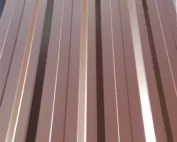
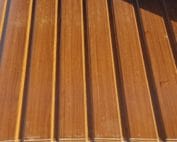
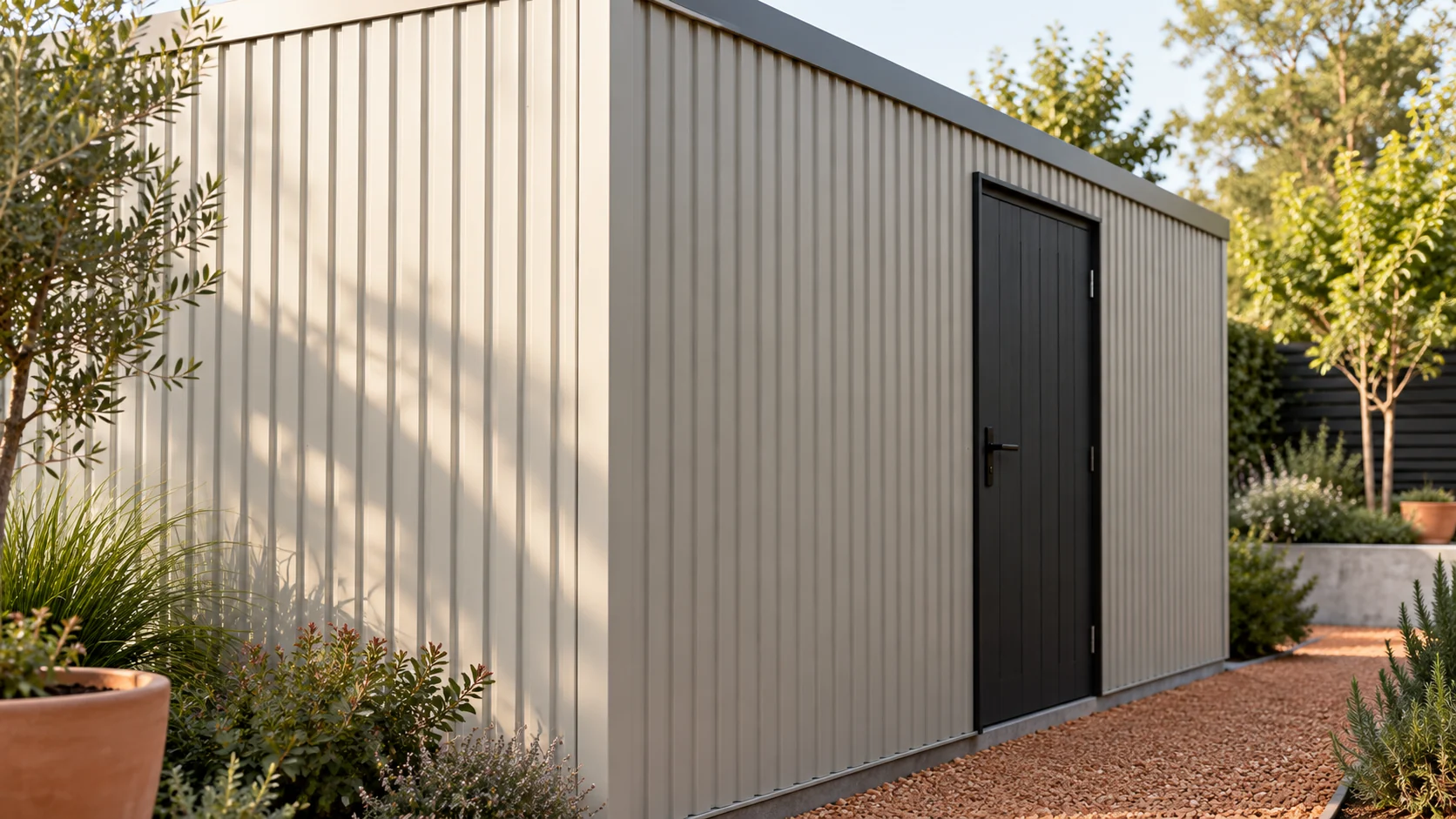
The low-profile T12 trapezoidal steel sheet is well suited to small façades and lightweight structures. However, it should not be selected on rib height alone. Steel thickness, rib geometry, cover width and the planned support are important. This guide helps distinguish visual features from structural requirements and check whether the chosen variant suits the specific task. T12 denotes a group of low profiles with a rib depth of approximately 12 mm. This is not the steel thickness. The designation also does not imply a common width for all sheets. Various cross-sections are available on the market, and some names include additional numbers specifying the cover width. Full identification is provided by the cross-section drawing.
What can be read from the profile designation?
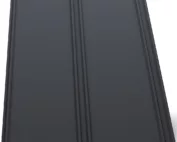
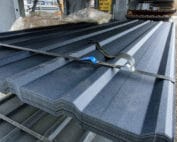
When comparing offers, it is worth placing the drawings side by side. Check the rib spacing, the width of their flat parts and the method of side connection. A similar appearance does not mean interchangeability. Different edge profiling may prevent the old strip from being connected to the new one without additional processing.
Which dimensions matter for a small wall?
The overall width determines the sheet’s external dimensions. The coverage describes the width remaining after connection with the adjacent strip. The length is ordered separately. On a vertical façade it may correspond to the height of a bay, but flashings and required clearances must be taken into account. It is not worth ordering material based on the height from ground to eaves alone.
For a calculation example, let us take a sheet with an overall width of 1080 mm and a coverage of 1064 mm. These are assumptions for the calculation, not a declaration of the parameters of all T12 sheets. For a wall 5.6 m long, five strips will give 5.32 m, so that is not enough. Six are needed, and the last one requires adjustment. This simple difference shows why ordering from the surface area alone may not be sufficient. The available lengths and steel thickness must be checked for the selected product. The sheet length is its external dimension, not the permissible support spacing. In a real quote, the parameters of the selected delivery must be confirmed.
Why does steel thickness not solve everything?
Thicker sheet metal may change the load-bearing capacity and resistance to local deformation. However, it does not act independently of the profile. The steel grade, support arrangement and method of fixing also matter. The load table applies to a specific combination of these characteristics. The result cannot be transferred between two products just because both are 0.5 mm.
On a façade, wind suction is important. On a roof, loads specific to the roof slope are added. Deflection and the ultimate limit state are checked separately. A surface that is too flexible may look bad even before a more serious problem occurs. A narrow building does not exempt you from such an assessment, particularly in open terrain.
Can T12 be used on a roof?
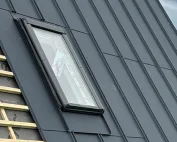
Only if the given variant is intended for such use and its requirements can be met. Some low profiles are intended primarily for wall cladding and finishes. The list of applications for one model must not be treated as approval for the entire group. The pitch, support and connection arrangement are key.
With a small canopy over the entrance, it is easy to focus on a small area. Yet this location can be exposed to strong gusts and wind-driven water. A lower profile should not replace proper drainage. If the roof requirements exceed the capabilities of T12, a taller trapezoidal steel sheet together with the entire structure should be compared.

Which coating and which side of the sheet should you choose?
The decorative side must correspond to the planned laying direction of the profile. Reversing the sheet can change the geometry of the visible profile and the joint. In the order, it is worth specifying whether the application is for a façade or roof and which side is coated. The RAL colour does not describe gloss, texture or coating resistance.
In a sheltered soffit, the conditions will be different from those on a façade next to a busy road. Dirt, moisture and the local environment affect surface maintenance. The coating should not be selected solely to match the window shade. It is worth examining a sample outdoors and checking how it looks next to the corner flashing in the same light.
How should the material be prepared for trouble-free use?
Sheets must be carried without dragging them over the coating and without excessive bending. A low profile is not resistant to any kind of handling. A pack left in damp conditions requires handling in accordance with storage rules. Tight wrapping alone does not guarantee a dry surface between the sheets.
After installation, remove swarf and check that the edges do not form water pockets. For later cleaning, use agents compatible with the coating. Do not accidentally scrub with an aggressive preparation a spot that requires a different repair. A well-executed simple façade should be possible to inspect and clean without dismantling its basic elements.
What else is worth asking about
Can T12 and T14 be combined in one run?
This should not be assumed. Different geometry may require a separate detail. To continue the field, a compatible cross-section is selected, not just a similar height.
Can a small roof do without load tables?
No. Suitability is determined by the entire system. A small area says nothing yet about span, fixings and wind load.
7 branches. Materials closer to your project.

- SEROCK — Dzierżenin 34 E
- BŁONIE — ul. Sochaczewska 138A
- RADOM — ul. Grobickiego 8
- ŁÓDŹ — Natolin 8
- OLSZTYN — Barczewo, ul. Prosta 9
- WROCŁAW — ul. Jerzmanowska 10C
- GORZÓW WLKP. — ul. Zielona 33/34