Fences
Six practical benefits of metal picket fences
In brief
Metal pickets allow you to build a visually light fence without the frequent renovation required by wood, but these benefits depend on correct design and installation. Before buying, assess whether the coating, posts and fixings suit the planned infill and operating conditions. Also check the gap between pickets, which affects transparency and wind exposure. Compare samples in daylight and view a test panel from different angles. Remember that coated steel does not need impregnation like wood, yet it does not mean a complete absence of maintenance.
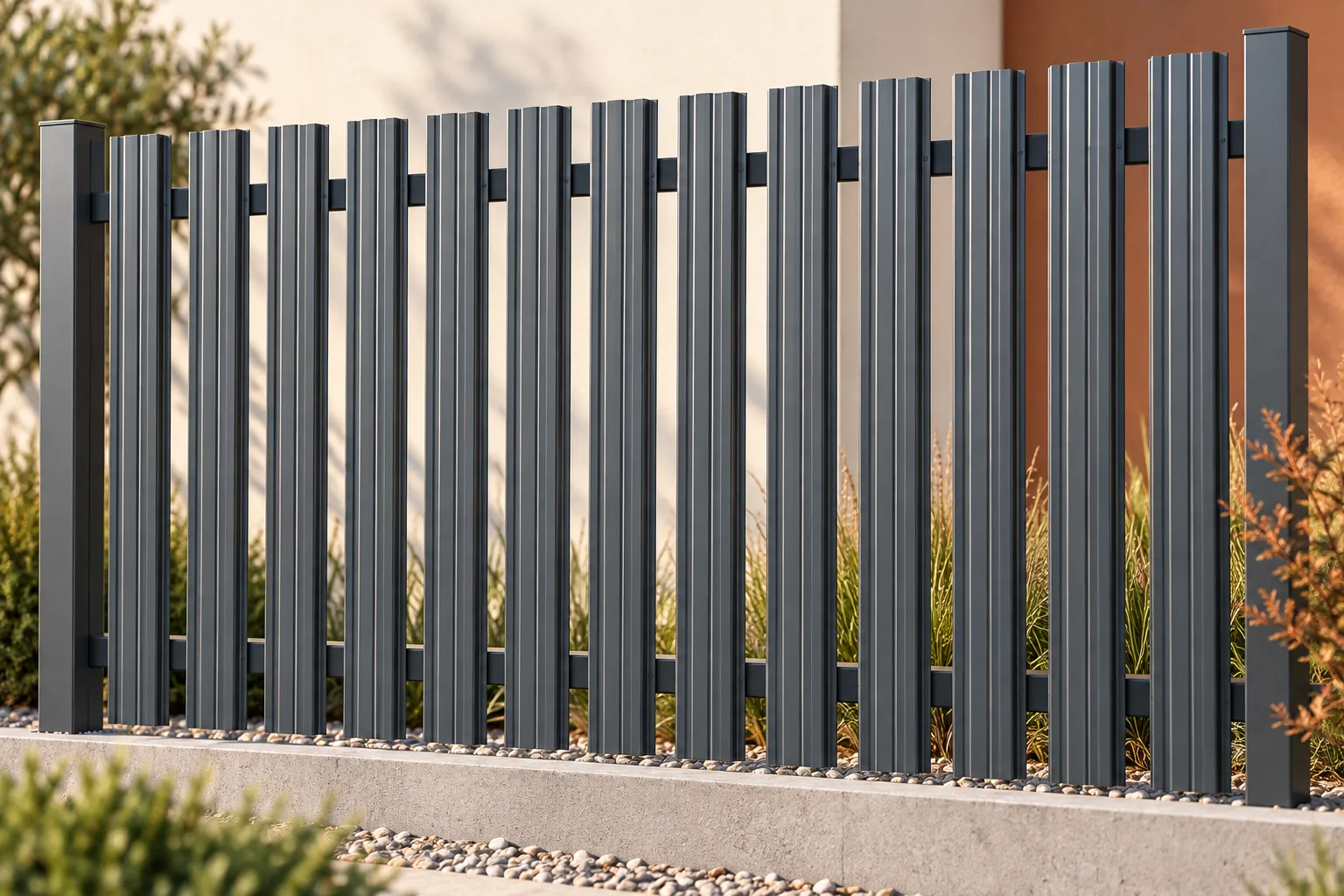
The first benefit is less routine maintenance
Coated steel does not require cyclical impregnation like untreated wood. Dirt is usually removed by gentle washing, in line with the recommendations for the given coating. This is convenient along a long fence line, where renovating every board takes a lot of time. It does not, however, mean a complete absence of maintenance work.
It is worth regularly inspecting the edges and fastening points. A scratch that exposes the steel should be protected with a suitable touch-up paint. Soil, wet leaves and lying snow should not remain in contact with the lower part of the pickets for long periods. Good maintenance helps preserve the appearance of the entire bay.
The second benefit is the ability to choose the degree of privacy
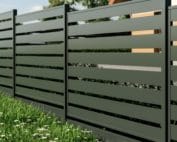
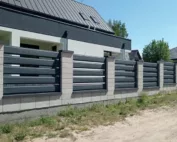
The spacing between the pickets allows the transparency of the fence to be varied. Wider gaps create a light, open layout. Smaller ones restrict the visibility of the property. When mounted on both sides of the rails, the gaps can be partially screened while retaining the space between the rows of elements.
Such a solution does not always provide full screening from every angle. Before ordering, it is worth viewing a sample bay from the street and from the side. A denser infill also changes the wind effect. Posts, foundations and fastenings must be selected for the actual structure, not just the width of the bay.
The third benefit is a consistent appearance across many elements of the property
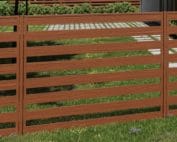
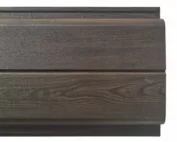
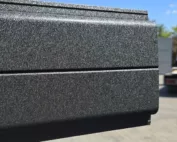
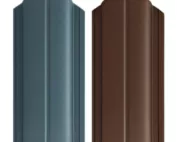
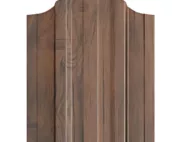
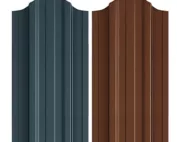
The colour of the pickets can be matched to the roof, the gate and the façade flashings. Smooth, matt and decorative surfaces are available. A shared shade tidies the appearance of the house’s surroundings, especially when the fence runs over a long length. However, it is not necessary to use an identical colour on all elements.
Compare samples in daylight. The same colour description does not guarantee an identical texture and gloss. Also check whether the decorative coating is present on both sides of the picket. In a fence both sides are visible, so the finish on the garden side has real aesthetic significance.
The fourth benefit is convenient organisation of installation
Individual pickets are easier to handle than a large, full infill panel. They allow you to plan the spacing and close successive sections gradually. They also help to match the fence to the chosen height. Installation still requires, however, level alignment of the structure and accurate setting out of the line.
It is best to prepare a spacer to maintain a consistent gap. The fasteners must match the material and thickness of the rail. Overtightening can deform thin sheet metal. Screws must not be selected solely by the colour of the head. Their coating and specifications affect the durability of the connection.

The fifth benefit is the option to replace a single picket
A damaged element can usually be replaced without dismantling the entire infill. This is useful after an impact, scratching or permanent deformation. When purchasing, it is worth keeping a small stock of identical pickets. This will make later repair easier, particularly if a less common profile or decoration was chosen.
A new element may differ from the old one that has been exposed to the sun for years. A stock does not eliminate all differences, but it allows the geometry to be kept consistent. Also keep information about the coating and the delivery. The colour name alone is not enough if a specific version of the product needs to be reproduced.
The sixth benefit is flexible adaptation to the design
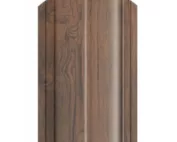
Pickets can be laid vertically or horizontally, if the chosen system and support allow it. This makes it easier to match the infill to a modern house, a traditional form or a simple utility building. The shape of the end affects the character of the fence, but should not hinder safe use.
Before deciding, calculate the entire set. The pickets are only part of the cost. Rails, posts, foundations, fixings and labour are added. When comparing offers, however, include the same length, height and infill density. Then it is clear whether the chosen version really offers benefits corresponding to its price.
How can you avoid losing these benefits at the design stage?
Before purchasing, look at the fence from the side from which it will most often be seen. The bay by the terrace may require more screening than a section along an open garden. The same density does not have to be repeated everywhere. The structure of each section must, however, take its actual infill into account.
On sloping ground, choose a stepped arrangement or a solution intended for following the slope. Randomly shortening pickets on site can leave exposed edges and an uneven line. Determine how the cuts and the bottom finish will be protected. Careful detailing helps to preserve both the appearance and ease of later maintenance.
7 branches. Materials closer to your project.

- SEROCK — Dzierżenin 34 E
- BŁONIE — ul. Sochaczewska 138A
- RADOM — ul. Grobickiego 8
- ŁÓDŹ — Natolin 8
- OLSZTYN — Barczewo, ul. Prosta 9
- WROCŁAW — ul. Jerzmanowska 10C
- GORZÓW WLKP. — ul. Zielona 33/34