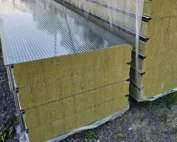
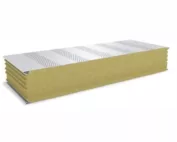
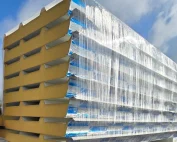
Panels in use
How does a sandwich panel work and what should you know before building?
In brief
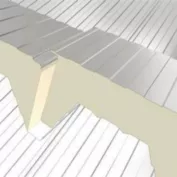
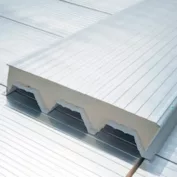
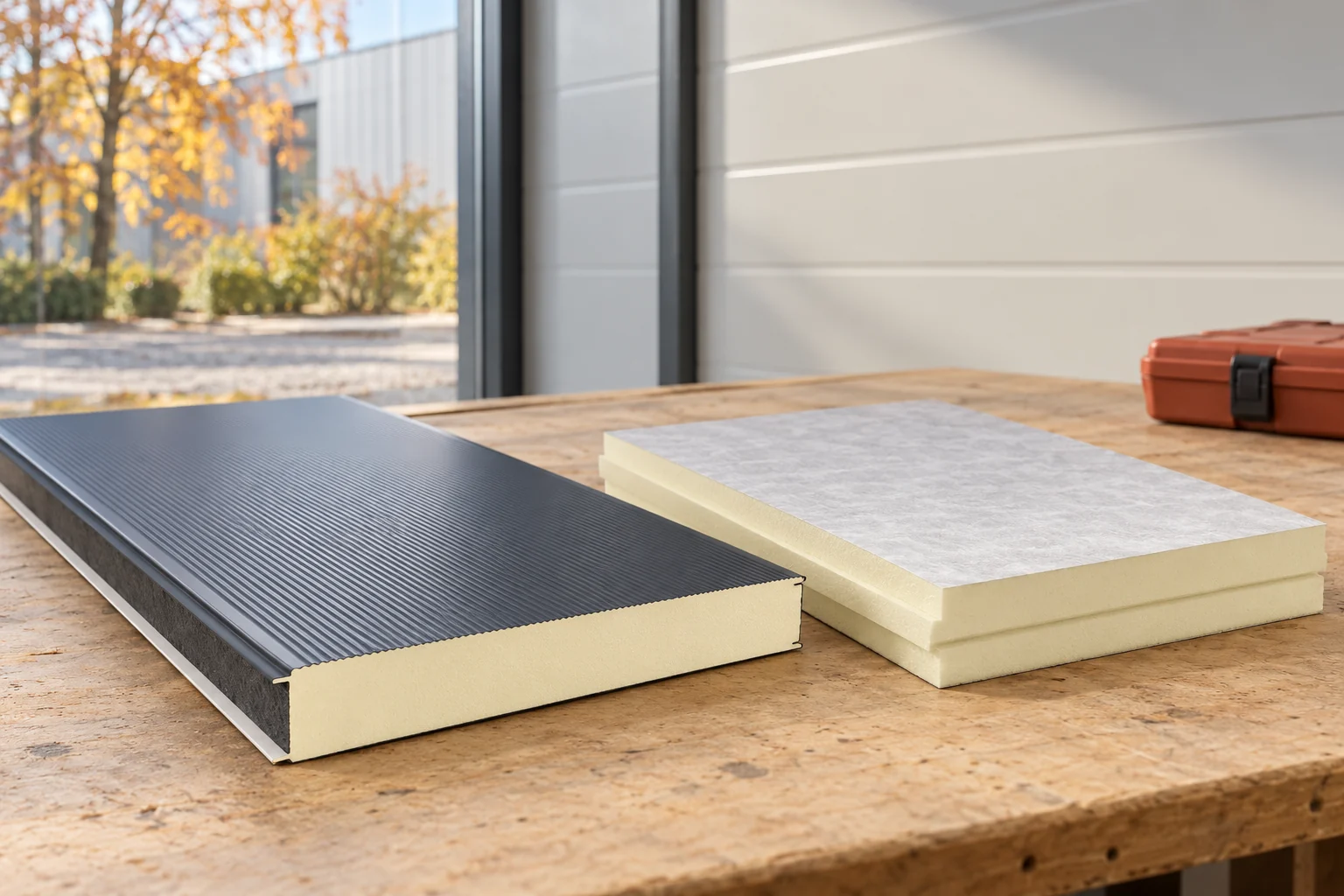
A sandwich panel combines several functions in a single element. Its core and facings work together, so they should not be assessed separately. The panel can form a wall or roof once fixed to a suitable structure. The connections also determine durability. This guide explains what you are actually buying and where the limits of the material itself lie. A typical panel has two facings bonded to a core. The steel surfaces and the material between them together carry loads. Adhesion at the interface between the layers is important. Delamination should therefore not be treated as a minor cosmetic defect.
Why do bonded layers matter?
The core provides thermal insulation and participates in the section’s structural behaviour. The facings protect it and provide the usable surface. Cutting an opening, a dent or damage to an edge can change the behaviour of the whole element. The effect on the panel is assessed, not just the appearance of the sheet.
How does a panel differ from an insulation board?
Rigid PIR board with a foil facing or glass fleece is a different material category. It is used as an insulation layer within a designed building envelope. It does not automatically replace a panel with steel facings. It has different documents and a different method of fixing.
The thermal parameter is also recorded differently. The R-value of the insulation alone is not the U-value of the complete wall. When comparing prices, separate these products. A seemingly cheaper insulation board requires further layers that create airtightness, protection and finish.
What properties result from the choice of core?
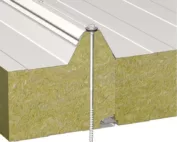
PIR, PUR, EPS and mineral wool offer different sets of properties. Thermal conductivity, mass and fire behaviour matter. Within each group there are different variants. There is no single table that describes every panel with the same colloquial core designation.
With mineral wool, the arrangement of the lamellae and the bond with the facings also matter. With foams, the specific variant must be known. The fire reaction of the finished panel and the fire resistance of the building envelope are separate assessments. Neither is read solely from the colour of the cross-section.
What is the significance of the surface and the joint?
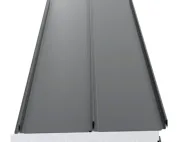
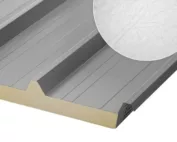
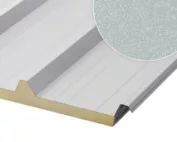
The cladding may have different steel thicknesses, coatings and profiling. These features affect its intended use and operating conditions. A dark façade heats up differently from a light one, which must be taken into account when selecting length and support. Colour alone does not describe the type of protection.
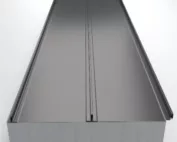
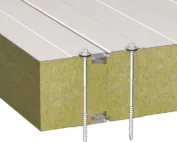
The lock determines how the panels are joined and sealed. In the concealed-fixing variant, part of the joint is covered by the next panel. This does not mean there are no screws. Elements with a similar module may have incompatible locks. They are not mixed without confirming the solution.

What is needed to turn panels into an enclosure?
You need a structure with the correct geometry, fasteners and details. Support, seals, flashings and edge protection are important. A long panel requires appropriate transport and lifting. The ability to manufacture an element does not mean it will carry loads without supports.
Installation should follow the instructions for the specific system. The contractor checks positioning, fastener pressure and joint tightness. Cutting must protect the coatings from overheating. After work, swarf is removed before it starts to leave corrosion and hard-to-remove marks.
How to plan the application and cost?
The panel works well in many buildings but must be selected to suit their function. A heated pavilion, a warehouse and a cold store have different operating conditions. Determine temperature, humidity, cleaning and loads. Only then compare variants of thickness, coatings and joints.
Calculate the order cost from the number of pieces and length, not just from the floor area. Add accessories, transport and installation. In repetitive small buildings, common dimensions can be standardised. However, openings and structure must still be checked separately for each building.
What won’t the panel solve on its own?
It does not replace ventilation, structural design or the detailing of service penetrations. It will not provide good acoustic comfort just because the core is associated with sound insulation. Insulating against noise and absorbing sound within the interior are different tasks.
After the building is handed over, inspections and proper cleaning are required. New loads, openings and changes of function require reassessment. Retained panel markings help with repairs. The material properties only have practical significance in a correctly executed and maintained separating layer.
What else is worth asking about
Does a sandwich panel on its own form the structure of the entire pavilion?
This should not be assumed. The panel carries loads in a specific support arrangement. The entire structure requires stability, connection and foundation design. The term ‘self-supporting’ does not mean it can be used arbitrarily.
Can every panel be reversed?
No. The facings may have different thicknesses, coatings and purposes. The profile and the geometry of the joint also matter. The installation direction should correspond to the documentation for the specific product.
7 branches. Materials closer to your project.

- SEROCK — Dzierżenin 34 E
- BŁONIE — ul. Sochaczewska 138A
- RADOM — ul. Grobickiego 8
- ŁÓDŹ — Natolin 8
- OLSZTYN — Barczewo, ul. Prosta 9
- WROCŁAW — ul. Jerzmanowska 10C
- GORZÓW WLKP. — ul. Zielona 33/34