Renovation and maintenance
Preparing the site for safe re-roofing work
In brief
Before you strip the old covering, plan the whole process. Inspect the structure and the layers hidden beneath the sheets, because what is visible on the roof does not reflect the condition of battens, timber or connections. Establish which formalities are needed and how waste will be managed. The new metal sheeting must suit the roof, and the crew should have safe access and a clearly agreed scope of work. Remember to protect the interior from the weather and provide temporary drainage.
What to check before ordering new material?
An inspection of the structure and layers under the old covering is needed. The visible surface does not show the condition of the battens, timber or connections. Some defects will only be revealed once uncovered, but many problems can be spotted earlier. It must be established which elements will remain and which require assessment or replacement.
The scope of formalities depends on the actual works, the type of building and its protection. Replacing the covering, changing the structure and extending the roof are different situations. Before starting, the correct procedure for the specific project must be checked. It is not worth basing a decision on the fact that a neighbour carried out a similar renovation without notification.
Why does the old covering need to be identified?
The type of material determines the dismantling, protective measures and the method of handing over the waste. A suspicion of asbestos requires particular attention. Such a covering must not be treated like ordinary steel sheet intended for removal by oneself. The work should be entrusted to an entity prepared for safe handling of this material.
Suspected panels should not be broken or cleaned by a method that causes dust. Identification and organisation of removal should take place before dismantling. It is also worth checking local funding opportunities in advance. Programme conditions may require notification of works before they are carried out, and the support does not have to cover the purchase of a new roof.
How to organise work at height?
The crew needs safe access, fall protection and proper equipment. Unloading and the feeding of material must be planned. Long sheets should not be carried in a way that causes them to buckle. Wind conditions may prevent the safe handling of large elements.
A work zone must be marked out on the ground and secured against access by unauthorised persons. Material must not be thrown down at a random location. Determine the access route to the house and the protection of the surroundings. The organisation should also cover breaks, waste storage and the situation of a sudden change in weather.

How to protect the building during dismantling?
The extent of roof uncovering must be matched to the capacity for re-securing. Removing the entire covering in one day is not always sensible. A plan is needed for temporary protection against rain and for water drainage. A loosely thrown tarpaulin may not be sufficient in wind or heavy rainfall.
Once exposed, elements that were previously hidden must be inspected. Damaged timber or damp insulation require a decision before covering up. New covering should not be fixed solely to keep to schedule. A hidden defect may later force the freshly completed roof slope to be stripped again.
How to match new steel sheet to an existing roof?
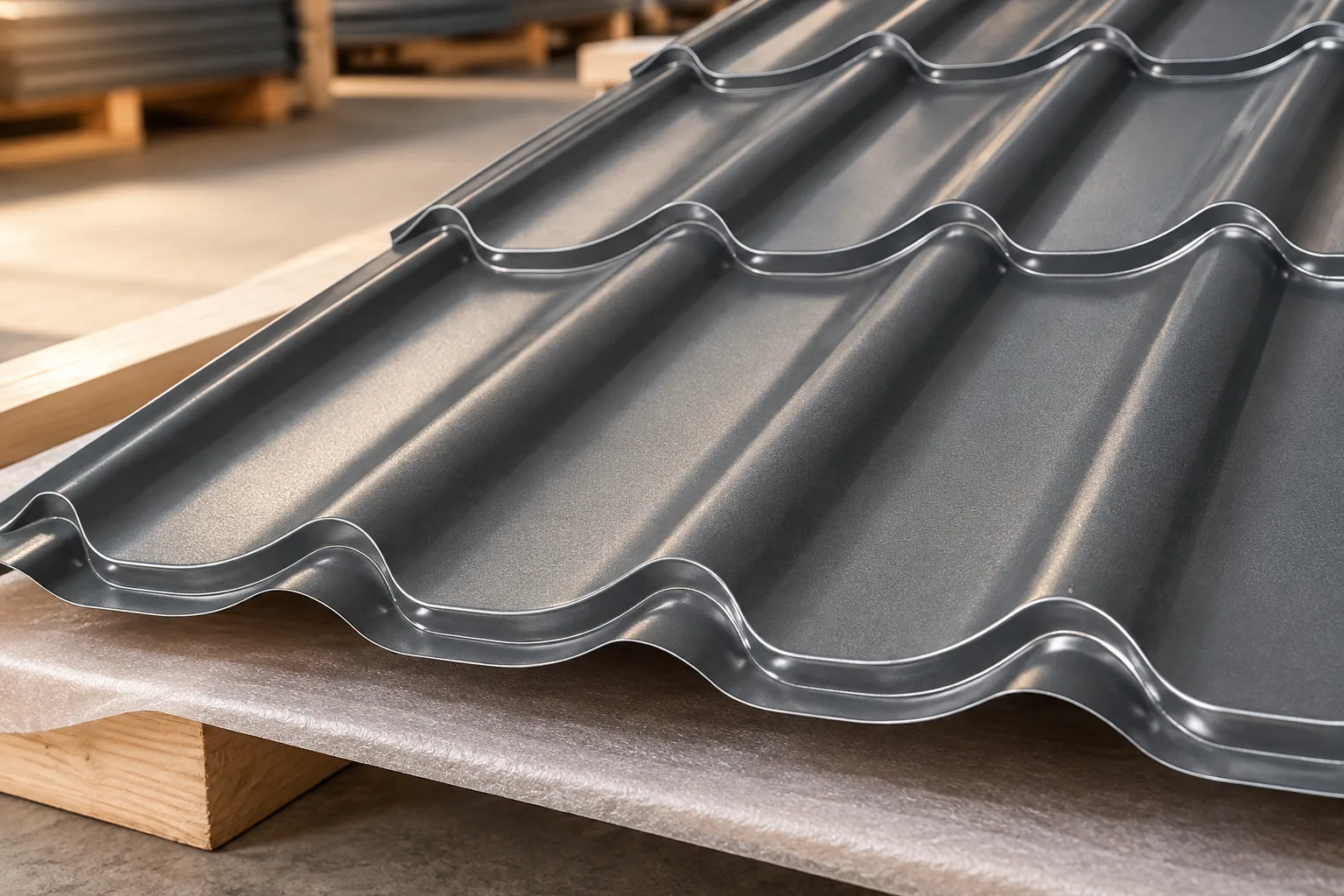
T18, T35, cut and modular tile-effect metal roofing have different geometries and requirements. The pitch, supports and first-row details must be checked. It must not be assumed that the old battens suit the new profile. Even a low material weight does not replace an assessment of the load-bearing capacity of the entire structure.
It is worth using the renovation to sort out the eaves, gutters, flashings and service access. If photovoltaics are planned, their requirements should be taken into account now. With an insulated attic, check the insulation layout and airtightness. New covering alone will not eliminate thermal and humidity problems inside.
How to accept the works and close the renovation?
Acceptance should cover laps, fixings, flashings and drainage. Swarf and waste must be removed from the roof slope and gutters. Ask for documentation of the areas that have been covered, and for the labelling of the material used. Keep the warranty conditions and the recommendations for inspections.
Settlement should take account of agreed scope changes, not arrangements reconstructed from memory. Waste must be handed over in accordance with its type and requirements. A safe replacement is only complete when the roof has been checked, the site tidied, and the user knows how to monitor the new building envelope.
After the first heavier rainfall, it is worth verifying the locations of previous leaks. If moisture appears, a diagnosis is needed, not immediate sealing of a random joint. The water may have a different source than before the renovation. Documentation of the stages helps establish the cause without unnecessary dismantling.
7 branches. Materials closer to your project.

- SEROCK — Dzierżenin 34 E
- BŁONIE — ul. Sochaczewska 138A
- RADOM — ul. Grobickiego 8
- ŁÓDŹ — Natolin 8
- OLSZTYN — Barczewo, ul. Prosta 9
- WROCŁAW — ul. Jerzmanowska 10C
- GORZÓW WLKP. — ul. Zielona 33/34