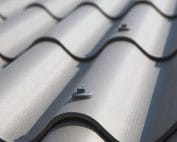
Fibre cement coverings
Replacing individual sheets or the whole roof? Decision criteria
In brief
A single crack does not necessarily mean the whole roof slope must be replaced. However, several similar defects may point to a problem that goes beyond a single sheet. Corrugated fibre cement sheets should be assessed together with their fixings and the supporting structure. Asbestos-free fibre cement makes local repair worth considering, provided compatible components are available and the cause of the fault is known. The decision should be based on an inspection and on the cost of a durable solution, not solely on the number of visible cracks. In an old building, the name used by the owner does not always confirm the composition of the covering. It is also possible that only some sheets were replaced. If asbestos is suspected, do not begin by drilling, cutting or removing a fragment on a trial basis.
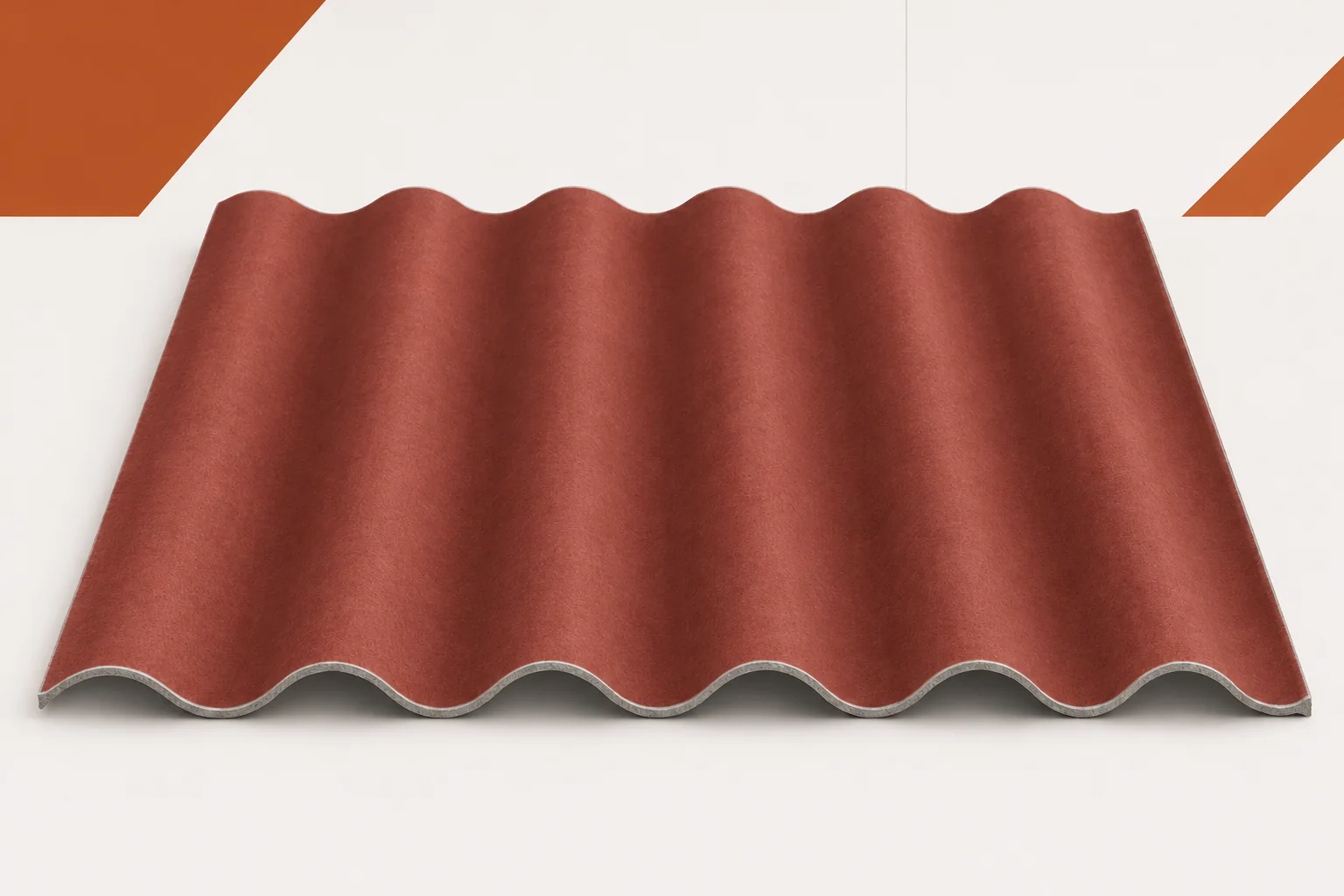
First establish what material is on the roof
A separate survey and preparation of the works are needed. Markings and the repair history of the modern roof are equally important. They help establish the correct profile and the availability of parts. Without this, a quote for a single replacement may rest on the mistaken assumption that every similar sheet fits the existing arrangement. Identifying the material sets the limits for the further technical decision.
The cause matters, not just the location of the crack
The damage may have been caused by an impact, but also by excessive pressure, inadequate support or a faulty corner. Corrugated fibre cement sheets replaced without removing the cause may be damaged again. It is therefore worth checking the adjacent fixing holes, the arrangement of the supports and the condition of the laps. Repeated cracks at similar points are an important indication. They should not be treated as several independent cases without inspecting the whole area. On the other hand, a single sheet damaged during service work does not automatically prove a defect in the whole roof. The assessment should distinguish a local event from a recurring installation error.
The replacement must be compatible with its surroundings
Corrugated fibre cement sheets from different product families do not necessarily fit at the lap, even when they have a similar number of corrugations. The cross-section, effective width, cover length and method of fixing must be compared. The colour of the new piece may also differ from the surface after years of use. This is an aesthetic matter worth discussing in advance. It should not, however, obscure technical compatibility. If the original variant is no longer available, a confirmed solution should be sought rather than forcing an unfamiliar profile into place. Sometimes the repair will cover a wider strip or area in order to achieve correct connections. Such a scope may be more sensible than a seemingly economical replacement of a single piece.
The condition of the fixings and structure affects cost-effectiveness
A new sheet will not repair worn connections or weakened supports. Asbestos-free fibre cement requires proper anchoring, sealing and an even substrate. During the inspection it must be checked whether the problem affects only the sheet or also the battens, purlins and accessories. If most of the connections need improvement, the sum of small repairs may approach the cost of a wider modernisation. This does not automatically mean that everything must be dismantled. It is worth preparing two comparable scopes with the expected outcome. Each should indicate which existing elements remain and what limitations will still apply after the works.
Access and the risk of damage also cost money
Replacing a single sheet may require scaffolding, platforms or temporary closure of the interior. Corrugated fibre cement sheets are fragile under point loads, so the repair cannot be planned on the basis of walking on the adjacent sheets. A safe way of reaching and carrying the element must be provided for. Where there are numerous distant damages, organising many small interventions can be costly. The condition of the covering surrounding the work area should also be taken into account. If it is weakened or was previously badly installed, dismantling may reveal further problems. An honest quote should describe these unknowns and how any extension of the works will be agreed.
A change of function may argue for a larger scope
If the building is to be insulated, heated or fitted with new installations, repairing the covering alone may not be enough. Corrugated fibre cement sheets must then be assessed in the target arrangement. Other layers, ventilation details and penetrations may be required. It is often more advantageous to combine the necessary repairs with the planned modernisation than to return to the roof several times. However, a full replacement should not be justified by a general promise of improved comfort without a design. First it must be determined what is to change in use and which parameters are needed. Only then can the repair of the current problem be compared with a solution for future needs.
Record the decision together with the acceptance conditions
The chosen option should specify the sheets to be replaced, the fixings, the flashings and the scope of support repairs. After repair, the fibre cement sheets must form a system consistent with the documentation, not a collection of local patches. It is worth keeping photographs of the cause and of the work carried out. The acceptance should also cover adjacent joints disturbed during dismantling. After subsequent rainfall, observe the effect, bearing in mind that moisture may have more than one source. If a limited repair has been decided upon, it is well to set a date for inspecting the remainder of the roof. A consciously adopted scope is easier to maintain than a vague promise that the problem will never return.
When planning the repair of asbestos-free fibre cement roofing, gather photographs and markings of the covering. A comparison of the local and full scope should take into account the cause of the defect and the compatibility of the parts.
7 branches. Materials closer to your project.

- SEROCK — Dzierżenin 34 E
- BŁONIE — ul. Sochaczewska 138A
- RADOM — ul. Grobickiego 8
- ŁÓDŹ — Natolin 8
- OLSZTYN — Barczewo, ul. Prosta 9
- WROCŁAW — ul. Jerzmanowska 10C
- GORZÓW WLKP. — ul. Zielona 33/34