Insulation and energy
Assessing the environmental impact of a metal roof
In brief
Can a metal roof be an environmentally favourable choice? It depends on the whole roof, not the sheet alone. Metal is lightweight, can be repaired and the metal recovered, but its production also has an environmental impact. Check the environmental declaration: the unit, the stages covered and the validity period. Compare solutions serving the same function, including covering, structure, insulation and fixings. Remember that thin metal alone will not provide thermal comfort without insulation. Also consider how far the materials travel, how long the roof is expected to last and which materials can be recovered when it is dismantled.
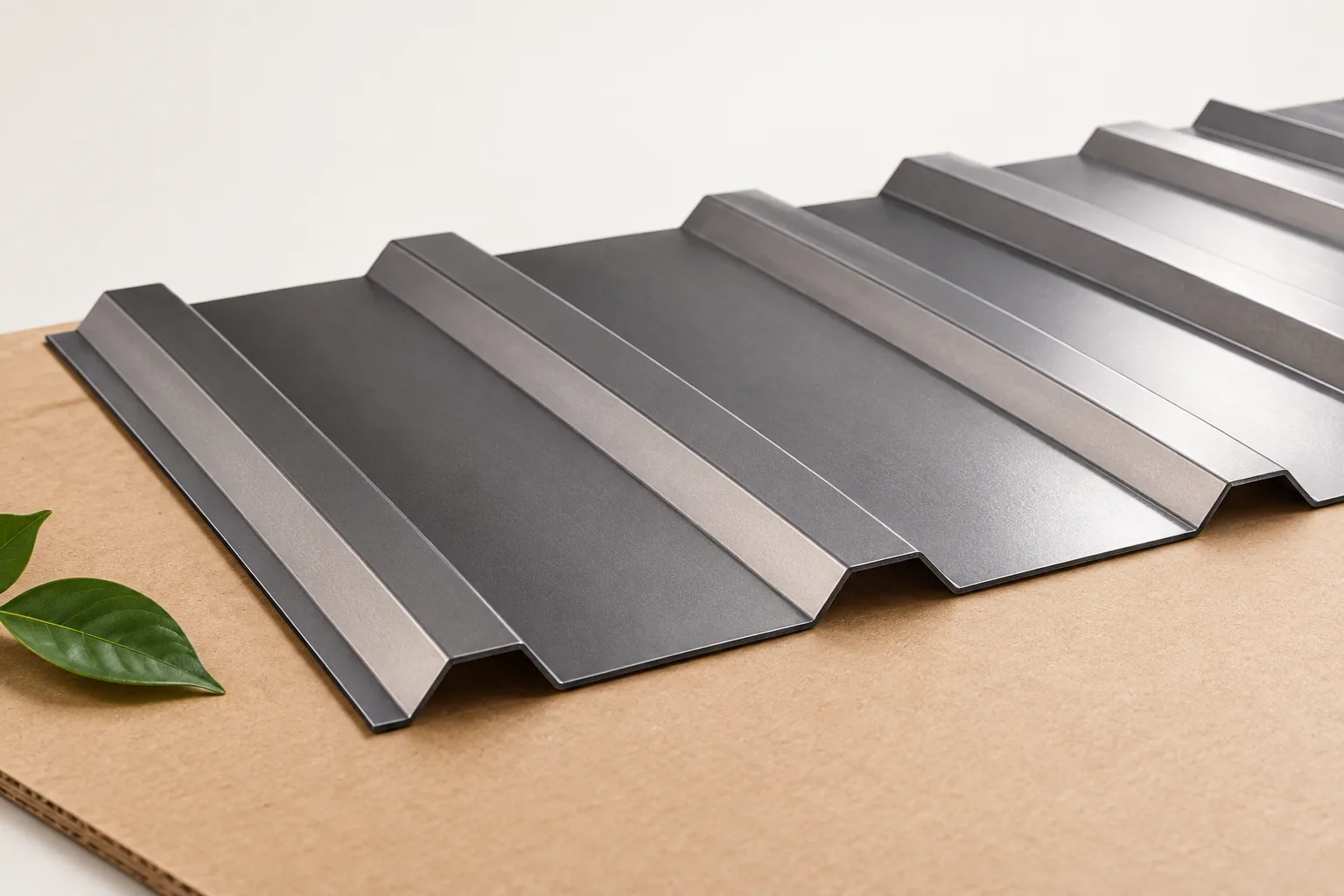
Why does the material alone not provide a complete answer?
A roof consists of the covering, structure, insulation, fixings and other layers. The environmental impact results from their manufacture, transport, installation, maintenance and end of use. Comparing a single sheet with a complete solution of another type leads to misleading conclusions. First, a common scope of assessment must be defined.
The function of the building envelope is also important. A roof over a heated room should provide the required comfort and limit energy losses. A thin sheet alone does not do this. A sensible choice of covering must therefore work together with the thermal insulation, airtightness and moisture conditions of the entire system.
What can be checked in an environmental declaration?
An environmental product declaration presents the results of the assessment for a specific product and the assumptions made. The unit, the scope of stages and the validity period must be checked. A document covering one square metre of a specific sheet is not a ready-made balance for any roof. Differences in thickness, mass and method of use still matter.
The results may show production, end of use and potential benefits beyond the system boundary separately. Future benefits should not be arbitrarily subtracted from current emissions. Consistent rules and an equivalent function are needed for comparison. The mere presence of a declaration does not mean that a product is unconditionally the best for the environment.
What benefit does low mass and good cutting layout provide?
A low covering mass can reduce the amount of material transported and influence the structural design. However, the actual result is determined by distance, transport organisation and the other layers. Lower emissions cannot be promised solely on the basis of the weight of one square metre of sheet.
A more direct benefit comes from reducing unnecessary waste. Sheet lengths and module formats should be matched to the geometry of the roof slope. Accurate measurement reduces the risk of reordering. Not every cut-off piece is suitable for use, which is why a cutting plan is more important than a general statement about material savings.

Why do durability and repair matter?
A covering that fulfils its function for a long time reduces the need for another manufacture and transport of replacement material. Durability depends on the proper coating, installation and care. Early repair of minor damage can prevent a larger renovation. However, this does not mean that every old roof should be maintained at all costs.
Before replacement, it is worth identifying the cause of the problem. A leaking flashing does not always require stripping the entire covering. Conversely, extensive corrosion or structural damage may justify more extensive work. A decision based on a technical assessment avoids both unnecessary replacement and prolonging the use of a faulty roof.
Can metal from a roof be recovered?
Steel is suitable for material recovery, but the possibility of recycling is not equivalent to the actual recovery of every part. Dismantling, segregation and transfer of the waste to the appropriate recipient are required. Coatings, contamination and components joined with other materials must be taken into account.
A sandwich panel is a product composed of facings and a core, so its end-of-life management requires a different assessment than a plain sheet. The recycling properties of the steel alone must not be attributed to the entire panel. When purchasing, it is worth asking about the intended method of handling after dismantling and the available information on end of use.
How to make a sensible decision for your own building?
Choose a solution that meets the project requirements with a reasonable amount of material. Compare durability, maintainability and complete layers. Check environmental data for the actual variants, if available. Avoid a comparison based on the recovery percentage alone or a single parameter from advertising.
A well-insulated, airtight and repairable roof can reduce energy and resource consumption during the building’s use. Metal sheet can be part of such a solution. However, its advantages must be combined with an honest assessment of production and subsequent end-of-life management. An eco label will not replace this data.
In practice, it is worth keeping documentation of the materials used and the layer arrangement. This facilitates future repair, extension and segregation after dismantling. It requires no additional material on the roof and reduces guesswork during subsequent work. It is a simple action that supports responsible use of the building.
7 branches. Materials closer to your project.

- SEROCK — Dzierżenin 34 E
- BŁONIE — ul. Sochaczewska 138A
- RADOM — ul. Grobickiego 8
- ŁÓDŹ — Natolin 8
- OLSZTYN — Barczewo, ul. Prosta 9
- WROCŁAW — ul. Jerzmanowska 10C
- GORZÓW WLKP. — ul. Zielona 33/34