Roof and energy
Do optimisers solve every shading problem on a roof?
In brief
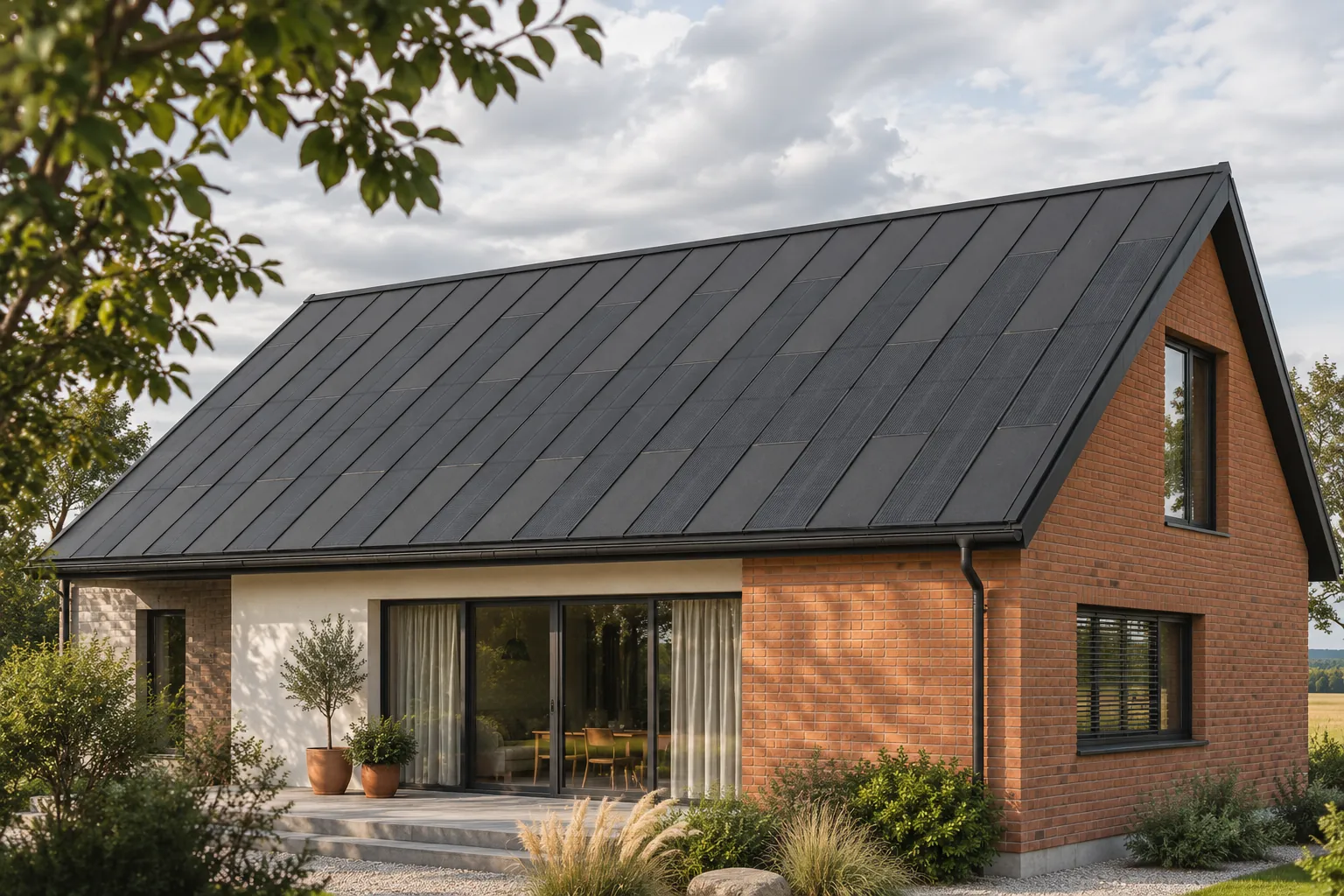
Optimisers can improve how photovoltaic elements that work under different conditions interact. However, they cannot bring light under a chimney, a tree or a neighbouring building. In an integrated roof, a sensible layout of the active areas is still the most important thing. Electronics should complement the design, not justify installing cells in a place that remains shaded for much of the day. A shaded section receives less radiation and cannot generate as much energy as a similar section in full light. How this affects the other elements depends on their construction and how they are connected. That is why two apparently similar shading situations can produce different effects. The percentage of shaded surface alone does not describe the whole phenomenon.
What does shading change in how cells work?
The designer should identify where the shade comes from and when it occurs. A chimney casting a narrow band is a different problem from a broad shadow from a building. You need a picture of how conditions change over the course of the day and the year. A photo taken at sunny summer noon does not automatically show the most unfavourable conditions.
What does matched electronics help with?
An optimiser can reduce certain losses associated with mismatch between the operation of components. Depending on the system, it also enables more detailed monitoring or safety functions. The scope of benefits depends on the specific device and configuration. Not every optimiser on the market should be credited with all functions.
The electronics must be matched to the parameters of the active components and the inverter. A similar nominal power is not the only condition for compatibility. Voltages, currents and the required connection arrangement matter, among other things. Installing additional devices without checking these relationships can make the system work worse instead of better.
It is also worth establishing whether the data from the devices will remain available to the owner after cooperation with the installer ends. This makes later servicing and changing the service provider easier.
What will an optimiser not fix?
It will not remove a permanent lack of sun. It will not correct a poorly chosen roof pitch or a faulty water-drainage detail. Nor will it replace removing the cause of damage to a cable or connection. This is important because many roof problems are of a constructional or organisational nature and do not result from mismatch of module power.
If an offer promises full energy recovery in shade, ask for calculations for the specific system. Compare the forecast with and without the electronics under the same assumptions. Then you can see what problem the device solves and how much its operation costs. A general assurance of no losses is not a reliable description of how it works.
Is it better to leave some places inactive?
Sometimes yes. In an integrated system, a passive element can be planned in a difficult zone while maintaining a consistent appearance of the covering. This allows you to bypass a location with low expected yield or a complicated detail. You do not have to buy modules for every metre of roof just because the remaining roof area is active.
The decision depends on the analysis. Short-term shading does not have to rule out a given field. What matters is the impact on energy across the whole year and the cost of the solution. The designer should be able to show why they are proposing an active element, a passive supplement or another configuration. Such reasoning is more useful than automatically choosing the most expensive set.
How does monitoring help identify the problem?
If the system provides data from individual fields, a recurring drop at the same time is easier to notice. This may indicate shading, but it is not yet a full diagnosis. The readings need to be compared with the weather, the roof map and device messages. A lack of data does not always mean a lack of production either.
Keep the original layout plan of the elements and their identification. For a later report, this will make it easier to point to a specific location. If a chimney has been extended or a tree has grown, it is worth noting the change. Conditions around the roof are not constant, even when the cells themselves remain on the same roof area for years.
How do you make a decision before buying?
First establish a sensible covering layout and active field. Then select the electrical architecture and monitoring functions. In an integrated steel roof, this can be coordinated with the aesthetics and cable routes before installation. This allows the advantages of the system to be used without multiplying devices with an unclear purpose.
Also ask for a description of service access to the electronics under the covering. The device must not only work on the day of acceptance but also be capable of being checked or replaced. A good quote presents benefits and requirements together. Then the optimiser is a consciously selected component of the installation, not a promise to solve every problem.
Among manufacturers and brands of photovoltaic roofs are SunRoof, SolRoof, MDM NT (MyRoof), Wienerberger Wevolt, Solartag, Megasol Energie, ML System, Terrán, Electrotile and Solarstone.
7 branches. Materials closer to your project.

- SEROCK — Dzierżenin 34 E
- BŁONIE — ul. Sochaczewska 138A
- RADOM — ul. Grobickiego 8
- ŁÓDŹ — Natolin 8
- OLSZTYN — Barczewo, ul. Prosta 9
- WROCŁAW — ul. Jerzmanowska 10C
- GORZÓW WLKP. — ul. Zielona 33/34