Installation and details
What to check before installing a photovoltaic array on a metal roof
In brief
In Poland, photovoltaic panels can be installed on a metal roof, provided the mounting structure is matched to the specific covering and the load-bearing capacity of the entire roof is verified. Before deciding, it is worth establishing whether the documentation specifies the exact sheet model and thickness – without this, the assessment of fixing suitability may be uncertain. The condition, age and geometry of the roof should also be checked, along with how wind and snow loads are transferred to the building structure. If the covering needs repair, it is better done before installing the system.
What needs to be checked before ordering panels?
The first assessment concerns the roof: its condition, age, geometry and structure. The weight of the modules is not the only additional load. Wind loads and the influence of the installation on snow accumulation are added. The arrangement of supports must correspond to the way these forces are transferred to the building structure.
If the covering requires repair, it is better to carry it out before installing the system. Later replacement of the sheet under the modules means additional dismantling and repeated electrical work. It is also worth taking into account access to the chimney, roof hatch, gutters and inspection points. Filling every free part of the roof with panels is not always a good solution.
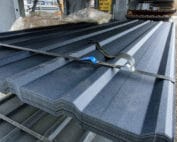
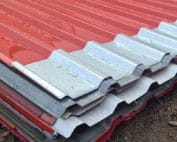
The documentation should indicate the exact sheet model and its thickness. When data from the old roof has not been preserved, an inspection and reliable determination of the covering construction are needed. Measuring the external height of the trapezoid is not enough. Two similarly looking sheets may have different properties and permissible fastening methods.
How is the system mounted on trapezoidal steel sheet?
In selected systems, short brackets fastened to the upper parts of the trapezoid are used. Such a solution requires conformity with the profile geometry, sheet thickness and conditions specified by the structure supplier. The label T18 or T35 alone is not sufficient to confirm the permissible fastening.
Another solution is to transfer loads to the substructure. The choice depends on calculations and the roof construction. It must not be assumed that every sheet with a higher rib will support any panel arrangement. The existing fastening of the covering to the supports must also be checked. This is another element of the path along which forces reach the building.
What changes with tile-effect metal roofing or sandwich panel?
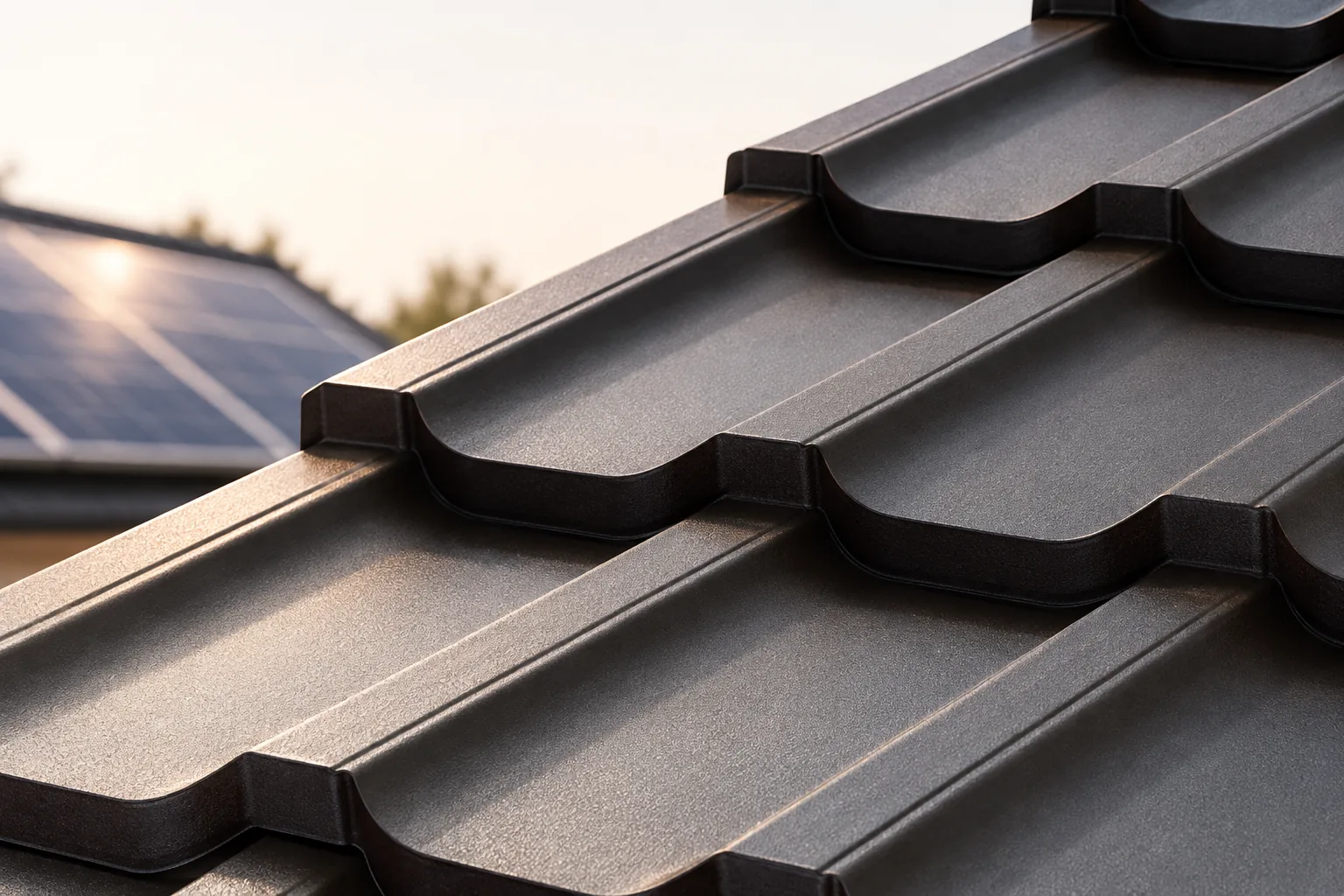
With tile-effect metal roofing, the fastenings often cooperate with wooden structural elements. Their position should be determined before making the holes. The bracket must not accidentally rest on the rib and dent the sheet. The detail must allow proper sealing of the point where it passes through the covering.
A roof sandwich panel requires separate verification. Its span, facings, core and fastening to the purlins are assessed. A screw embedded only in the thin facing is not automatically a proper support point for the installation. A solution approved for the given panel and the designed load arrangement must be used.

How to maintain sealing and corrosion protection?
Holes and fasteners must be made in accordance with the system documentation. The seal must work on the surface specified by the fixing designer. Excessive pressure may damage it, while too little may leave a path for water. Sealing everything with random silicone does not replace a correct detail.
After drilling and cutting, swarf must be removed. Its corrosion can soil the coating and create points of damage. The compatibility of the materials of the brackets, fasteners and covering is also important. Not every pair of metals is inert in a damp environment. The approved combination should follow from the documentation, not from a similar colour of the elements.
Why are cable routing and service access important?
Cables should not lie loosely on the sharp edge of the sheet or block water drainage. Penetrations to the interior require a sleeve and a tight execution. The design must take into account the distance of the modules from the covering and their cooling conditions. Electrical work must be entrusted to persons with appropriate qualifications.
The roof slope should remain accessible for inspection. This also applies to fixings, drains and flashings under or next to the installation. The work plan must include protection for persons moving on the roof. Module frames must not be treated as steps or anchor points unless they are intended for that purpose.
How should the roof be prepared for installation in a few years?
With a new roof, the planned area for the modules and the route for the cables can be indicated in advance. The structural engineer will assess the load reserve, and the roofer will prepare the appropriate details. This is a better moment to agree penetrations than later drilling into finished layers without knowledge of their layout.
In the documentation, keep the covering model, sheet thickness, support layout and photos before covering. Ask the installer for a fixing plan and confirmation that the system is compatible with the roof. Also check the covering warranty conditions. A correctly selected photovoltaic system can work with a metal roof, but it requires an assessment of the entire system, not just the space for the modules.
7 branches. Materials closer to your project.

- SEROCK — Dzierżenin 34 E
- BŁONIE — ul. Sochaczewska 138A
- RADOM — ul. Grobickiego 8
- ŁÓDŹ — Natolin 8
- OLSZTYN — Barczewo, ul. Prosta 9
- WROCŁAW — ul. Jerzmanowska 10C
- GORZÓW WLKP. — ul. Zielona 33/34