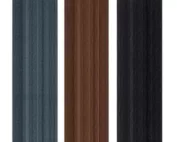
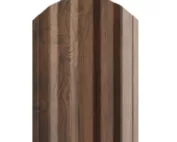
Metal fence pickets and fences
The picket is the infill. What really holds the fence together?
In brief
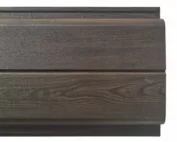
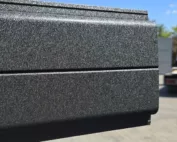
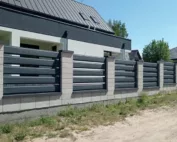
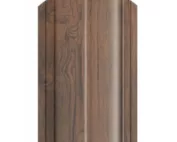
On a finished fence, the pickets are the most visible part. They create the colour and rhythm of the entire fence. For this reason, it is easy to attribute to them tasks that are actually performed by other parts. In reality, steel pickets are usually the infill of a prepared structure. Understanding this difference helps when buying, renovating and assessing the contractor’s work. It also helps avoid modifications based solely on appearance. Metal fence pickets define the gap and the character of the bay. They can have different widths, end shapes and finishes. Their profiling gives them the rigidity needed for their proper use. This does not, however, mean they can be used as arbitrary load-bearing elements. Every product has a defined purpose.
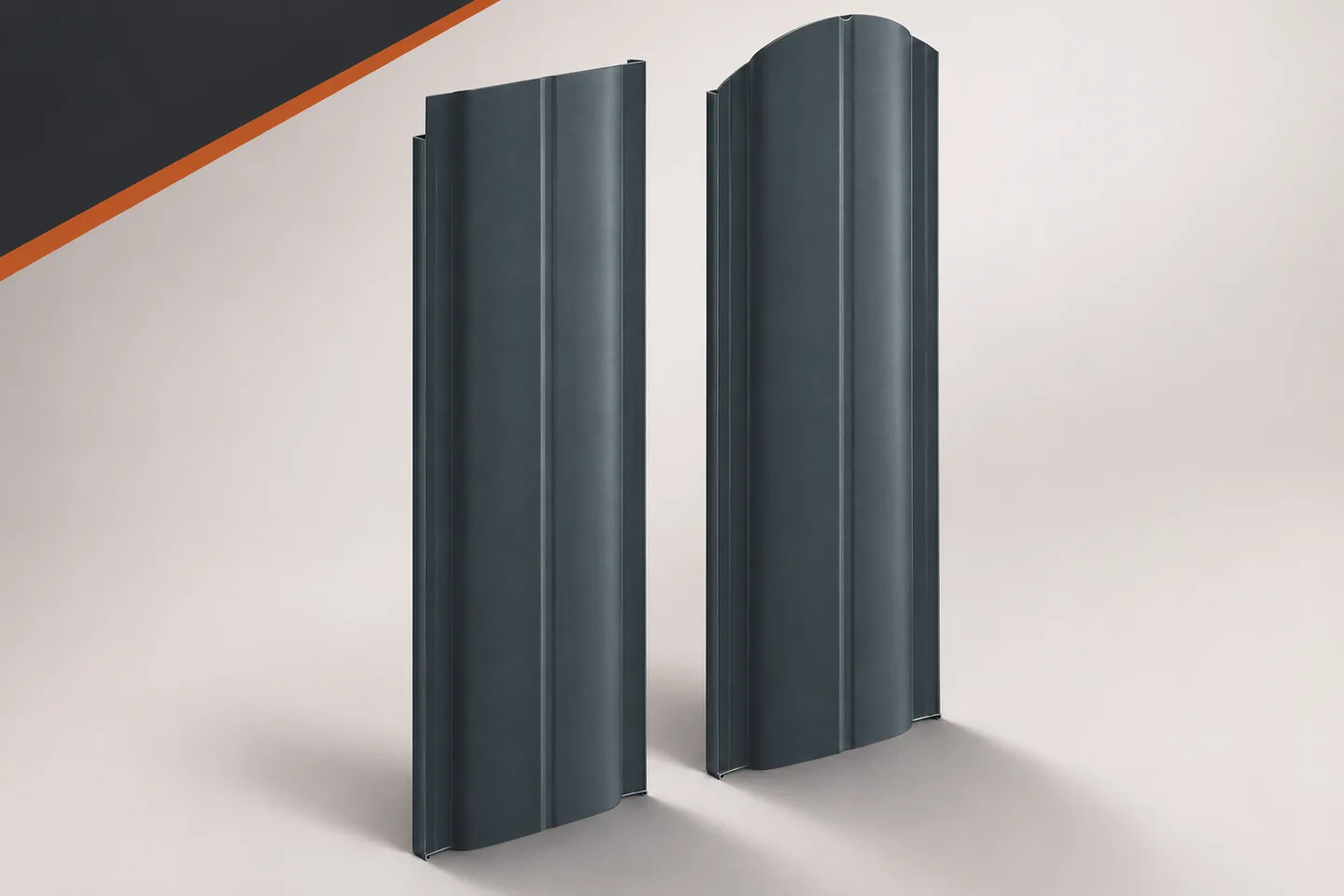
The infill creates the visible surface
The infill also transfers actions to the fixing points. It is not an element entirely free of loads. The difference lies in its function within the whole system. A thin picket should not be treated on its own as a post, beam or support for additional equipment. A similar colour does not mean a similar technical role.
The rails collect loads from the pickets
In a vertical arrangement, the pickets are fixed to horizontal supports. Their position affects the length of unsupported sections and the behaviour of the whole infill. A suitable structure therefore does not come down to two arbitrary strips of metal. It must match the planned fence geometry and the system instructions.
In a horizontal installation, the support arrangement is different. It is not enough to rotate the design without checking the lengths of the elements and the fixing points. Metal pickets should be supported in the manner intended for the specific application. The length available in production is not automatically the permissible distance between supports.
The posts and their fixing complete the load path
The bay supports transfer forces to the posts and on to their foundations. The condition of the substrate and the execution of this part matter for the stability of the fence. Their quality cannot be assessed by touching a single picket. The design should therefore cover the whole, including elements hidden after completion of the works.
With a fence being renovated, it must be checked what has actually remained serviceable. A post standing straight may require assessment of its connections or protection. There is no basis for retaining every old structure simply because the new pickets are light. A change in the infill surface also affects the wind action.
The fastener is part of the system, not a minor detail
A screw or rivet connects the picket to the support. It should match the thickness and type of the materials being joined. Proper distribution of the fixing points is also needed. An unsuitable element can damage the thin sheet or fail to provide the expected connection. Matching the colour of the head alone is not enough.
When purchasing, it is good practice to treat the fasteners as a separate technical item. Determine their type and quantity in accordance with the system. Do not replace them with a random stock from a previous build. An apparent saving on a small component can make later repair and assessment of the cause of any loosening more difficult.

Additional equipment needs its own solution
A mailbox, heavy planter or bike rack can introduce loads that were not anticipated for the picket. Such additions should not be screwed to thin sheet metal simply because it is in a convenient place. A separate supporting element connected to the structure may be needed.
This also applies to climbing plants and seasonal covers. They change the weight or the surface exposed to wind. Sheet metal pickets should not take on new tasks without assessment. It is worth planning the intended equipment in advance and indicating to the contractor the places where it is to be installed.
The gate and pedestrian gate require looking at the whole leaf
In a moving element, the pickets work together with the frame. Its geometry, mass and support affect the operation of the hinges or track. Replacing only the infill must not ignore these relationships. A change from an open arrangement to a dense one, or the addition of a second row, is particularly significant.
If the leaf drops or rubs, the cause need not lie in the pickets. It may relate to the frame, the post or the fittings. Repair should begin by establishing the source of the problem. Adding more fasteners to the infill is not a universal method of restoring correct gate operation.
What should be clear before the quote
Determine whether you are ordering only the pickets, a complete bay or the entire fence with installation. These three scopes cover different components and responsibility for their selection. For the infill alone, data on the existing structure is needed. For a new fence, the arrangement of supports and the method of setting them must also be established.
Metal pickets are an attractive way to finish a fence if they work within a suitable system. The ready-made coating and various sections make it easier to match the appearance. A durable result, however, requires the infill, fasteners and structure to work together. It is worth asking about each of these parts, even if only the front is most visible in the visualisation.
7 branches. Materials closer to your project.

- SEROCK — Dzierżenin 34 E
- BŁONIE — ul. Sochaczewska 138A
- RADOM — ul. Grobickiego 8
- ŁÓDŹ — Natolin 8
- OLSZTYN — Barczewo, ul. Prosta 9
- WROCŁAW — ul. Jerzmanowska 10C
- GORZÓW WLKP. — ul. Zielona 33/34