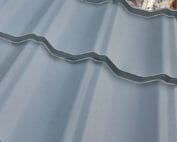
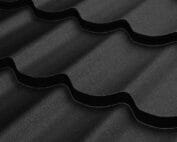
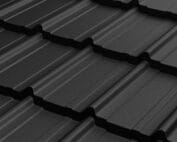
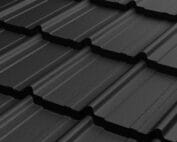
Tile-effect metal roofing
Choosing between single- and double-module tile-effect sheets
In brief
In Poland, the choice between single-module and double-module metal roof tiles depends on roof geometry and how the work is organised, not on the number of modules alone. A module is a repeating section of the profile measured along the roof slope; a single-module panel has one such row, a double-module panel two. Check on a cutting plan whether the smaller element makes valleys and dormers easier, and whether the larger one speeds up laying on simple slopes. Also compare coverage width and the permitted laying direction. Leave the format decision to the designer, as the difference does not determine quality.
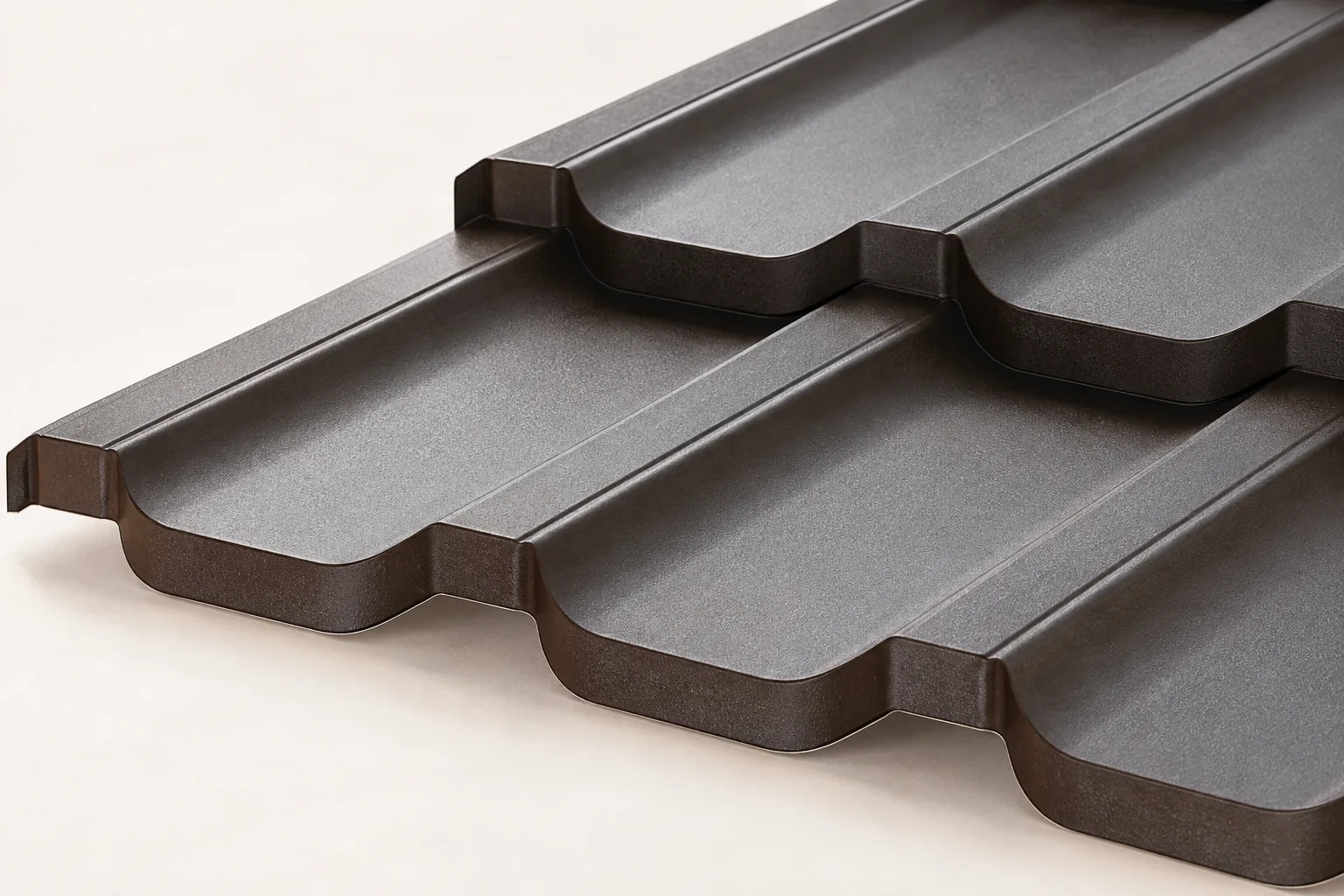
What does one module actually mean?
A module is a repeatable section of the pattern measured along the roof slope. A single-module panel contains one such row, and a double-module panel two. The total length of the element also includes the parts needed for the joints. That is why it cannot be calculated solely by multiplying the length of the visible profile.
Width works in a similar way. The dimension of the whole panel is greater than the width that the element actually covers once the overlap is laid. When ordering, you have to use the covering area. The number of pieces in a pack alone or the price of a single piece does not yet allow you to compare the cost of two different formats.
Which panel is better suited to a complex roof?
Smaller panels make it easier to plan the work at roof valleys, dormers and short sections of the slope. In such places, the way cut elements are used matters. Not every cut-off fragment can be turned around and moved to the other side of the roof. This is limited by the direction of the profile and the construction of the locks and overlaps.
The advantage of a format is worth checking on a cutting plan. The difference does not result solely from the number of modules, but also from the covering width and the permitted laying direction. On a simple gable roof, the benefit of very small elements may be small. On a slope with numerous breaks, the balance may look completely different.
How does the format affect the speed of installation?
A double-module panel covers a larger area than a single-module panel from the same family. It therefore requires fewer elements to be carried and positioned on a given slope. However, this should not be converted directly into half the working time. Preparing the substrate, forming the eaves and installing the flashings remain just as important.
A smaller panel is sometimes more convenient when bringing material onto the roof and working in a confined space. A larger one has a larger area exposed to the wind. The organisation of the workplace must take account of the weather and safe working practices. An experienced team chooses the laying sequence according to the system instructions, not the size of the stack of sheets.

Does more joints mean worse tightness?
Correctly designed joints are part of the roofing system. Their number alone does not determine the roof’s tightness. What matters is the shape of the edges, the required overlap, the roof pitch and the precise fit of the panels. Even a large sheet will not protect against water if the installer details the chimney or roof valley incorrectly.
Fixing instructions must not be carried over between models that look similar. Screw layout and the way joints are run may differ. Checking the first rows helps avoid a cumulative pattern shift. Correcting a large deviation by stretching subsequent panels can deform the surface.
How do you compare price and appearance?
A free quote should cover the same roof area in both formats. The comparison should include the number of panels, waste, fixings, flashings and transport. Compare the same steel thickness and an equivalent type of coating. Otherwise the price difference may result from the material protection rather than its dimensions.
From ground level, the number of modules in a panel need not be visible. Both formats can form a similar arrangement of rows. The impression of the roof is determined more by the height and profile of the pressing, the colour and the gloss. It is worth viewing a sample outdoors, because screens and artificial light change the perception of colour.
Waste should be accounted for separately from the reserve intended for future repairs. The reserve is to remain dry and undamaged, while waste is often a piece without a full joint. The contractor should explain how much material from the order will end up on the roof. This allows the actual cost of the covering to be assessed, instead of comparing only the catalogue price of the panel.
What should you check before placing the final order?
Determine whether the chosen format fits within the project assumptions and the range of pitches permitted for the product. Check the batten spacing, the details of the first row and the availability of matching flashings. If the roof is to be carried out in stages, plan for safe storage of the panels. A damp, tightly packed bundle is not a good store.
Ask the contractor to point out a specific benefit of the proposed format on your roof. It may be more convenient cutting, simpler handling of the material or fewer elements on an open roof slope. Such an argument is more useful than a general assurance that one or two modules always mean a better choice.
7 branches. Materials closer to your project.

- SEROCK — Dzierżenin 34 E
- BŁONIE — ul. Sochaczewska 138A
- RADOM — ul. Grobickiego 8
- ŁÓDŹ — Natolin 8
- OLSZTYN — Barczewo, ul. Prosta 9
- WROCŁAW — ul. Jerzmanowska 10C
- GORZÓW WLKP. — ul. Zielona 33/34