Steel profiles and structures
A hole in a profile is no small matter. How do connections affect the structure?
In brief
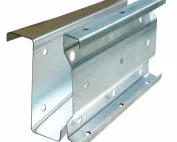
A bolt is small compared with a purlin several metres long. Nevertheless, it is around the bolt that forces pass from one element to another. Cold-formed profiles therefore require carefully designed connections. This applies both to roof z-purlins and to wall channel sections. Holes, washers and intermediate plates form a system with a specific task. Randomly matching components does not guarantee that this task is fulfilled. On a structural drawing, a connection often looks like a point. In the building it consists of plates, holes and fasteners of specific dimensions. Each part has limitations. A thin web may be sensitive to local bearing or tear-out. For this reason, a strong bolt does not yet guarantee an equally strong joint. The entire load transfer path is assessed.
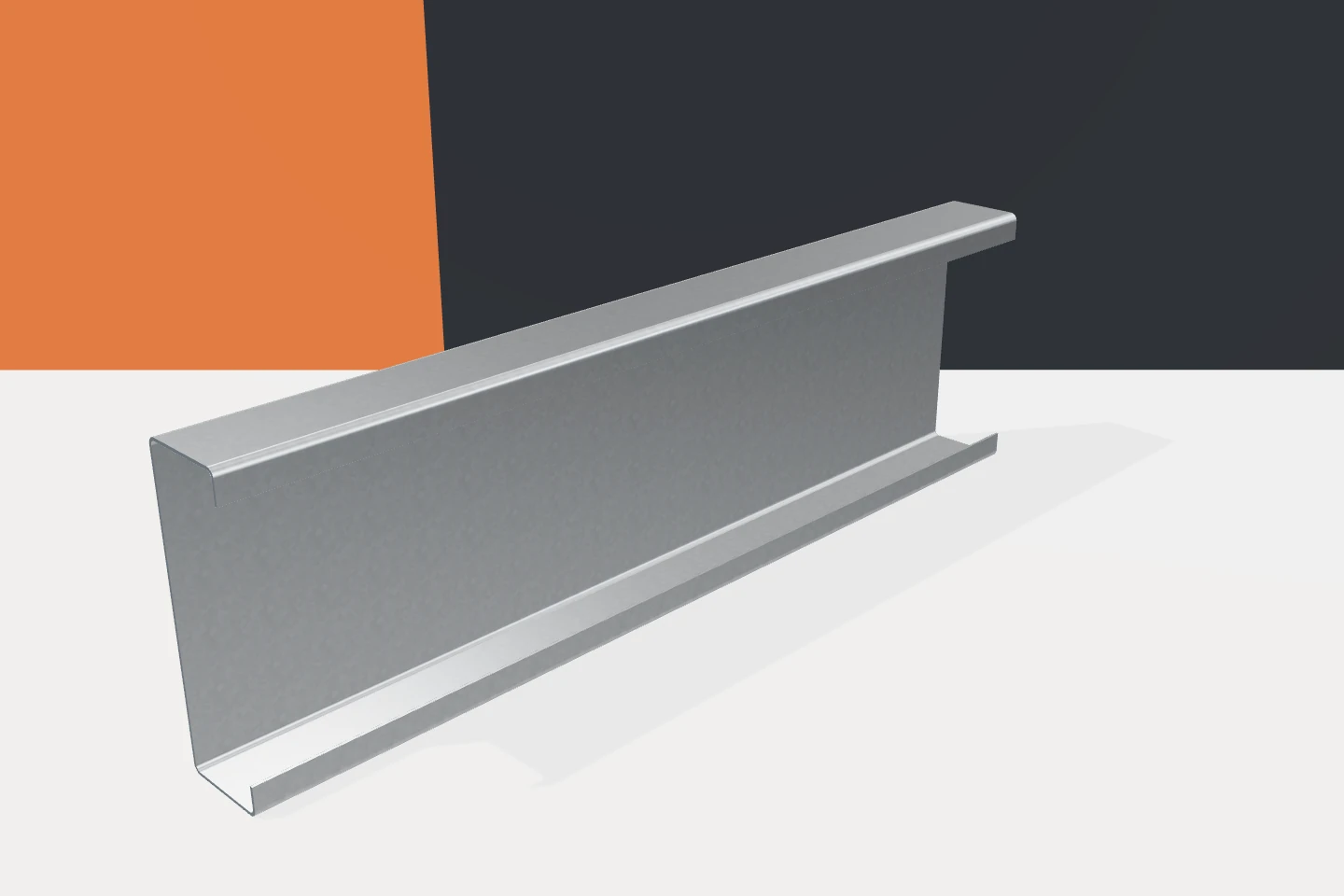
The force must pass through the actual detail
The position of the force also matters. An eccentric connection can produce additional effects in the profile. In an open channel or Z-section, the tendency to twist must be taken into account. Galvanised profiles do not lose these characteristics through the presence of a coating. The detail drawing shows where the element is to be supported and how it is to be fixed. It is not merely an instruction for the aesthetic assembly of steel.
A hole changes the local cross-section
Making an opening removes part of the material. Its significance depends on the location, size and the forces acting. There is therefore no single universal zone in which every profile may be drilled without agreement. The areas around supports, laps and edges are particularly important. Nor should it be assumed that a few small openings are always insignificant. Their arrangement can create a significant weakening.
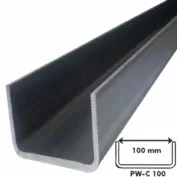
Slotted holes have their own applications and working conditions. They are not an arbitrary way of compensating for measurement errors. The design specifies their direction and their interaction with the fastener. Zeds, channels, sigma and omega profiles may have different hole-forming possibilities. In each case it must be checked whether the opening remains in the intended plane and distance from the bend.
Sheet thickness influences the choice of fastening
The fastener must be suitable for the materials and thicknesses present in the given joint. This applies to bolts, self-drilling screws and other solutions. It must not be assumed that a product used for fixing the cladding is also suitable for connecting purlins to the frame. These are different tasks. The technical data and the requirements of the structural documentation remain essential.
In the case of screws, the drilling capacity and correct seating also matter. Additional length does not replace suitability for the substrate. For bolts, the grade, diameter and intended components of the assembly are important, among other things. Cold-formed profiles must be connected according to a specified solution. Changing one type of fixing for another requires verification, even if installation seems easier.
Prefabrication helps provided the drawings match
Factory hole-forming can reduce work on site. The element arrives prepared for a specific location. The condition, however, is up-to-date documentation. If the support plan changed after production was approved, the finished holes may no longer fit. This is a coordination problem that the accuracy of the machine alone does not solve. It is therefore worth keeping an eye on revision numbers and part markings.
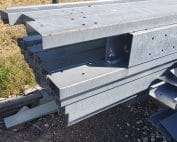
Before assembly, the component is compared against the drawing and the material list. It is also checked whether it has been turned or moved to another bay. Galvanised profiles of similar height may differ in their hole patterns. Clear labels are a practical control tool here. They help avoid reworking a correctly made component that has ended up in the wrong place.

When the openings do not fit, a diagnosis is needed
The first step should be to stop assembly of that joint and establish the cause. The support dimensions, the profile marking and the side on which it is set must be checked. Only then can the permissible method of correction be assessed. Enlarging holes without diagnosis may conceal one error and create a new one. Forcing the shape of a thin web is particularly dangerous.
Likewise, welding on an arbitrary piece of sheet metal is not a neutral correction. It changes the structural system and may damage the surface protection. If the design provides for welding, the correct technology and post-work protection are required. A weld should not be treated as a universal answer to every non-conformity. For cold-formed profiles, the correction must be a deliberate technical change.
The installation of fasteners is subject to inspection
Placing all the bolts in the holes does not in itself complete acceptance. The completeness of the set, the fit of the components and conformity of the work with the instructions must be assessed. Excessive local tightening may deform a thin profile. An unfinished connection, in turn, may not provide the intended behaviour. The tightening method should correspond to the specific type of fixing.
There is no single torque value suitable for all connections of zed and channel sections. The parameters follow from the fastener used and the documentation. The check also covers the support and bracing in the vicinity of the node. A node does not act in isolation from the structure. Even correct bolts will not replace a missing stabilising element or an incorrectly set support.
A good connection saves time through predictability
The benefit of prepared profiles lies in repeatable assembly. The contractor should know which component goes in a given place and how it will be fixed. Well-described details reduce the number of questions at height. They also facilitate acceptance and later inspection. This is a real advantage of prefabrication that cannot be achieved merely by increasing the number of bolts.
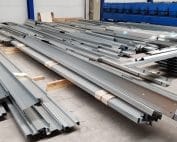
When ordering, it is worth checking the complete set of profiles and accessories. Omegas may need different fixings than Z purlins, and sigma profiles different intermediate sheets than channel sections. Galvanised profiles retain their advantages when the connections match their geometry. In a structure, what matters is a continuous load path. Every hole should have a justified place in it.
7 branches. Materials closer to your project.

- SEROCK — Dzierżenin 34 E
- BŁONIE — ul. Sochaczewska 138A
- RADOM — ul. Grobickiego 8
- ŁÓDŹ — Natolin 8
- OLSZTYN — Barczewo, ul. Prosta 9
- WROCŁAW — ul. Jerzmanowska 10C
- GORZÓW WLKP. — ul. Zielona 33/34