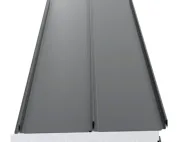
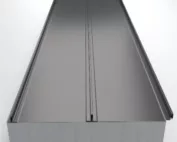
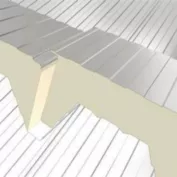
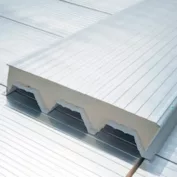
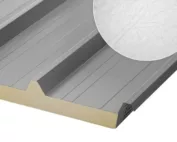
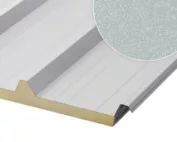
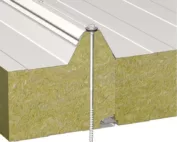
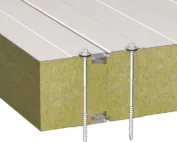
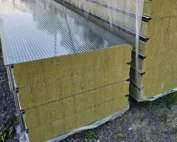
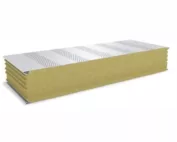
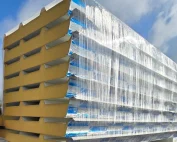
Panels in use
How much does an Oborniki sandwich panel cost and what lies behind the name?
In brief
The name “Oborniki panel” is a colloquial term for a sandwich panel. It does not describe a single core or a single quality. In this group you will find wall and roof elements with different parameters. The price therefore depends on the specific set of features. Before purchase, it is necessary to establish what the partition is to do and which items the offer includes. The panel consists of a core bonded to facings. Popular core groups are PIR, PUR, mineral wool and EPS. The materials differ in thermal conductivity, behaviour in fire and mass. The word “Oborniki” alone does not allow any of these properties to be assessed.
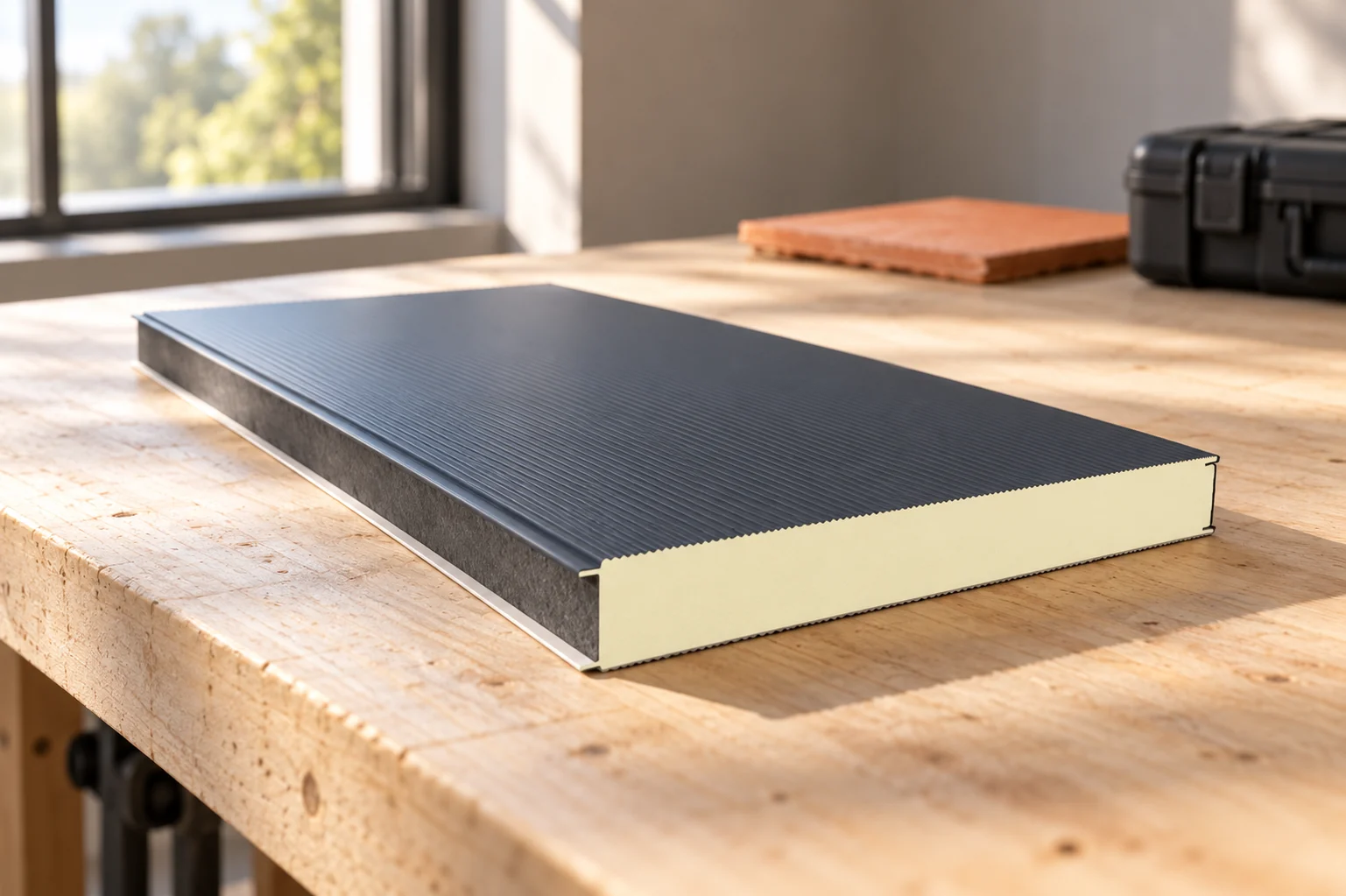
How do you identify the right type of panel?
Check the intended use separately. A roof needs a profile and connections suitable for water drainage. A wall may have visible or concealed fixing. The cold-storage variant is selected for the entire sealed enclosure system. Do not order solely by colour and thickness.
Why does the same thickness not mean the same effect?
For example, a 100 mm thick wall PIR panel may have a U-value of 0.19 W/(m²·K). For the selected mineral wool panel of this thickness, the value is 0.44 W/(m²·K). These are parameters of two specific variants. They do not constitute a table for the entire market.
A mineral wool panel, on the other hand, may meet other fire-related requirements. Do not choose a winner based on a single number. A comparison makes sense when both solutions meet the project conditions. Only then can cost and installation implications be assessed.
How do you calculate the amount for the panels alone?
Assume, for calculation purposes only, the purchase of 96 m² of material at €34.72 net per m². The price of the panels will be €3,333.12 net. This is not a market offer. If the cutting plan requires ordering 104 m², the same rate already gives €3,610.88 net. The difference results from the quantity, not from a price increase.
Check whether the supplier prices the covering area and how they calculate lengths. Window openings do not always reduce the amount of material purchased. The panel is often ordered in full lengths, and the cut-out is made later. Waste therefore has its own cost.
What do you pay extra for beyond the core?
The price varies with the thickness of the steel facings, the type of coating, the colour and the profiling. Short runs and non-standard lengths can also matter. A coating intended for a mild interior may not be sufficient where frequent washing or aggressive vapours occur.
When costing a complete enclosure, also include fasteners, seals, flashings, delivery and unloading. A long panel can reduce the number of joints, but requires different transport. For a small pavilion, the share of these expenses can be more significant than a small difference in price per m².
For cold-store panels, additional items may include connection details for the floor, walls and ceiling. It is not enough to buy thicker foam. A leaky joint will let moist air through, and this can increase operating costs even with a good parameter for the panel itself.

When does buying the cheaper option make sense?
Saving is reasonable when the material still meets the established requirements. In an unheated storeroom, insulation performance has a different significance than in a room used all year round. However, moisture, loads and fire safety must also be checked.
Do not switch to a thinner panel just because it matches in colour. A thinner core can change the load-bearing capacity and the method of fixing. An outlet offer requires a description of defects and confirmation of properties. A damaged lock is not treated as an ordinary cosmetic mark.
What should be compared when choosing a supplier?
Ask for the documents for the specific product and a written delivery schedule. Important points are the available lengths, the date, the unloading conditions and the possibility of replenishing flashings. “Off the shelf” should mean a confirmed batch, not general information on the website.
For several repeatable buildings, ask about batch consistency and a reserve for replacement. Even the same colour code may not ensure perfect visual consistency over time. Agree the method for reporting transport damage and the acceptance rules before payment.
How should the order be recorded to avoid misunderstandings?
Enter the application, core, thickness, cover width, lengths and number of pieces. Add the facings, coatings, colours of both sides and the required parameters. The list should also include connection elements. Such a description can be compared with the documents and the delivered batch.
In a hypothetical pavilion in Żagań, it is worth comparing the price for two complete wall variants. One may have better insulation performance, the other different fire characteristics. Assess the difference against the actual function of the room, not according to the term “płyta obornicka” alone.
What else is worth asking about
Does every Oborniki panel have a foam core?
No. The colloquial term also covers panels with mineral wool and other variants. The core type must be stated in the offer and in the marking of the specific product.
Is the net price enough to compare offers?
It is useful if you are comparing the same quantities and scope. Check taxes, transport, unloading and accessories separately. Two identical rates per m² can produce different totals for the whole order.
7 branches. Materials closer to your project.

- SEROCK — Dzierżenin 34 E
- BŁONIE — ul. Sochaczewska 138A
- RADOM — ul. Grobickiego 8
- ŁÓDŹ — Natolin 8
- OLSZTYN — Barczewo, ul. Prosta 9
- WROCŁAW — ul. Jerzmanowska 10C
- GORZÓW WLKP. — ul. Zielona 33/34