Mineral wool in panels
Is a 60 mm wall panel with mineral wool enough, and what about the 40 mm version?
In brief
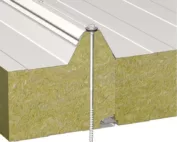
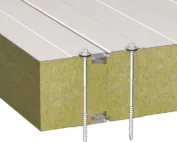
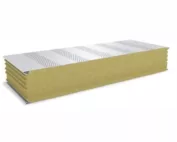
The 60 mm panel with mineral wool is available in selected wall families. However, it should not be treated as a solution for every small building. Insulation performance, load-bearing capacity and fire requirements must be checked. The 40 mm offer may relate to a different core. Before comparing prices, it is worth confirming which product is actually being sold. No. The thickness range depends on the panel family. In some catalogues, wall panels with mineral wool start at 60 mm, in others at 80 mm or more. A single availability table for the whole market should not be created. The dimension must be confirmed for the specific product, joint and facings.
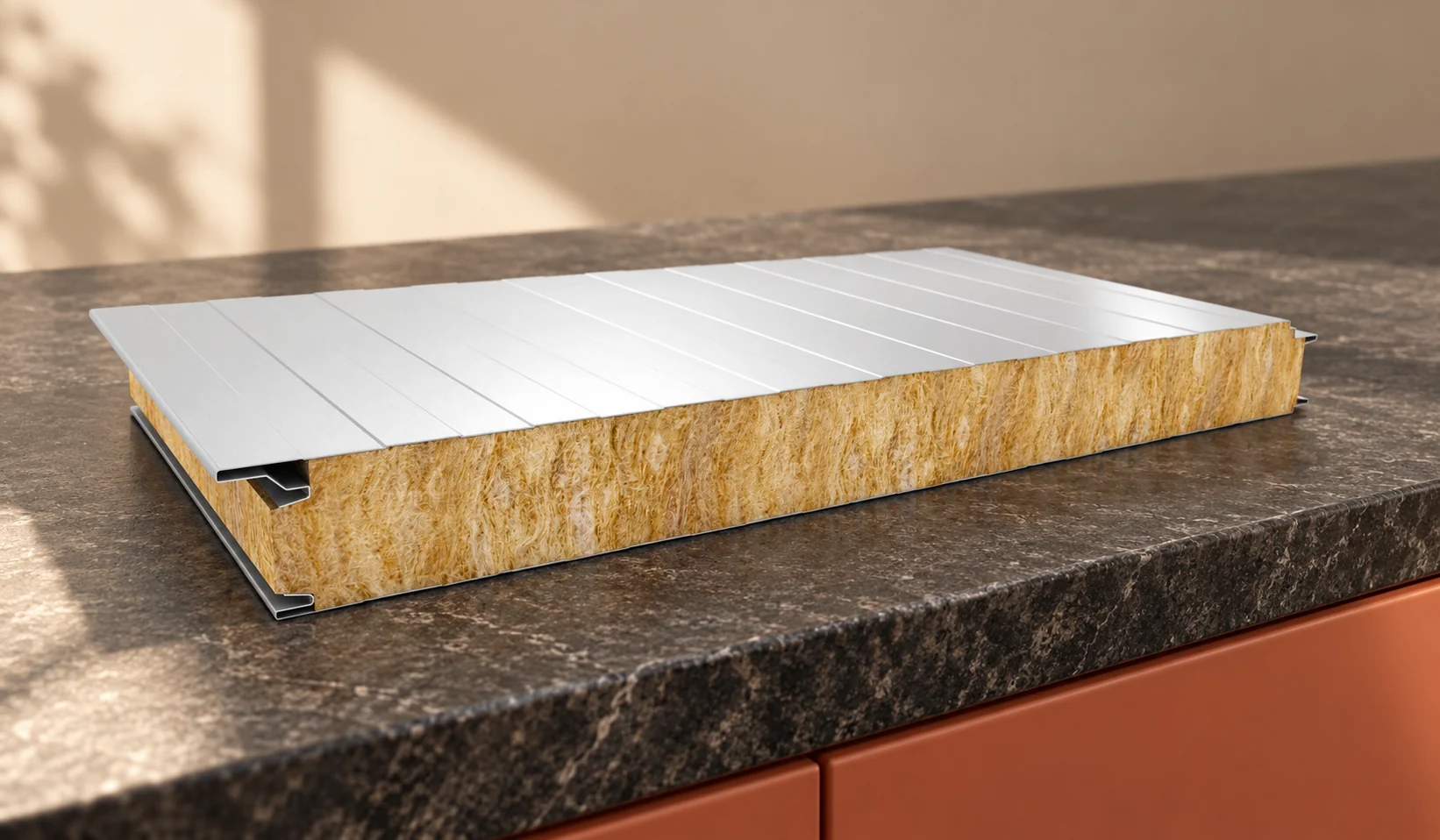
Is 60 mm a universal minimum thickness?
The same applies to the 40 mm version. That number alone in a listing does not prove that the core is mineral. Thin panels may have foam or another filling. You need to obtain product identification and documentation. The colour of the edge in an unclear photo does not replace this data.
What insulation performance does an example thin panel have?
In one wall family, the variant with 60 mm mineral wool has Uc 0.66 W/(m²·K). Its mass with 0.5/0.5 mm steel facings is 14.1 kg/m². These are the parameters of a specific configuration. They should not be used to describe any panel with a similar core.
For comparison, in the same family 100 mm has Uc 0.39. With an identical temperature difference, the flow through a 60 mm field will therefore be greater. This does not automatically mean that a thin panel is unsuitable. It shows that the choice must take into account the operating temperature and the requirements of the whole wall.
For a 20 m² field and a temperature difference of 20 K, a simple calculation gives 264 W for U 0.66. At U 0.39 it is 156 W. The result relates only to this field. It does not include losses at joints or air exchange.
Where can a thin panel be justified?
It can be considered in a specific unheated enclosure or internal partition if it meets all the requirements of the task. However, the word “warehouse” should not be treated as an exemption from selection. Stored materials may require stable conditions, and the wall still works under wind load.
In a seasonal pavilion, it is worth establishing whether the user plans later heating. An apparent saving at the outset may make it difficult to change the function. The thickness is selected for a realistic building operating scenario. If the room is to be regularly heated in winter, the variants must be calculated and the decision should not rest on the small area alone.
Does the presence of mineral wool ensure the required fire resistance?
No. The reaction-to-fire class of the finished panel is a different parameter from the wall’s resistance. In the example table for 60 mm, the EI resistance may be marked NPD. This means there is no declared value for that property in that entry. On this basis alone, a class from the thicker variant cannot be assigned.
If the project requires a specific partition, the documentation for its build-up must be checked. Spans, orientation and connections matter. A thin panel with a mineral core is not automatically a substitute for a thicker classified wall. Such a decision should not be made solely on the basis of an auction description.

How do you check load-bearing capacity and fixings?
The panel has defined capabilities for action between supports. Thickness alone does not give a universal purlin spacing. Tables for the correct variant and the building loads are needed. Fasteners and their anchoring are assessed separately. The panel’s low weight does not eliminate wind suction.
For a small structure, attention should be paid to support widths and details at openings. A thin panel still needs correct edge closure. It cannot be installed on a random frame on the assumption that it ‘doesn’t weigh much’. Additional equipment should have its own designated support.
How do you compare buying 60 mm with a thicker variant?
Prepare the cost of the entire wall for two solutions. Include the quantity of material, the structure, fasteners and flashings. Then compare the U-value and the required classes. The difference in the price of the panels alone may be only part of the surcharge. It is also worth checking the cost of a later change in the building’s use.
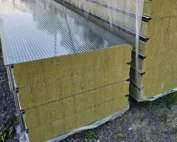
Before ordering, confirm the available lengths, coatings and documents. If you are considering outlet stock, assess the actual condition of the core and the locks. In the case of a thin panel, damage should not be justified by lower building requirements. The material must retain the function for which it was selected.
In the enquiry, use a full description: mineral core, thickness, facings, coverage and required parameters. This reduces the risk of receiving a quote for a different type of panel.
What else is worth asking about
Does every 40 mm panel have a mineral wool core?
No. This thickness may relate to other cores. The identification and documentation of the specific product must be checked.
Is 60 mm enough for a heated room?
You cannot answer without the conditions of use and the design. You need to assess the required U-value, thermal bridges, moisture and the other heat losses of the building.
7 branches. Materials closer to your project.

- SEROCK — Dzierżenin 34 E
- BŁONIE — ul. Sochaczewska 138A
- RADOM — ul. Grobickiego 8
- ŁÓDŹ — Natolin 8
- OLSZTYN — Barczewo, ul. Prosta 9
- WROCŁAW — ul. Jerzmanowska 10C
- GORZÓW WLKP. — ul. Zielona 33/34