Mineral wool in panels
How to choose fixings for insulated wall panels with a mineral wool core?
In brief
A screw for a panel with a mineral wool core must connect the panel to the correct support and maintain the sealing of the fixing point. It is not selected solely by core thickness. The steel facings, the material of the structure and the wind load are important. The number and arrangement of fasteners are determined for the specific wall. A universal number of pieces per metre can be misleading. The panel thickness, the type of fixing and the material of the support must be known. Steel, timber and a subframe fixed to masonry place different requirements. With steel, the drilling range of the fastener and the thickness of the element are important. A screw intended for a thin wall is not automatically suitable for a thicker section.
What information is needed to choose a screw?
The length must account for the entire assembly and the required anchorage. It is not enough to add an arbitrary allowance to the panel thickness. The diameter, thread shape and intended washer are also important. Selection should use the fastener documentation and the panel system. A similar head appearance does not mean the parameters are compatible.
How do visible and concealed fixings differ?
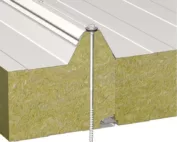
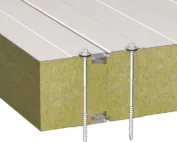
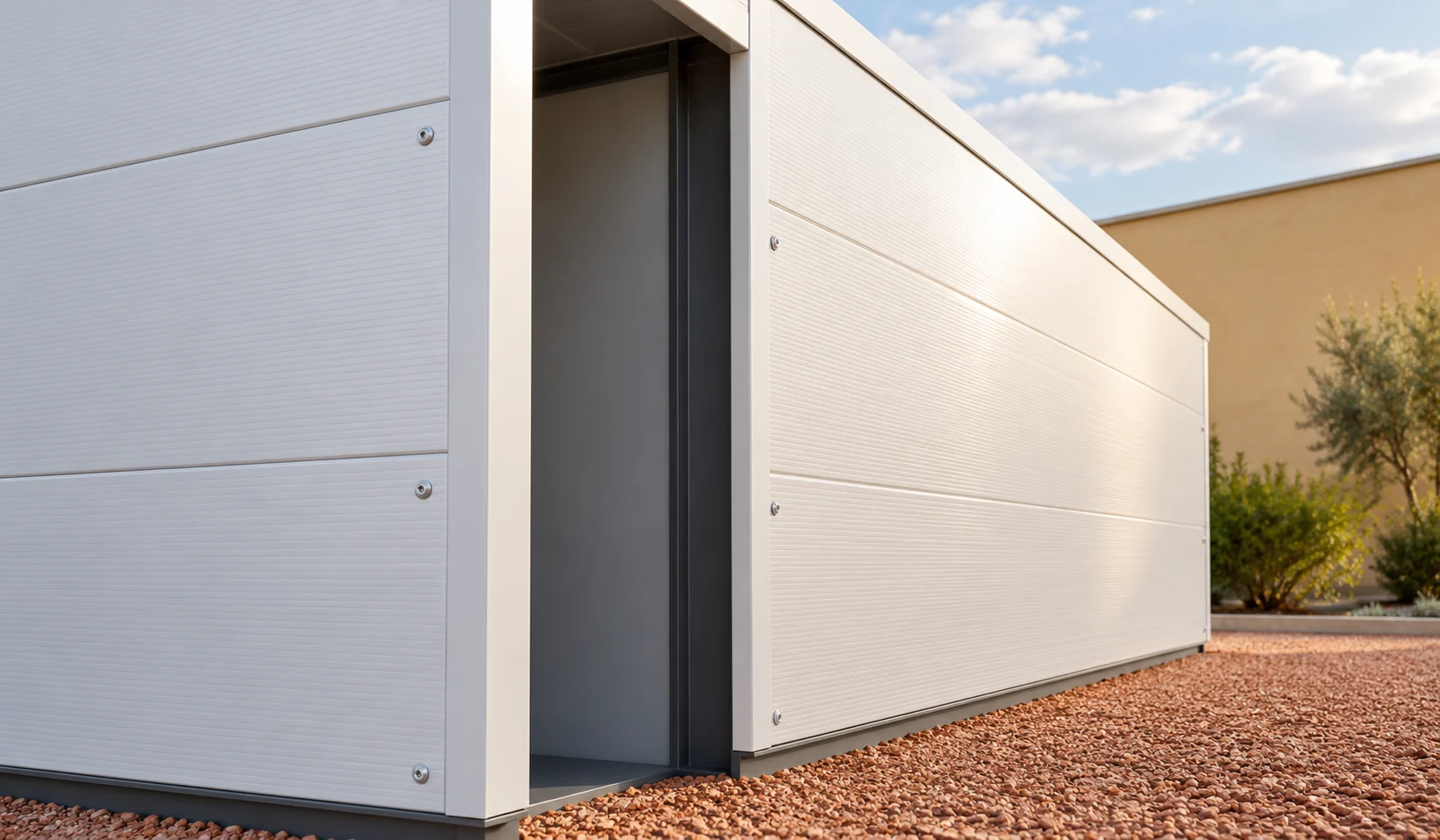
In the visible fixing variant, the fastener passes through the designated point in the cladding. In the concealed arrangement, it sits within a suitably shaped connection zone. The geometry and the way forces are transferred are part of the system. These solutions should not be swapped by independently relocating the hole.
Concealed fixing helps achieve a calm elevation pattern. However, it may require strict adherence to the installation sequence and additional elements to distribute the pressure. The solution for the specific panel family must be checked. At corners and openings, the detail may differ from a simple wall field.
Why does the number of screws depend on the location on the building?
Wind does not act uniformly over the entire surface. Greater effects may occur in edge and corner zones. The fixings must transfer forces to the supports, and these in turn to the structure. The panel span and its arrangement also matter. Therefore, an average number of pieces per m² serves at most for a preliminary budget.
The final layout should show fasteners at every support and in every zone. The pull-out resistance from the substrate and the pull-through resistance through the cladding must also be checked. A strong steel structure alone does not guarantee a correct connection. The weakest element in the assembly may be precisely at the washer or the thin wall of the support.
What role does the seal play and what is the correct pressure?
The sealing washer is intended to limit water ingress at the fixing point. It must be correctly positioned and pressed down. Insufficient pressure leaves a leak. Excessive pressure can deform the cladding or damage the seal. The screw should be set according to the intended geometry, without accidental skew.
The entire wall should not be corrected by repeatedly tightening all the heads. The condition of the connection must first be assessed. In the event of damage, replacement of the fastener or another agreed repair may be necessary. Additional mass around the head is not automatically a durable solution. It may hinder inspection and not eliminate the substrate fault.

What should be checked during installation?
The supports should be located in the intended plane. The panel should not be pulled to a large unevenness by force of the screw. The required edge and hole distances must be maintained. Drill swarf is removed from the surface. Leftover metal particles can cause rusty marks on the finished façade.
The flashings fastenings do not replace the main panel fasteners. Each group has its own task. Likewise, the tape on the support is not an arbitrary substitute for the seam seal. The contractor should distinguish these elements on the drawing and in the delivery. Mixing their functions leads to a seemingly complete but non-compliant arrangement.
How should the acceptance of connections be documented?
It is worth checking the fastenings before covering hidden zones. The acceptance includes the fastener type, its position, number and the condition of the cladding. A photo of the finished façade from a distance will not show all the details. For a series of similar pavilions, a short checklist for each wall is useful.
Keep the specification of the screws used and information about the substrate. This will facilitate the selection of a compatible element during later repair. If a change from the design has been made, it should be agreed and recorded. It is not worth relying on a verbal assurance that another screw ‘holds just as well’. The connection parameters require specific confirmation.
It is worth re-inspecting the connections after other teams have completed their work. A impact on the panel or accidental drilling can change the condition of a previously accepted location.
What else is worth asking about
Is a screw longer than the panel thickness sufficient?
No. Proper anchoring, the drilling range and compatibility with the substrate are required. Length is only one of the parameters.
Do all the heads on the wall transfer the same forces?
No. Panel fasteners, flashings and other details can perform different functions. They should not be counted as one interchangeable group.
7 branches. Materials closer to your project.

- SEROCK — Dzierżenin 34 E
- BŁONIE — ul. Sochaczewska 138A
- RADOM — ul. Grobickiego 8
- ŁÓDŹ — Natolin 8
- OLSZTYN — Barczewo, ul. Prosta 9
- WROCŁAW — ul. Jerzmanowska 10C
- GORZÓW WLKP. — ul. Zielona 33/34