Steel profiles and structures
Z, C, sigma and omega steel sections: what does the shape tell you?
In brief
Cold-formed profiles are easy to recognise by their cross-section. It is harder to judge from this what a specific element is suitable for. Z-purlins, C-sections, sigma and omega profiles can have a similar length and a silver surface. Nevertheless, they behave differently under load. The letter in the name helps to organise the range, but does not replace technical data. It is worth knowing where the description of appearance ends and structural selection begins. Cold-formed profiles are produced by shaping a strip of sheet steel. Successive bends form the web, flanges and any stiffeners. It is not just about giving the element an attractive appearance. The distribution of steel in the cross-section affects its stiffness. A flat strip and a section formed from it do not perform in the same way. This allows galvanised profiles to serve as lightweight structural elements.
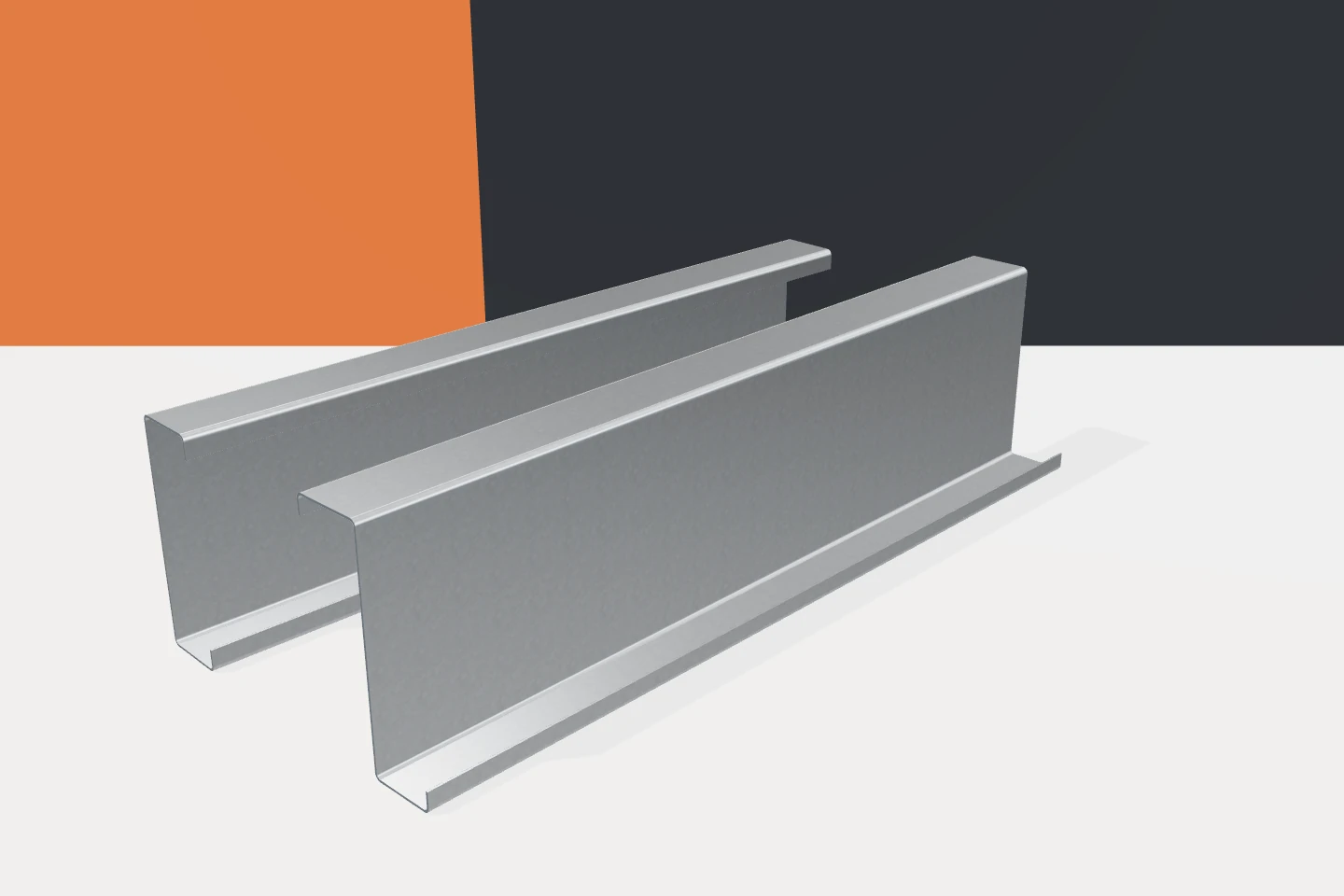
The sheet steel takes on a three-dimensional form
The term “cold-formed” on its own describes the method of forming. It does not indicate a specific steel grade or type of protection. Various materials and coatings appear in the quote. Therefore, when comparing two components, the full designation must be read. The external dimensions are only the first part of this information.
The Z-purlin has flanges on opposite sides
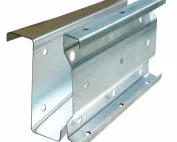
In a Z-profile the flanges extend from the web in two directions. The edges may have stiffening bends. Z-purlins are often used in roof purlin systems. In suitably selected systems, different flange widths allow components to be overlapped. This solution is part of a calculated scheme, not a free way of extending a beam.
Not every Z-purlin can be nested inside another. Flange widths, material thickness and bend radii must be taken into account. The orientation of the section on the roof is equally important. Rotating a component simply to make it easier to drive a fastener can change its structural behaviour. An installation drawing settles more than a resemblance to the letter Z.
The C-section forms an open side of the cross-section
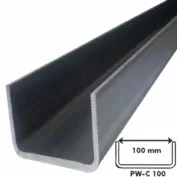
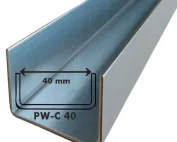
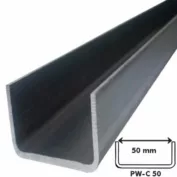
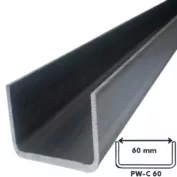
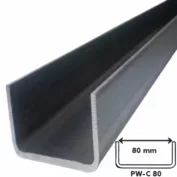
C-sections have both flanges on the same side of the web. In many structural C-profiles the ends of the flanges are additionally bent inwards. This geometry suits numerous solutions for wall rails, studs and framing. C-sections are also used as purlins where they are provided for in the design. Their application should not be limited to walls alone.
A cold-formed C-profile and a heavy rolled channel are different products. Even a similar height does not justify substituting one for the other. Thickness, steel grade, flange shape and the type of support are significant. Cold-formed profiles also require consideration of the stability of thin webs. This condition is often invisible to someone looking at the component alone.
Sigma uses additional bends
Sigma profiles can be recognised by the shaping of the web. Instead of a single flat wall, they have additional folds in it. Their purpose is to change the behaviour of the section and to limit the susceptibility of selected parts to deformation. Such cold-formed profiles are used in roof and wall structures and in other systems intended for the given profile series.
Sigma is not automatically stronger than every Z-profile and C-profile. The comparison must relate to specific dimensions, materials and structural schemes. A taller profile made of thin sheet may behave differently from a shorter profile made of thicker sheet. An additional stiffening rib alone does not guarantee greater load-bearing capacity. It only helps when it corresponds to the actual working conditions.

Omega covers various families of components
Omega profiles have a cross-section resembling a hat. The central part is offset from the plane of the two side feet. This arrangement facilitates the creation of substructures and fixing to the substrate. Low omega profiles are used, among other things, in grids and cladding details. There are also larger hat-shaped cross-sections with a structural function. They are not the same product.
This is an important distinction when purchasing. A small omega under cladding does not become a purlin just because it is made of steel. Height, thickness and the permitted method of fixing are what matter. Galvanised profiles must be selected according to the application described in the documentation. The family name allows you to find a group of products, but it does not define their load-bearing capacity.
Galvanising is a separate product characteristic
The zinc coating limits steel corrosion. However, it does not determine whether the element has a Z, C, sigma or omega cross-section. Each of these families can be available as galvanised profiles. When assessing durability, check the coating designation and the anticipated environment. Moisture, vapour condensation and contaminants can change the operating conditions.
A shiny surface does not prove greater load-bearing capacity. A matt surface does not necessarily indicate a defect either. The appearance depends, among other things, on the coating itself and its ageing. Scratches, coating loss and deformations require separate assessment. A dented web is not merely an aesthetic problem. A structural profile should retain the geometry assumed in the design.
How to read a quote without guessing
A good specification includes a cross-section drawing, wall thickness, material, coating and length. For elements prepared for installation, a hole plan is also needed. The information ‘channel 200’ leaves too many unknowns. This abbreviation may conceal products with different flanges, bends and properties. The same applies to Z-sections and sigma profiles.
The choice begins with the function of the element. Then the loads, support spacing, connections and required stiffening are determined. Only on this basis is the cross-section selected. This approach makes use of the real advantages of cold-formed profiles. It allows a light and well-organised structure to be achieved, without attributing magical properties to the letter in the name alone.
7 branches. Materials closer to your project.

- SEROCK — Dzierżenin 34 E
- BŁONIE — ul. Sochaczewska 138A
- RADOM — ul. Grobickiego 8
- ŁÓDŹ — Natolin 8
- OLSZTYN — Barczewo, ul. Prosta 9
- WROCŁAW — ul. Jerzmanowska 10C
- GORZÓW WLKP. — ul. Zielona 33/34