XPS insulation
XPS in an inverted roof. How does the build-up above the waterproofing work?
At a glance
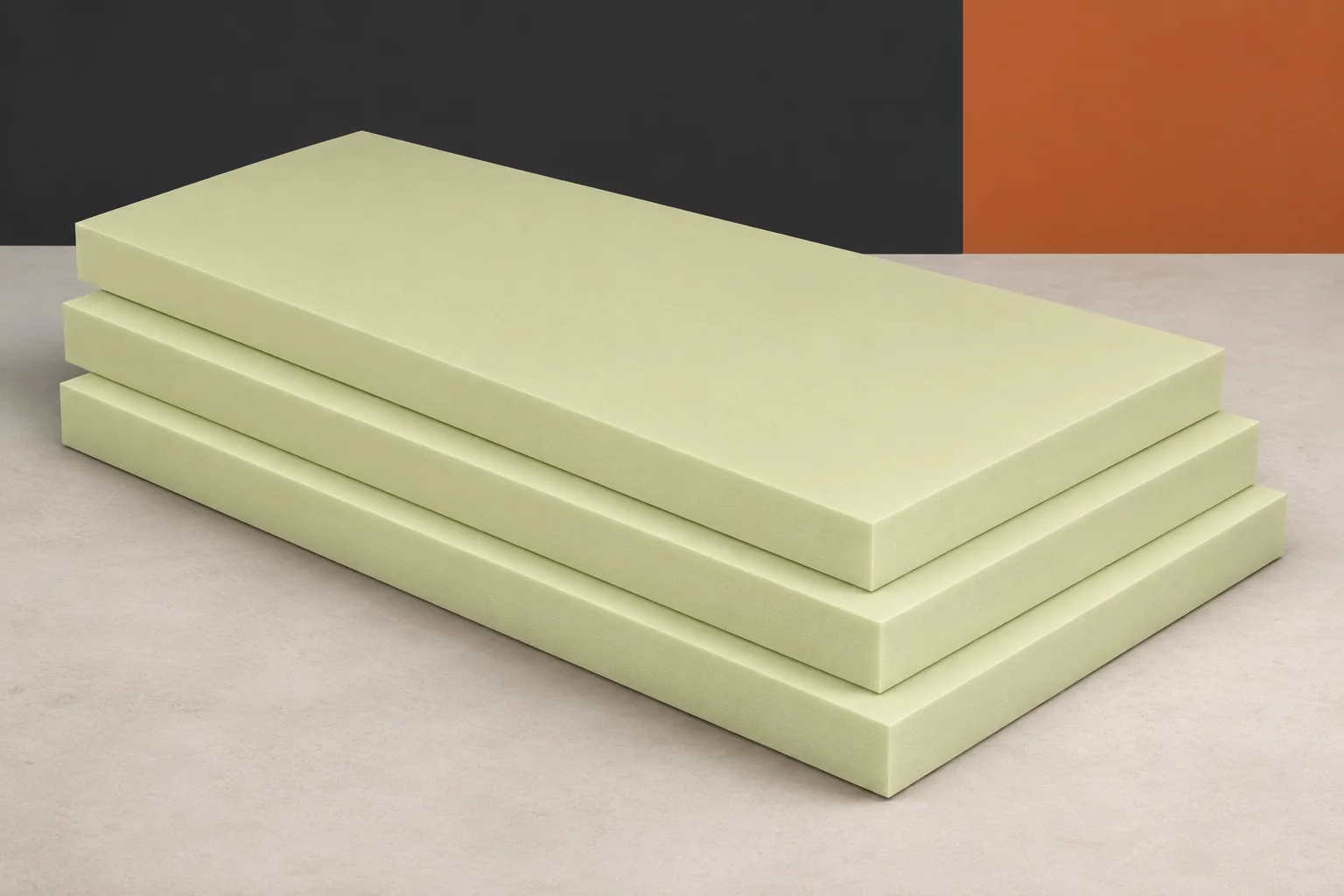
In an inverted roof, the XPS boards lie above the waterproofing. This changes the conditions under which they perform. The insulation comes into contact with rainwater and carries the weight of the layers laid above it. Extruded polystyrene is suitable for such applications in appropriately selected grades. However, the material name alone does not describe the whole solution. The term styrodur is also used colloquially, but when ordering, specific XPS properties and the roof design are needed. In a classic flat roof, the layer protecting against rain is above the thermal insulation. In the inverted build-up, the order is different. First, a tight waterproofing is applied to the prepared substrate, and only above it is the XPS laid.
What exactly is being inverted?
The boards reduce temperature fluctuations in the waterproofing and shield it from some of the mechanical effects.
This does not mean that any roof can be inverted simply by adding boards. The condition of the covering, the falls, the outlets and the load-bearing capacity of the floor structure must be checked. Extruded polystyrene is to be part of a defined system. Its thickness also affects the height of thresholds, parapets and flashings.
Why is XPS used on roofs?
The closed-cell structure limits water absorption by the boards. XPS also combines thermal insulation performance with the rigidity needed beneath the usable layers. These properties are useful where moisture and the weight of ballast occur above the covering. However, the boards should not be described as a material that never takes up water.
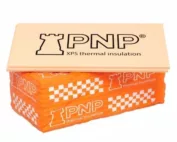
XPS variants differ in their parameters. Among the things to check are water absorption, behaviour under freezing and creep under pressure. Well-known XPS manufacturers include Finnfoam, FIBRAN and PNP. The choice among their offerings should follow from the documentation for the specific board, not from the colour of the material alone.
The lightness of the boards makes them easier to carry and lay out on the roof surfaces. The clear geometry helps to check the continuity of the thermal insulation before ballasting. A properly selected material combines these installation advantages with the resistance needed above the waterproofing.
Water must have a path to drain away
Rain can pass through the surface layers and reach lower levels. That is why the design includes drainage of water from the appropriate roof levels. XPS does not replace falls or outlets. A system without efficient drainage remains defective, even when boards with low water absorption have been used.
Joints between boards and areas around outlets require particular attention. Extruded polystyrene should not block the spaces intended for drainage. Filter layers must retain fine particles while at the same time allowing water to flow. Their type is not selected solely on the basis of the fabric’s grammage.
Thickness does not follow from the lambda value alone
A lower thermal conductivity coefficient helps achieve greater thermal resistance of the layer at the same thickness. In an inverted roof, however, dividing the thickness by lambda alone does not complete the calculation. Water flowing beneath the XPS can draw heat from the warmer layers. The design accounts for the effect of this phenomenon on the result.
The assumed water-flow-limiting layer and the way it is laid are also important. Not every geotextile performs the same function. XPS of a given thickness may be appropriate in one system and insufficient in another. A complete cross-section should be compared, together with its thermal assumptions.
Ballast and surfacing load the boards
Gravel, terrace slabs or green layers exert pressure on the insulation. Added to this are the service loads and actions assumed in the design. For XPS, the stress value in a short compression test is not the only important factor. Deformation accumulating over many years of service must also be assessed.
Extruded polystyrene must not be selected by simply converting the class into permissible tonnes. The designer checks the entire load-transfer path, the bearing surfaces and the load-distributing layers. Planters, technical equipment and paving supports require separate solutions.
One layer or several layers?
There is no single rule suitable for all roofs. The permissible number of XPS layers depends on the system solution and its documentation. A multi-layer arrangement requires an assessment of thermal and moisture conditions. It should not be created simply because thinner boards are left over in the warehouse.
The board edge also matters. The rebated edge makes it easier to maintain the continuity of the thermal insulation, but it does not create a watertight roof covering. A cut element loses part of its factory profile. How it is to be installed must be considered before work begins. XPS boards are laid on a prepared, level substrate without random voids.
Maintain compliance when substituting boards
When a replacement is delivered, more than thickness and compressive class must be compared. The water-related properties, the lambda value for the given thickness and the permitted laying method are important. A different edge profile can change consumption and the number of offcuts. If the covering area differs from the gross dimension, the bill of quantities must be recalculated. The conformity of the XPS with the design should be confirmed before unpacking the entire delivery. This avoids a situation in which missing square metres are replaced with a different variant at random.
What should be checked before covering the insulation?
Acceptance begins with the waterproofing. A leak hidden under XPS and heavy ballast is harder to find. Next, the conformity of the boards with the order, their condition and their laying at outlets and parapets are checked. It is worth recording the variants used and keeping the batch labels.
Before installing the final layers, the completeness of the filtration, roof drainage and edge protection must be confirmed. The roof should also have access to the places requiring cleaning. A system planned in this way makes it possible to exploit the advantages of XPS without attributing to the board alone the tasks of the entire building envelope.
7 branches. Materials closer to your project.

- SEROCK — Dzierżenin 34 E
- BŁONIE — ul. Sochaczewska 138A
- RADOM — ul. Grobickiego 8
- ŁÓDŹ — Natolin 8
- OLSZTYN — Barczewo, ul. Prosta 9
- WROCŁAW — ul. Jerzmanowska 10C
- GORZÓW WLKP. — ul. Zielona 33/34