Sandwich panels
Will insulating a cattle shed solve damp problems? Leaks, condensation and ventilation explained
In brief
Insulating a cowshed reduces heat flow through the building envelope, but it is not a device that removes moisture. A wet surface may result from a leaking roof, condensation of water vapour, or the way the room is washed and used. Each of these situations requires its own investigation. At Izoprofil.org we explain why buying thicker insulation does not automatically solve all water problems in an agricultural building. We show what observations to collect before modernisation and how to separate the tasks of the cladding, the ceiling lining and ventilation. This also applies to insulated sandwich panels with a PIR core. The choice of material should follow determination of the cause of dampness, taking into account the structure, the rearing conditions and the permitted cleaning method. The guide organises diagnosis; it does not replace assessment of a specific building.
A wet surface does not yet indicate the cause
Record where water appears and what happened beforehand. Does the phenomenon occur after rain, after washing, during a cool night or with a higher stocking rate? Mark the locations on a simple sketch. A photograph of a droplet alone does not establish where the moisture comes from. For the person carrying out the inspection, the course of the phenomenon over time is also important.
Condensation may appear on a surface colder than the dew point of the surrounding air. The air conditions and the surface temperature are therefore assessed, not solely the thickness of the insulation. A single measurement in the middle of an empty hall does not describe the whole working day. Areas at supports, openings and the boundaries of heated sectors must be taken into account.
A thicker panel does not repair leaky flashings
If water penetrates from outside, the covering and the details draining precipitation need to be assessed. Adding a layer from below may only conceal the traces. First establish the condition of the joints, flashings and service penetrations. Do not close up a wet or damaged section without identifying the cause and preparing it properly for further work.
The place where dripping occurs need not coincide with the place where water enters. Its path may run along a structural element or along the underside of a layer. Repairing only the visible point is therefore often ineffective. The inspection should cover the related details, observing the rules for roof access and without accidentally breaking the seals of sound joints.
Insulation and ventilation perform different tasks
The insulation layer affects the temperatures of the building envelope and heat losses. Ventilation serves air exchange, including the removal of water vapour generated inside. These functions cannot be replaced by a single board. Closing the inlets to retain heat requires assessment of the entire system; it is not a universal way of improving conditions in a cattle shed.
The requirements of a room arise from its actual use. Pass information about the animals, watering, washing and opening of gates to the person selecting the ventilation. A similar floor area of two buildings does not mean the same amount of moisture. Do not promise a specific microclimate on the basis of the core name alone or a low thermal conductivity value.
A ceiling lining also changes the layout of the room
A new suspended ceiling may reduce the height of the usable space and change the pattern of air supply. Before installation, check the position of existing inlets, outlets and equipment. Do not assume that a system working with an open structure will retain its properties once the structure is enclosed. Coordination of the building envelope with the services and with access for later inspections is required.
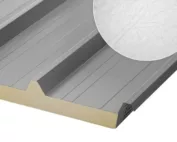
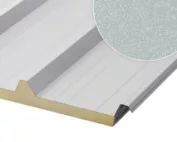
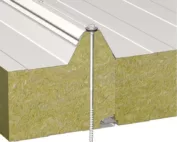
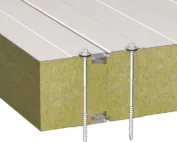
A PIR insulation board and a roof sandwich panel do not automatically have the same structural role. The method of suspension or support must correspond to the documentation for the selected product. Do not hang equipment on the new finish without confirming an acceptable solution. Pipe and cable penetrations should have planned frames and seals rather than being created only during installation of the services.
Washing must be matched to the type of surface
Water from cleaning is a different source of moisture than precipitation or condensation. Determine which surfaces will be regularly washed and how the water is to be drained. The cladding and connection details are selected for these conditions. A low water absorption of the core does not mean the entire assembly is resistant to any detergent, temperature or jet pressure.
Follow the recommendations for the coating used and check places where water may remain after cleaning has finished. Surface damage, exposed edges and leaking joints require an assessment appropriate to the system. Do not attribute changes in appearance to the insulation material itself before checking the conditions of its use and cleaning.
Observe the result under comparable conditions
After modernisation, carry out observations under a known pattern of farm operation. Record internal conditions, weather and events such as washing or prolonged opening of the gate. The absence of condensation on a dry, mild day does not confirm how the assembly behaves during frost. Only comparison of similar situations helps assess whether the identified cause has been removed or only the conditions in which it occurs have changed.
7 branches. Materials closer to your project.

- SEROCK — Dzierżenin 34 E
- BŁONIE — ul. Sochaczewska 138A
- RADOM — ul. Grobickiego 8
- ŁÓDŹ — Natolin 8
- OLSZTYN — Barczewo, ul. Prosta 9
- WROCŁAW — ul. Jerzmanowska 10C
- GORZÓW WLKP. — ul. Zielona 33/34