Purchase and cost comparison
When should you choose a first-grade panel and when should you consider outlet?
In brief
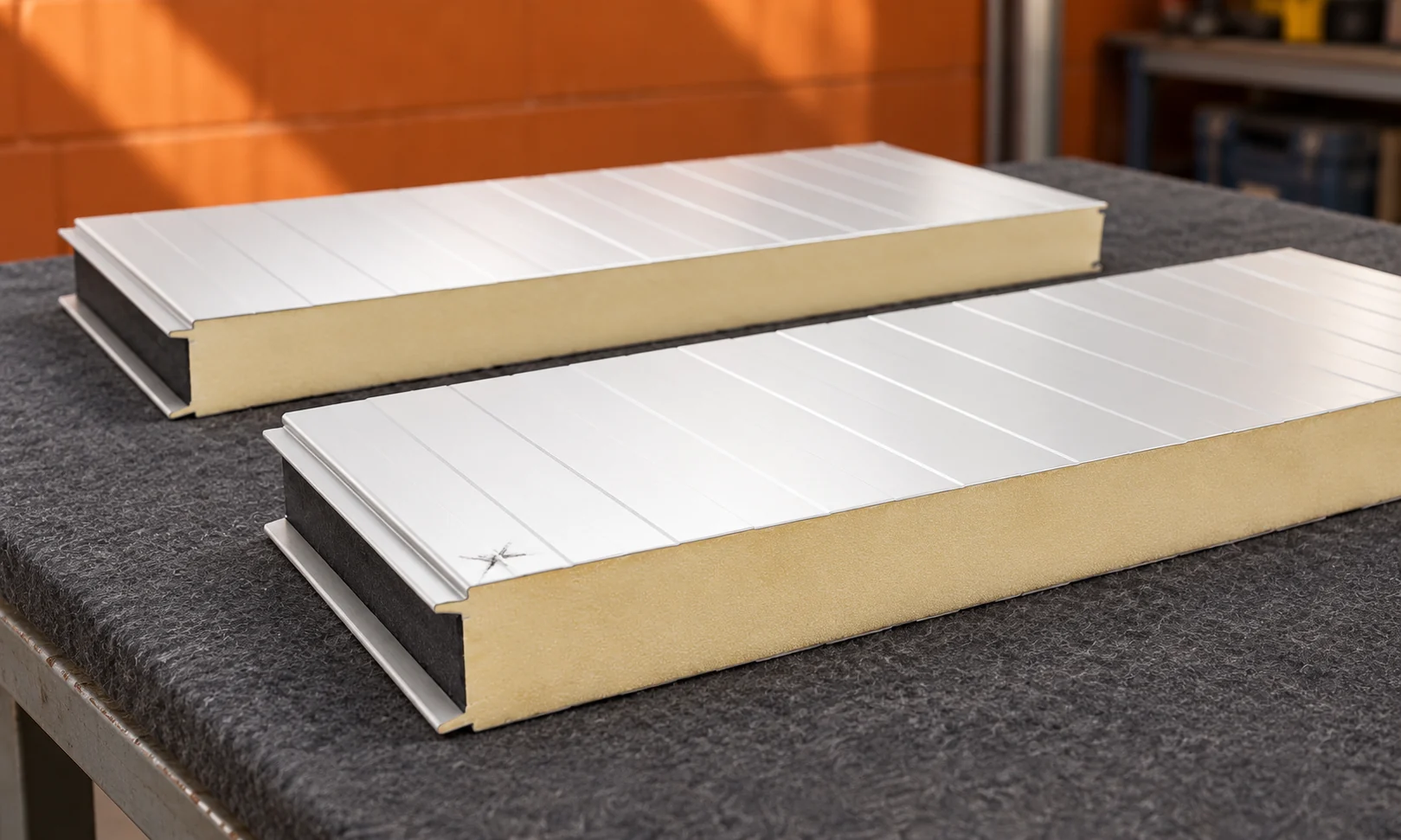
Outlet can lower the cost of the enclosure, but it requires a precise description of the material. Under this name you find surplus stock, end-of-series and panels with defects. These are different situations. First grade gives an easier reference point for the ordered properties. The choice should be driven by the requirements of the building and the condition of the specific batch, not by the discount alone. Ask why the panels were classified as outlet. Production surplus without defects is a different case from a deformed edge or damaged facing. The trade term alone does not say which properties have been retained. A description of each material group is needed.
What must be established instead of relying on the category name?
With first grade too, check conformity with the order. A correctly made panel may have the wrong core, profile or colour. Quality class does not replace technical selection. The offer should state the exact characteristics and permissible tolerances.
Which defects affect appearance and which affect the performance of the partition?
A shade difference may be troublesome on a representative façade, but it need not weaken the panel. Delamination, a cracked core or a deformed interlock are assessed differently. Such damage may affect load-bearing capacity, tightness and the durability of the joint.
Not every scratch is purely cosmetic. Its depth and location matter for steel protection. Retouching must be matched to the coating. Paint does not restore the geometry of a damaged interlock. Assessment should precede purchase, not take place only during installation.
How do you check the whole batch and not just the panel on top?
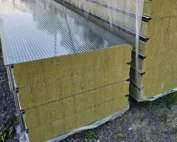
Establish whether inspection or photos of marked pieces are possible. Check the ends, edges and lower elements of the pack. Count the lengths. Panels of similar appearance may come from different batches. It should not be assumed that their interlocks will work together correctly.
In repetitive pavilions, assign elements to specific walls. Sometimes the use of a full-value part of a longer panel can be planned. Such cutting must be calculated before purchase. At the same time, too small a bearing must not be left, nor a damaged joint.
How do you calculate the real cost of the discount?
Calculation example only: 100 m² at €27.77 net costs €2,777.00. If, after selection, you use 90 m², the material attributable to each usable metre costs €30.86 net. Offcuts and disposal of waste are additional. The rate on the invoice does not show the full saving.
Compare this amount with a full order of first-grade material. Add any second transport and longer work by the crew. On a small project, the lack of a few suitable lengths can cancel out the discount. It is worth calculating also for a less favourable reject scenario.

When is panel repeatability particularly important?
In a chain of kiosks or pavilions, uniform modules, colours and details matter. A mixed batch can make it harder to maintain this standard. A reserve for future replacement limits the problem but requires appropriate storage. Not every outlet material can be reordered later.
In buildings with specific fire and thermal requirements, you need a documented configuration. Do not assume that the panel retains all its properties after damage. Doubts are resolved technically. A low price does not justify departing from the project requirements.
What should be recorded before accepting the material?
In the order, describe the defects, quantities, lengths and documents supplied with the batch. Establish rules for reporting discrepancies. Photographs should make it possible to link the damage to a specific element. A general reservation that ‘the goods may have defects’ provides too little information to assess suitability.
On unloading, check the condition against the agreed description. Distinguish a defect known before purchase from transport damage. Keep the markings until installation is complete. This will make it easier to clarify shortages and avoid installing the wrong panel.
How do you make the decision for a specific room?
For a representative, heated façade, both appearance and parameters matter at the same time. In a sheltered storage area, a difference in shade may matter less. Durability, fixing and tightness must still be checked. The function of the building changes priorities; it does not remove technical requirements.
Choose outlet material when the condition of the batch is known and the cutting plan yields a measurable benefit. First-grade material is often more convenient when time reserves are small and buildings require a uniform appearance. Base the decision on the cost of the usable cladding, not on a percentage promotional slogan.
What else is worth asking about
Does the end of a production run always mean damaged panels?
No. It can be a fully functional stock item in specific dimensions. However, the parameters, condition and compatibility with other components must be confirmed. The name ‘clearance sale’ is not enough.
Does a different shade on the two sides rule out a purchase?
It does not have to, if such an arrangement suits the project and has been clearly described. Also check the type of coatings. The sides of the panel may have different purposes and cannot always be reversed freely.
7 branches. Materials closer to your project.

- SEROCK — Dzierżenin 34 E
- BŁONIE — ul. Sochaczewska 138A
- RADOM — ul. Grobickiego 8
- ŁÓDŹ — Natolin 8
- OLSZTYN — Barczewo, ul. Prosta 9
- WROCŁAW — ul. Jerzmanowska 10C
- GORZÓW WLKP. — ul. Zielona 33/34