Façades and aesthetics
What zinc, magnesium and aluminium do in a metallic coating
In brief
Before comparing sheets, establish whether the metallic protection is meant to be visible or hidden beneath an organic coating — this affects how the product should be assessed. In a typical roof sheet, the zinc, aluminium and magnesium layer sits on the steel core, under successive finishing layers, though it may also form an uncoated surface. Check the exact coating designation, how its quantity is stated, and whether the data refer to one side or both combined. On a metal-tile sample you usually see the outer layer, not the steel’s metallic protection itself.
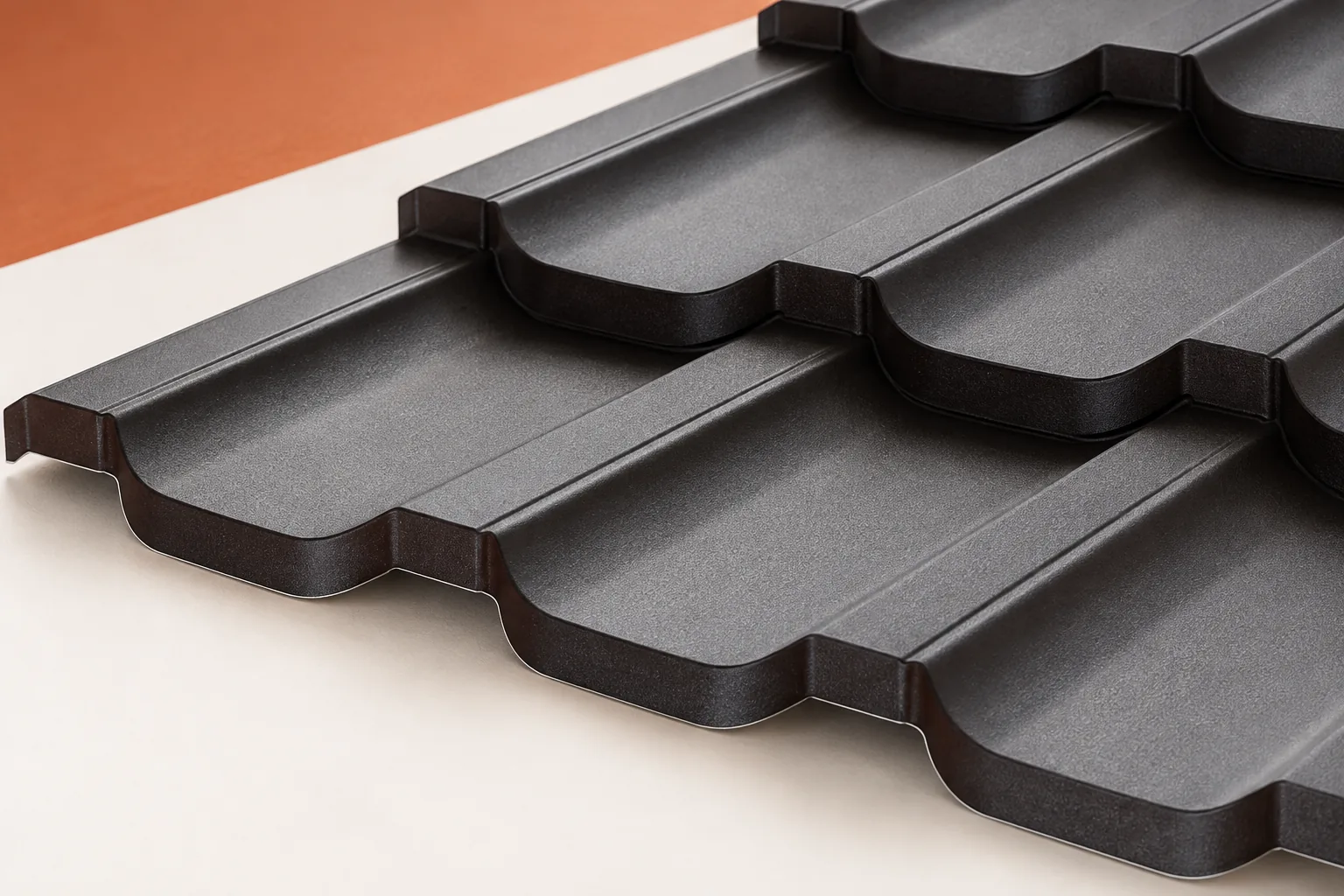
Where is the metallic coating located?
In a typical coated roof sheet, the metallic protection is on the steel core, beneath the successive finishing layers. It may also form the visible surface of the product without a coloured organic coating. Both variants must be distinguished. What we see on a tile-effect metal roofing sample is usually the outer layer, not the metallic protection of the steel itself.
The metallic and organic coatings work together but have different tasks. The first participates in protecting the core against corrosion. The second provides an additional barrier and gives colour and texture. The selection should cover the entire set of layers. Good parameters of one part do not allow the quality of the other or the service conditions of the finished product to be neglected.
How does zinc help protect steel?
Zinc separates the steel from its surroundings and can provide electrochemical protection for small exposed areas. It then acts as a material consumed in the protection process. This does not mean unlimited resistance. The duration depends on the amount of protection, the environment and the condition of the surface. Moisture and contaminants affect the course of corrosion.
The way the sheet is stored also matters. Water trapped between the sheets restricts drying and can lead to the formation of light-coloured corrosion products. Such a deposit is not the same as the desirable, stable surface protection during normal exposure. Packages should therefore be stored according to the instructions, even when the material has modern metallic protection.
Why are aluminium and magnesium added?
Alloying additions change the structure of the coating and the products formed during its interaction with the environment. In specific solutions they can improve corrosion resistance, including near edges. However, the results must be related to the specific composition, material thickness and test conditions. The mere appearance of magnesium in the description does not create a single level of quality.
Zinc-aluminium, aluminium-zinc and zinc-aluminium-magnesium coatings are not one identical family. They differ in the proportion of components and in their properties. Nor should it be assumed that every variant has the same range of application. In the documentation, the exact designation and the supplier’s recommendations should be checked rather than relying on similar abbreviations.

Can the edge of the sheet protect itself?
In the descriptions of some coatings, there is information about edge protection. This refers to electrochemical phenomena and the formation of layers that limit corrosion under specific conditions. It is not regrowth of metal or restoration of damaged paint. A large scratch, an overheated edge and extensive exposure of steel still require assessment.
The scope of such protection depends, among other things, on the coating, the sheet thickness and the treatment. It does not justify cutting with an angle grinder or leaving swarf on the roof. The rules for tools, cleaning and any touch-ups remain important. In the event of damage, follow the instructions for the finished product, not a general slogan about self-protection.
How should designations and test results be compared?
It is worth checking the type of protection and how its quantity is stated. Coating mass and layer thickness are different quantities. For continuously coated sheets, the data may refer to the sum of both sides, so the description of the designation must be read. Do not compare bare numbers without units or assume identical density for different alloys.
A corrosion chamber test is a tool for comparison under defined conditions. The number of hours cannot be freely converted into years of roof service life. The real environment includes cycles of moisture, drying, temperature and deposits. A reliable assessment combines the material documentation, the scope of application and the warranty conditions of the finished covering.
What matters when buying a roof or façade?
First, the working environment of the sheet is determined, including conditions on the interior side. Then the complete material is compared: core, metallic protection, organic coating and installation requirements. It is not worth paying extra solely for the name of a technology without information on what benefit it offers in a given application. The compatibility of fasteners and adjacent materials is also important.
For tile-effect metal roofing, trapezoidal steel sheet and sandwich panel cladding, the data for the specific product must be observed. A similar type of protection does not mean identical load-bearing capacity, geometry or warranty. Metallic alloy coatings can be a valuable element of protection if they are properly selected. They still require careful installation, water drainage and regular removal of dirt.
7 branches. Materials closer to your project.

- SEROCK — Dzierżenin 34 E
- BŁONIE — ul. Sochaczewska 138A
- RADOM — ul. Grobickiego 8
- ŁÓDŹ — Natolin 8
- OLSZTYN — Barczewo, ul. Prosta 9
- WROCŁAW — ul. Jerzmanowska 10C
- GORZÓW WLKP. — ul. Zielona 33/34