Fibre cement roof coverings
Roof renovation records: which documents should you keep?
At a glance
After a renovation, it is easy to put the documents aside, because the new roof works and looks good. The problem comes back when, after a few years, a single sheet has to be found or the fixing of an installation has to be checked. Fibre cement sheets come in many profiles and versions. “Asbestos-free fibre cement” as an entry on the invoice may be too general. It is worth keeping an orderly, complete set of information about the material, the structure and the details as executed. This will make repairs, acceptance and later investment decisions easier. What is needed is data that allows the profile, format, thickness and finish variant to be identified. It is also worth keeping the batch markings from the packaging or the delivery documents. The colour and the number of sheets alone are not enough.
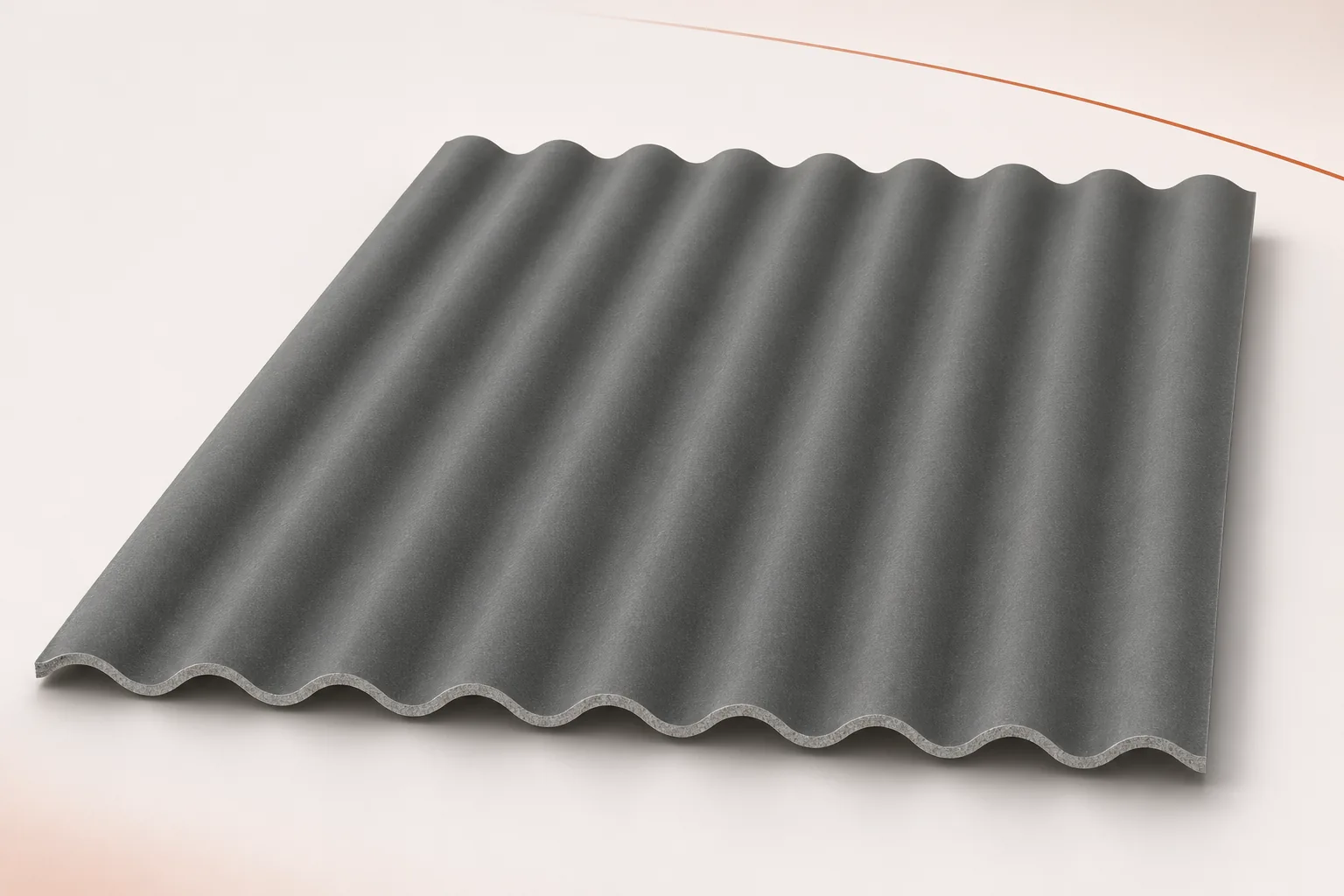
Product designation should be unambiguous
Similar products may have different edges and cover widths. If the roof was installed in stages, the deliveries should be assigned to the relevant roof slopes. A simple plan with descriptions is helpful. This means the next team does not have to guess which components come from a later repair. The documents should reflect the material actually installed, not just the first quotation sent before the order was changed.
Keep the documentation specific to the product version
Fibre cement sheets have declared properties and instructions specifying their application. It is worth keeping the version of the documents that corresponds to the delivery. The website may later present a newer variant or a different product range. You should not rely solely on a saved link without a copy of the required documentation. The warranty conditions and their scope for the sheet and the coating are also important. They are not automatically identical. It is a good idea to record agreements concerning non-standard solutions. If a specific detail required confirmation, it should remain together with the roof documentation.
The list of fasteners is just as important as the list of boards
Fasteners differ in their intended use for the substrate, material and corrosion protection. Fibre cement sheets may require a specific set of washers and seals. After a few years, the visible head will not always allow the set used to be identified. It is worth keeping labels and descriptions of the accessories. Information about shaped pieces, tapes and rooflight elements will also be useful. The translucent sheet has separate documentation, even when its profile matches the roof. An orderly list of parts makes it easier to order a replacement and prevents random leftovers from being combined during servicing.
The drawing should show the actual construction
The design may change during the works once the structure has been uncovered. Corrections to supports, the layout of the cut and penetrations must be recorded. Asbestos-free fibre cement is meant to perform within a specific arrangement, so preserving its current layout is important. It is worth marking zones with different fixing and unusual locations. During later installation of equipment, such a drawing helps establish the position of the structure. It does not replace a new load assessment, but it provides the data needed for one. A lack of records of changes may lead the next team to drill where, according to the old design, a support was supposed to be.
Photograph the layers before they are covered
Photographs are particularly valuable for flashings, the ridge, the eaves and connections to the wall. Fibre cement sheets later conceal part of the structure and the layers. It is worth photographing the detail close up and in a wider view so as to preserve its location. In the case of an insulated roof, the continuity of the insulation, its tightness and the service penetrations must also be documented. Photographs alone do not replace acceptance, but they help reconstruct the arrangement during diagnosis. It is good to give the files clear names with the date and the side of the building. A large folder of random close-ups without a description is far less useful after a few years.
Describe the acceptance through specific checks
The protocol should indicate the scope of the works, the remarks noted and the manner of their rectification. Fibre cement sheets should be assessed together with the laps, fixings, drainage and ventilation. Repairs carried out to supports and details must also be recorded. A general statement that there are no reservations does not provide the same knowledge as an orderly description. If items remain to be corrected, it is worth assigning them a location and a deadline. The documentation helps both parties understand the completed scope. In the case of an old covering requiring special handling, the relevant confirmations concerning its removal and disposal must also be retained.
Record subsequent inspections and interventions
A new cable, replacement of a skylight or installation of services may change the conditions of the roof. Fibre cement sheets should not receive further holes without the solution being recorded. It is worth keeping a simple register of dates, locations and the work carried out. In the event of a leak, it helps to check whether the symptom appeared after a specific intervention. Information on the cleaning agents used and the parts replaced must also be retained. It is not about extensive documentation of every trifle. What matters is a clear trace of the changes that affect tightness, load-bearing capacity, the surface or the possibility of later servicing.
Store the complete set so that it can be shared easily
It is worth having a digital version with organised folders and the key documents in a place accessible to the owner. When selling or handing over the management of a building, knowledge about the roof should not disappear with a change of person. It is a good idea to prepare a short index of the contents and a description of the system. You should not rely solely on the memory of the team that carried out the renovation. After years, contact may be difficult and product names may have changed. Retained documents shorten diagnosis and allow repair proposals to be compared on the same basis. This is a small effort compared with reconstructing the invisible details of a finished building.
After a renovation with asbestos-free fibre cement, gather the data on the sheets, accessories and workmanship in one complete set. For the next repair, this will be a practical guide to identifying the existing roof.
7 branches. Materials closer to your project.

- SEROCK — Dzierżenin 34 E
- BŁONIE — ul. Sochaczewska 138A
- RADOM — ul. Grobickiego 8
- ŁÓDŹ — Natolin 8
- OLSZTYN — Barczewo, ul. Prosta 9
- WROCŁAW — ul. Jerzmanowska 10C
- GORZÓW WLKP. — ul. Zielona 33/34