PIR insulation
Lambda, R and U using the example of swissporPIR Alu
At a glance
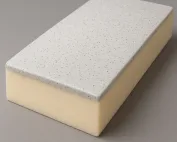
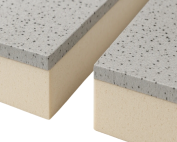
The thermal resistance of the swissporPIR Alu layer and the U-value of the finished building component are not interchangeable pieces of information. Confusing the two can change the assessment of an offer or of the expected effect. It is worth establishing which cross-section each figure refers to before starting to compare variants. swissporPIR Alu has a rigid polyisocyanurate foam core and a gas-tight laminate on both sides. The manufacturer lists aluminium, paper and polyethylene in the facing. The terms “polyurethane boards” and “polyurethane foam” are broader than the precise designation of the PIR product. When assessing the performance of the building component, it is worth checking swissporPIR Alu as a thermal insulation board with a laminate of aluminium, paper and polyethylene. Before assessing the solution, the laminate of swissporPIR Alu must be distinguished from the steel facing of a structural panel.
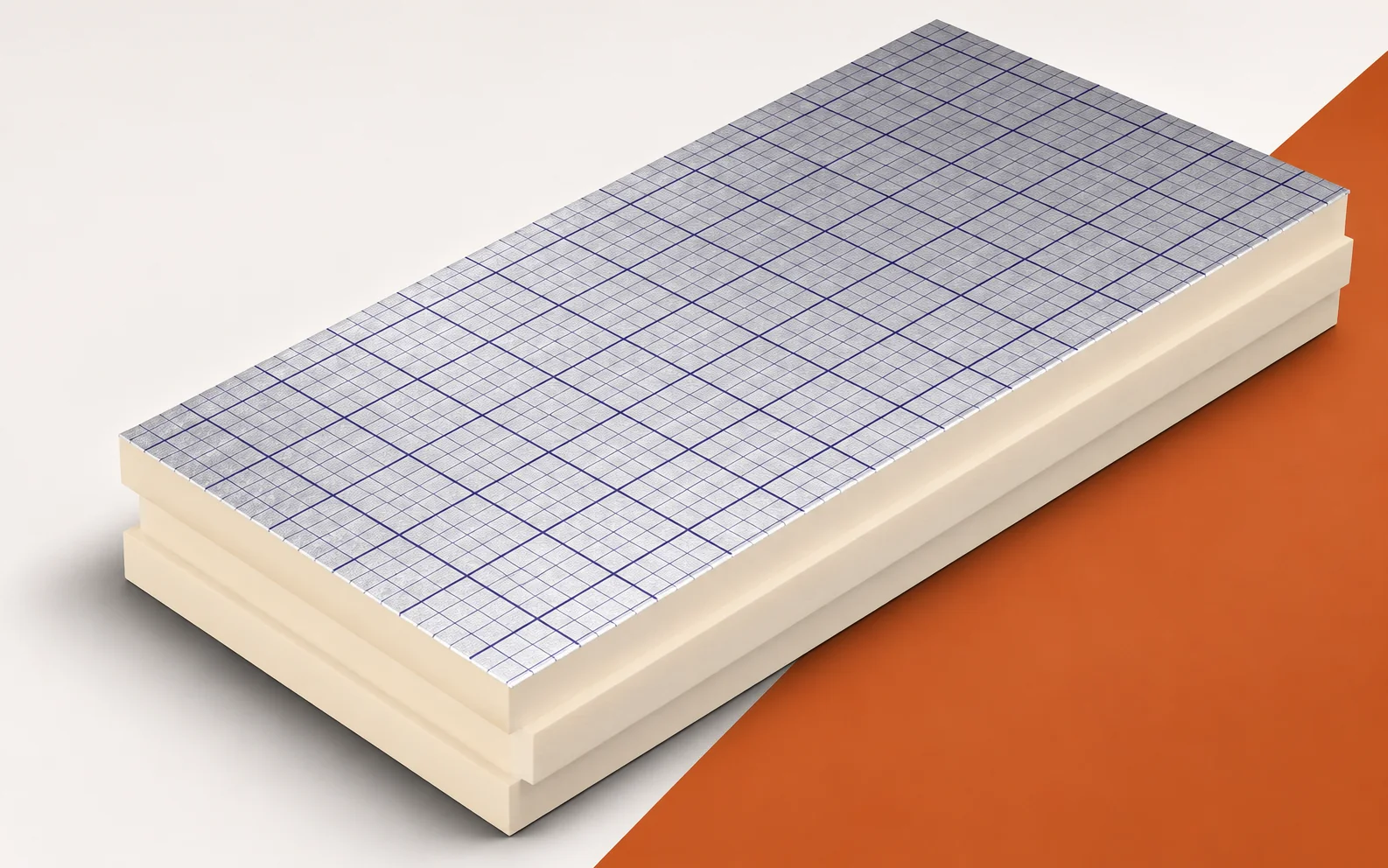
swissporPIR Alu PIR boards and the role of the laminate
The silver surface of the laminate does not mean that the board is a load-bearing panel or a finished roof covering. The facing protects the core, and its function must be distinguished from the structural tasks of the entire assembly. During inspection, compare the actual cross-section with the description of the support and of the protective and finishing layers above and below the PIR.
Selecting the thickness for the required resistance
The swissporPIR Alu data link R_D to thickness, with a declared lambda of 0.022 W/(m·K). The 100 mm variant corresponds to 4.50 m²K/W; the 120 mm board has 5.45 m²K/W, and the 160 mm one — 7.25 m²K/W. When reading a thermal comparison, these value pairs must be retained, because the symbol R_D alone, without indicating the thickness, does not identify the variant.
The lambda of 0.022 must be linked to the specific thickness of the swissporPIR Alu being ordered, because R_D relates only to the insulation layer, and not to the thermal transmittance of the entire roof or wall. Before drawing a conclusion, request the catalogue data for each variant and a separate calculation of the entire assembly, so that the figures refer to the actual layer.
Polyurethane insulation in the right format
The formats 1200 × 600 mm and 2400 × 1200 mm and thicknesses from 20 to 300 mm are the catalogue range, so the specific combination of dimensions must be confirmed in the offer. When assessing the workmanship, inspect the swissporPIR Alu board and the selected profile on a surface with many offcuts.
The format of swissporPIR Alu must be matched to the geometry of the surface and the offcuts required, because a large board on its own does not guarantee a small amount of waste. The cutting plan should preserve the necessary terminations and continuity of joints. When assessing polyurethane insulation, check the laying plan, the covering area and confirmation of the availability of the combination of dimensions before accepting the completed joint.
Continuity at three-dimensional junctions
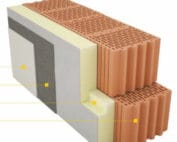
The material properties interact with the details: junctions with other building components, edges and service penetrations can increase heat losses. Therefore, when analysing junctions, identify the transition of swissporPIR Alu from the regular field to the edge and the adjacent building component.
Repair is preceded by preserving the continuity of swissporPIR Alu at the spatial junction of building components. Appearance alone is not enough: increasing the thickness in the middle does not make up for a missing fragment at the perimeter. Check the drawings of edges, service penetrations and points where the direction of the thermal insulation changes, as well as the history of previous works, so that the board’s parameters are also used at the terminations of the layer.
CS, creep and service loads
swissporPIR Alu has fire reaction class E, so it is not a non-combustible material. In the documentation, the CS data of at least 150 kPa and CC(2/1.5/50)25 must be kept separate from the fire class: class E describes behaviour in fire, while CS and CC concern behaviour under load.
CS for swissporPIR Alu and the assessment of creep under long-term pressure describe different conditions, so they are not interchangeable load limits. Therefore, when selecting a system, the duration of the pressure and the fire requirements must be checked separately, bearing in mind that the product has fire reaction class E. Only combining the relevant mechanical data with the system classification provides a basis for a conclusion.
Insulation with polyurethane: cost of the material and of the whole system
When comparing offers, first establish the same thickness, edge profile and usable area. The allowance is calculated after drawing out the cut pieces. Consider the swissporPIR Alu offer at the same thickness, edge and function.
Compare the price of swissporPIR Alu with the work needed to obtain a complete building envelope. A lower amount per square metre may relate to a different thermal resistance or a smaller scope of supply. Base any conclusion about cost or quality on the full designations, the quantities after cutting and the cost of executing the details.
A case worth considering
When two descriptions of swissporPIR Alu state R and U, first establish what each value refers to. R may describe the insulation thickness alone, while U describes the entire assumed cross-section — these are not equivalent parameters of the board. Check whether joints and the other layers were included in the U calculation. This is often exactly what explains the difference between offers, without any change of material.
7 branches. Materials closer to your project.

- SEROCK — Dzierżenin 34 E
- BŁONIE — ul. Sochaczewska 138A
- RADOM — ul. Grobickiego 8
- ŁÓDŹ — Natolin 8
- OLSZTYN — Barczewo, ul. Prosta 9
- WROCŁAW — ul. Jerzmanowska 10C
- GORZÓW WLKP. — ul. Zielona 33/34