PIR insulation
Is PIR always better than mineral wool? Six points to check
At a glance
In insulation guides, it is easy to encounter extreme assessments of PIR and mineral wool. A single characteristic is often presented as the answer to every problem in a building. A reliable comparison requires separating the functions. PIR boards may have an advantage in thickness, while other properties must be assessed separately. PIR boards with suitable facings often have a lambda of 0.022 W/(m·K). Mineral wool products come with various values. One should not assign a single figure to the entire product family. Compare the documents for two selected products and their thicknesses for the same thermal target. A statement about thinner insulation should include the data for both products being compared. Without them, it is impossible to tell where the stated ratio comes from.
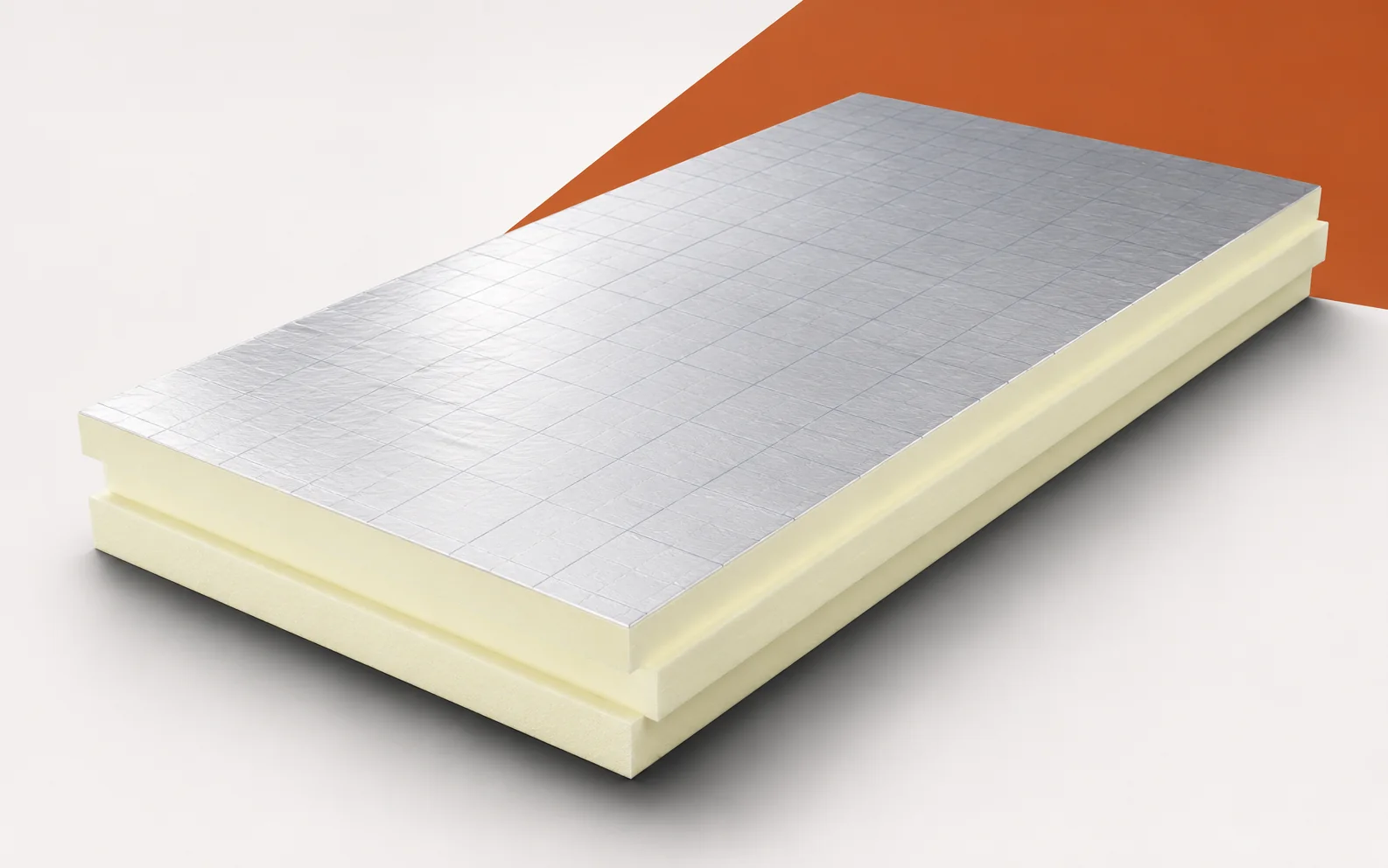
Comparing thicknesses requires specific figures
Polyurethane boards come with different facings and ranges of parameters, just as mineral wool products differ in their intended use. There is no single conversion factor for whole product groups. A good example states the lambda values, thicknesses and a common thermal resistance. This allows the reader to check the calculation instead of accepting a striking slogan.
Reaction to fire requires a separate assessment
Many uncoated mineral wool products have fire reaction class A1. This must be confirmed for the specific product. PIR should not generally be called non-combustible insulation. For boards, different classes and classifications relating to a specific method of installation may occur.
In descriptions of fire behaviour, watch out for a change in the subject of the sentence. First it may refer to the board itself, and a moment later to the complete roof. Polyurethane foam does not automatically take on the classification of the system in which it is used. Likewise, a document for one configuration does not describe every other one. It is worth asking what exactly was assessed. This makes it possible to separate genuine information from an overly broad marketing conclusion.
Thermal insulation does not mean sound attenuation
Do not attribute the same acoustic effect to any mineral wool. Products, densities and intended uses differ. The result of the system should correspond to a specific configuration. The filling material will not fix a leaky facing or a rigid acoustic bridge elsewhere in the building component.
The word insulation can refer to heat or to sound, but it does not denote the same property. Polyurethane insulation with a low lambda does not thereby achieve high acoustic effectiveness. The result depends on the entire system. A fibrous material can perform a different role from a rigid board. If a comparison moves from heat to quiet without additional data, an important step is missing. Each function requires the appropriate method of assessment.
Rigid boards and flexible infill are installed differently
PIR requires precise cutting and fitting to the surface. A flexible mineral wool mat can more easily fill the space between structural elements if it has been correctly selected and laid. Neither of these methods exempts you from checking. Filling that is too loose or accidentally compressed may perform incorrectly.
Ease of installation depends on geometry, not just on the name of the material. A rigid board suits a different way of working from a flexible filling. With numerous bends, the number of cuts may increase, and with irregular spaces, fit matters. A universal installation time should not be derived from a single efficient project. A reliable assessment takes account of the substrate, access and the number of difficult details.
Water vapour and moisture depend on the entire cross-section
Mineral wool usually offers low resistance to water vapour diffusion. A PIR board with a gas-tight facing may behave differently. This does not automatically mean a defect in one of the solutions. It is necessary to check how vapour and moisture will behave in the entire system and where leaks may occur.
The claim that a building component must breathe often conflates different phenomena. Water vapour diffusion is not room ventilation, and air flow through a leak can carry moisture to an unwanted location. That is why neither mineral wool nor PIR replaces a correct layer build-up. It is worth using more precise questions: along which path is the component supposed to dry out, and where has airtightness been ensured? The answers are more useful than an assessment of the slogan itself.
The choice can combine the advantages of different materials
The conclusion of the comparison should indicate the product, the build-up and the installation conditions. A recommendation of PIR or mineral wool alone is too general for placing an order. Add the required thicknesses and documents. This allows the decision to remain consistent during pricing, delivery and installation.
Summer comfort does not allow one material to be declared the winner without a description of the building. PIR boards limit the flow through the building component, but windows, shading and ventilation also influence the temperature. Polyurethane insulation is not a cooling device. It is also not true that mineral wool stops performing its insulating function once the sun appears. A sound analysis takes account of the operating conditions and the dynamics of the entire system.
How to draw the correct conclusion
The claim that mineral wool does not work in summer goes too far. Its thermal conductivity depends on the conditions, as do the properties of other insulants. Comfort requires an assessment of the entire building. It cannot be explained by a single surface temperature and an arbitrary thickness conversion factor.
When reading a comparison, separate five issues: heat, fire, sound, moisture and workmanship. Check whether each claim has data relating to the correct product or assembly. PIR boards have specific advantages and do not require non-existent defects to be attributed to competing materials. An honest comparison can point to different solutions for different locations. Such a conclusion is more useful than a simple ranking, because it allows the knowledge to be translated into a real project.
7 branches. Materials closer to your project.

- SEROCK — Dzierżenin 34 E
- BŁONIE — ul. Sochaczewska 138A
- RADOM — ul. Grobickiego 8
- ŁÓDŹ — Natolin 8
- OLSZTYN — Barczewo, ul. Prosta 9
- WROCŁAW — ul. Jerzmanowska 10C
- GORZÓW WLKP. — ul. Zielona 33/34