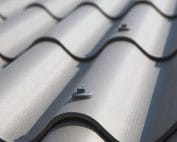
Fibre cement coverings
How to identify an existing roof covering before planning its replacement
In brief
An old corrugated roof may conceal more than one type of material. Individual sheets were replaced during successive renovations, and the names used by owners are often colloquial. New corrugated fibre cement sheets are not the same as old asbestos cement products. The term asbestos-free eternit describes a modern material, but it does not allow the composition of the existing roof slope to be assessed. Before planning replacement, information must be gathered without unnecessarily damaging the covering. The word “eternit” is sometimes applied to various corrugated sheets, regardless of their composition. The information that the roof was bought as asbestos-free may be valuable, but it is worth finding confirmation. Invoices, renovation descriptions, delivery notes and old photographs will be useful.
A name used in the family is not a document
It should be established whether the documents relate to the whole roof or only to the replaced section. The building may have been constructed in stages. Sometimes some sheets come from a different source than the rest. The identification should therefore cover all areas of the roof slopes. One known piece does not provide grounds for attributing the same composition to the remaining elements, especially when they have different markings or appearance.
Colour and shape do not determine asbestos content
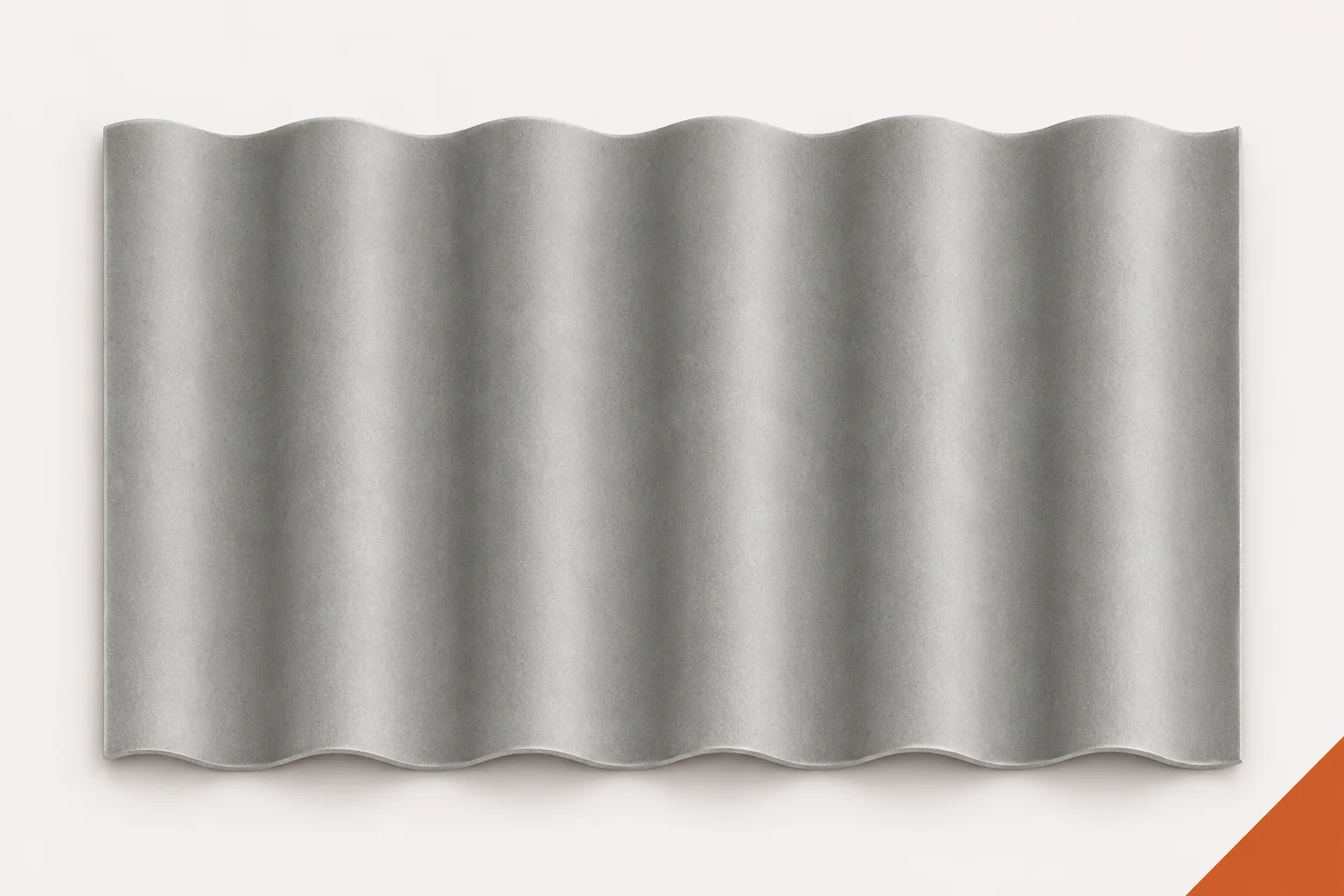
A grey surface and corrugated cross-section also occur in new materials. The paint coating may additionally make it more difficult to assess the age. Corrugated fibre cement sheets are selected according to the documentation, not solely on visual similarity. The same caution applies to an old roof. It should not be considered asbestos-free merely because it looks even or has retained its colour. Finding a similar photo in a catalogue does not provide certainty either. Profile patterns may have been used in different periods and compositions. In case of doubt, a professional identification is needed, not an increasingly firm assessment based on photographs.
Read markings without interfering with the material
If the inscriptions are visible from a safe place, it is worth photographing them in full. Symbols, the date and the batch number may be important. Do not scrape, sand or break off a fragment to reach the marking. Corrugated fibre cement sheets with confirmed contemporary documentation can be identified differently from an unknown old covering. However, the record must be linked to a specific product and the extent of the roof slope. An illegible symbol should not be guessed. It is better to keep the photo and ask for help in interpreting it. Access to the underside of the roof also requires a safety assessment, particularly with damaged structure or loose fragments.
Do not take a sample by accidental damage
If asbestos is suspected, breaking or drilling by yourself may release fibres. An identification requiring testing should be organised with a suitably prepared person or company. Asbestos-free fibre cement as a planned replacement does not change the way the old material is handled. Nor should the cutting instructions for the new product be transferred to the existing roof. These are two separate tasks. Before starting work, it is worth obtaining information from the municipality and determining the appropriate contractor. The aim is to confirm the situation while limiting intervention, not to obtain a sample at all costs during the initial inspection.
Assess the condition of the covering separately from its composition
Knowledge of the material does not yet say whether the roof is suitable for further use. Cracks, defects, the condition of the fixings and the structure matter. Corrugated fibre cement sheets may require replacement for technical reasons despite the absence of asbestos. Conversely, a visible defect does not provide grounds for processing the old product by yourself. The preliminary documentation should describe both issues separately. Photos of entire roof slopes and indication of leak locations are helpful. Do not step directly onto the sheets to check their load-bearing capacity. The condition assessment should take place from safe access, without creating new damage while searching for existing damage.
Record the scope of certainty and the unknowns
It is worth preparing a simple description: which fragments have confirmed origin, where the markings are illegible and which parts have been repaired. Corrugated fibre cement sheets bought for a new roof should have an unambiguous specification, but the documentation of the old covering may remain incomplete. Gaps should not be filled with assumptions. Such an honest description helps the contractor plan the identification and the quotation. It also prevents a situation in which the offer assumes easy dismantling and during the work it turns out that the material requires different handling. The earlier the unknowns are indicated, the easier it is to take them into account in the schedule and budget.
Only then choose the method of replacement
Once the material and the condition of the structure have been identified, the scopes of work can be compared. New corrugated fibre cement sheets are selected to suit the pitch, the supports and the intended function of the building. A similar old corrugation does not guarantee that the accessories will be compatible. It is worth separating the cost of removing the covering from that of the new system and of repairing the structure. If funding becomes available, the current rules and the scope of the assistance must be checked. The formalities should not be left until the day the team arrives. An orderly assessment allows the replacement to be carried out without mixing tasks connected with the old material with the normal installation of a new, well-documented roof.
Before you order asbestos-free fibre cement, gather the documents and any markings available for the old roof. A reliable assessment makes it easier to choose the contractor, the scope of work and the new covering.
7 branches. Materials closer to your project.

- SEROCK — Dzierżenin 34 E
- BŁONIE — ul. Sochaczewska 138A
- RADOM — ul. Grobickiego 8
- ŁÓDŹ — Natolin 8
- OLSZTYN — Barczewo, ul. Prosta 9
- WROCŁAW — ul. Jerzmanowska 10C
- GORZÓW WLKP. — ul. Zielona 33/34