Installation and details
How to check a roofer’s skills and experience
In brief
In Poland, a roofer’s quality is shown above all by how they think, not by the price per square metre alone. Check whether they can explain how the roof will be built, know the instructions for the chosen system and recognise problems that need a structural engineer. When discussing a team, ask about projects using a material similar to the one planned, because installing modular metal tiles differs from laying long trapezoidal sheets. Request a discussion of details and documentation of the stages that will later be covered. Experience matters, but it must relate to comparable work.
Does experience on every roof mean the same thing?
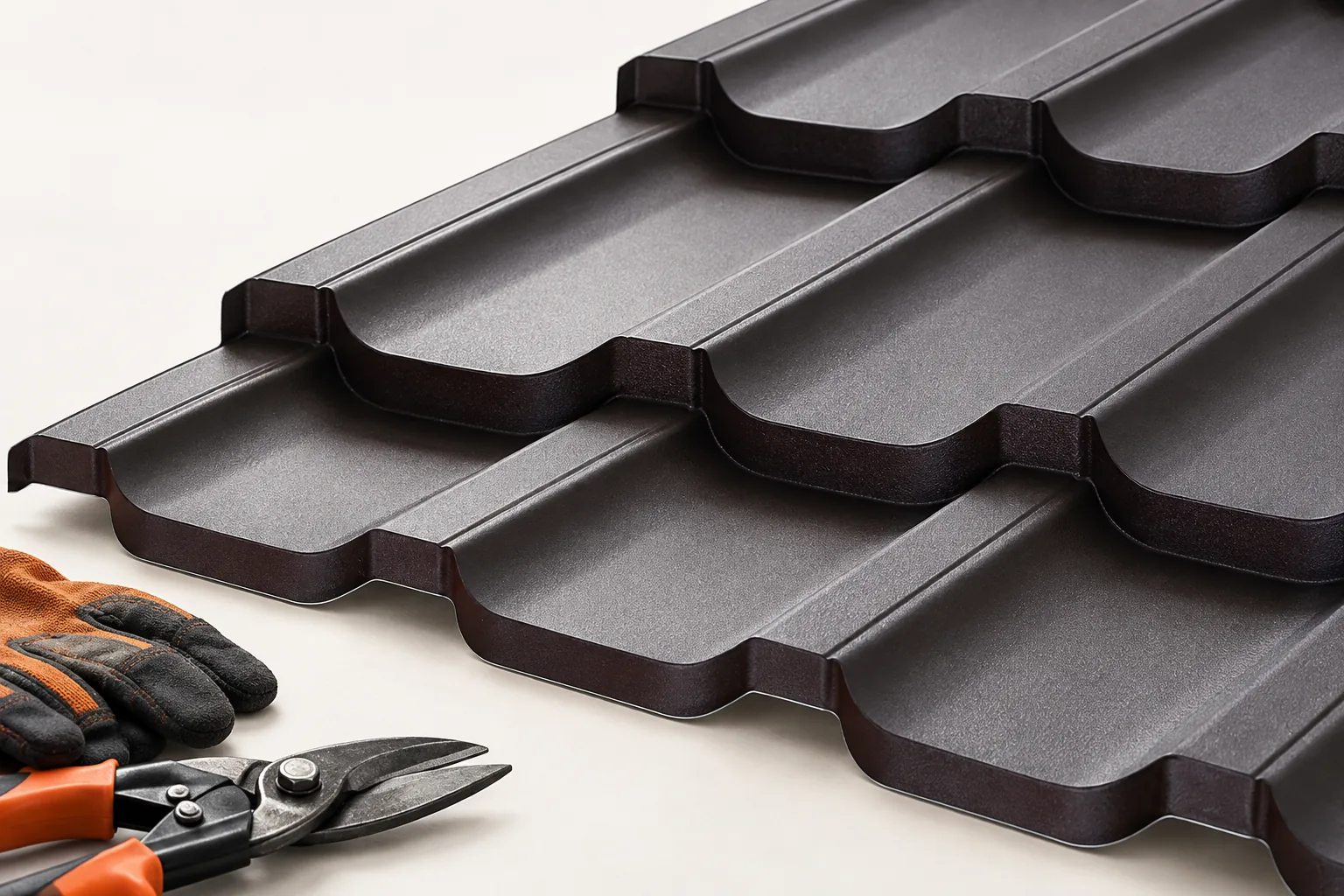
Practical experience is valuable, but it must relate to work similar to what is planned. Installing modular tile-effect metal roofing differs from laying long trapezoidal steel sheets or sandwich panels. Each system has its own connections, fixings and substrate requirements. It is worth asking about projects in the chosen material and requesting a specific discussion of them.
The ability to read documentation also matters. A contractor should not transfer the batten spacing or the number of screws from one model to another from memory. A good answer is: we will check the instructions and the conditions of this roof. Knowing the limits of one’s own authority is an advantage, especially when a renovation reveals structural damage.
How does a professional prepare a quote?
A reliable quote begins with a survey of the building. Dimensions, the shape of the roof slopes, the pitch and the scope of the planned layers are needed. For a renovation, access and possible problems after removal must be assessed. A specialist asks about gutters, chimneys, windows and future photovoltaics, because these elements affect work on the covering.
Not everything can be checked without opening up the roof. In that case, the contractor clearly records the assumptions and how additional work will be settled. They do not hide uncertainty behind the promise of one low price. For the client, it is important to understand the scope of the offer and to know which decisions must be made before ordering material.
Which details say the most about work quality?
It is worth inspecting the eaves, the roof valley, the chimney flashings and the junctions at walls. A regular roof surface is important, but watertightness often depends on small details. Ask where water will drain from beneath the covering and how the cavity will be ventilated. The answer should refer to the specific roof section.
A good roofer uses the right tools for cutting and removes swarf. They know that a random sealant does not repair a badly formed flashing. They check the laying of the first rows and do not force errors straight on subsequent panels. These habits are not always visible in a photo of the finished structure, so it is worth asking for documentation of the stages.

How should site organisation look?
The material needs space for safe unloading and storage. Long sheets must be handled without bending, and packs protected from moisture. The team should have a plan for protecting the interior during the works. Removing too much of the roof before a change in weather can expose the building to unnecessary damage.
Working at height requires suitable safeguards and safe access. This is part of carrying out the service, not an optional extra dependent on the workers’ courage. A competent professional can halt work in conditions that endanger people or the quality of installation. The deadline matters, but it does not justify lifting large sheets in dangerous wind.
Do training and references help when choosing?
Product training makes it easier to get to know the details of a specific system. Practical exercises allow connections to be checked before working on a finished building. Attending a course does not, however, replace an assessment of the completed works. It is worth asking what the training covered and how the knowledge gained will be used on your roof.
References are best treated as a starting point for a conversation. Ask the previous client about the course of the works, the response to defects and whether the settlement matched the contract. Photos should also show details, not just the house from a distance. The number of publications online is not a measure of the tightness of the completed covering.
What should be agreed before signing the contract?
Record the material, scope of works, method of acceptance, deadlines and rules for reporting defects. Establish who orders the components and is responsible for measurements. Where several crews are involved, responsibility must be divided for the eaves, insulation, gutters and service penetrations. Unclear boundaries between contractors are a frequent source of disputes.
Ask for the works that will be covered up to be documented. At completion you should receive information about the material used and the care requirements. A good roofer does not promise that the roof will never need inspection. He explains how to use it safely and which symptoms should prompt a review.
During the conversation, pay attention to the willingness to clarify doubts. A factual answer may include the need for an additional measurement or consultation. That is a better sign than certainty without checking the data. The contractor should be able to justify the solution so that the client understands what they are paying for and how to assess the result.
7 branches. Materials closer to your project.

- SEROCK — Dzierżenin 34 E
- BŁONIE — ul. Sochaczewska 138A
- RADOM — ul. Grobickiego 8
- ŁÓDŹ — Natolin 8
- OLSZTYN — Barczewo, ul. Prosta 9
- WROCŁAW — ul. Jerzmanowska 10C
- GORZÓW WLKP. — ul. Zielona 33/34