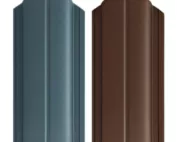
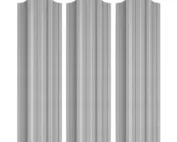
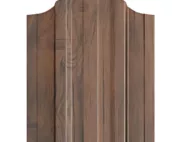
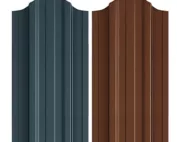
Metal fence pickets and fences
Are thicker metal fence pickets always stiffer?
In brief
In an offer, it is easy to find one number and take it as a measure of quality. For fence pickets, this is often the sheet thickness. The parameter matters, but it does not describe the whole product. Metal fence pickets work as formed elements connected to the structure. Their behaviour depends on several features at once. It is worth knowing them before you reject a light profile or buy a heavier one solely on the basis of advertising. Greater thickness can improve the stiffness of an element with the same geometry and from the same material. This is a useful rule, but the comparison must concern genuinely similar products. If you change the width, the depth of the profiling or the length, the result no longer follows from a single number. A fuller description is needed.
Compare thickness under the same conditions
When enquiring about metal fence pickets, ask for the nominal material thickness and how it is determined. Do not confuse the steel thickness with the overall height of the section. A profiling height of some ten-plus millimetres does not mean that the sheet is that thick. These are two entirely different dimensions, even though they may appear side by side in abbreviated descriptions.
Profiling changes how a thin strip performs
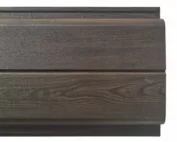
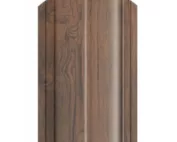
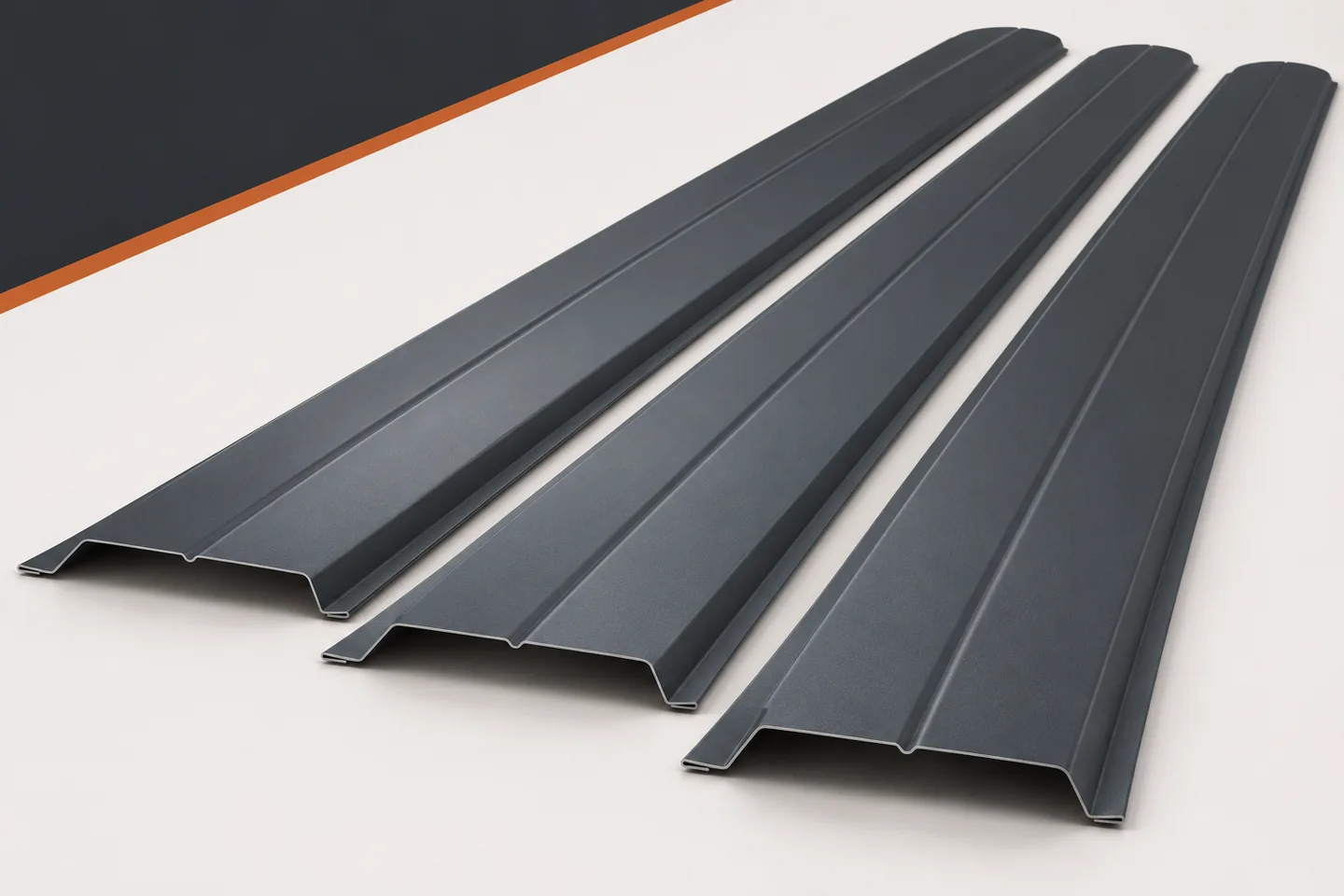
A flat strip of sheet metal is easy to bend in a given direction. Once it has been given a three-dimensional section, it behaves differently. Folded edges and grooves distribute the material in space. On this principle, a profiled picket can achieve useful stiffness with a thin wall thickness. The shape therefore has a technical, not merely decorative, significance.
However, you should not count the grooves and assume that the model with the most of them wins. What matters is their position, depth and the overall section. A narrow picket with pronounced profiling and a wide one with shallow grooves may be intended for different arrangements. The requirements are verified for the finished product.
Length affects the perceived flexibility
A short sample may feel very stiff in the hand. This does not confirm how a long picket mounted between supports will behave. As the length and the distance between supports change, so does the potential for deflection. Assessing a short section on the counter should therefore serve primarily to check the shape and surface.
The difference between the maximum length produced and the recommended length for a specific installation is important. The machine may produce a longer element than a simple support scheme would suggest. An offer of cutting to size does not relieve you of assessing the fixing method. This applies in particular to long horizontal elements.
Support is part of the fence’s properties
A sheet metal picket does not work in isolation from the crossbars. The position of the supports, the distance from the end to the fixing and the type of connection all matter. An excessively large unsupported section may behave differently from the same profile in the arrangement specified in the instructions. Choosing a thicker sheet alone will not correct every structural error.
There is no single universal support spacing for all pickets. Profiles, fence heights and site conditions vary. The number of fixings should not be based on the installer’s habit either. You first need to know the requirements of the chosen system, and only then prepare the structure and the order.

Stiffness and resistance to denting are separate issues
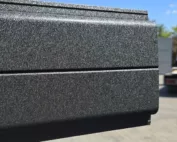
An element may hold its shape well within a bay and yet suffer local damage after a strong impact. A thin wall and its surface react to contact with a tool, a stone or a vehicle. For this reason, the word “rigid” does not mean “indestructible”. It is not worth promising resistance to any and all mechanical action.
Sheet metal pickets should be selected for their role as infill and used as intended. They do not serve as steps or as support for heavy objects. In places exposed to impact, the cause of the risk must be addressed. Simply ordering a thicker picket may not be enough to protect the entire fence.
How to assess a supplier’s data
A useful data sheet contains the cross-section, basic dimensions, material and application limits. It is also good if it indicates the fixing diagram. The absence of one of these pieces of information does not always mean the product is defective, but it makes comparison difficult. It is worth asking for the data to be completed before choosing the length and number of elements.
Be careful about transferring parameters from an entire shop category to a specific model. Different pickets may share a description but have a different drawing and profile height. In case of discrepancies, an explanation from the seller and identification of the supplied variant are needed. You should not choose the more convenient figure on your own.
A good choice starts with the application
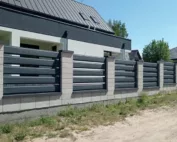
First determine the fence height, the laying direction and the planned openness. Then check whether the chosen cross-section and structure match this arrangement. This allows you to choose metal pickets with the required properties without accidentally increasing weight and cost. Reliable selection is based on the cooperation of all elements.
If two products have different cross-sections, do not decide on quality solely on the basis of thickness. Also compare the protective layers, the permitted installation and the accuracy of workmanship. Sheet metal pickets should form an even, stable infill. This effect depends on the entire solution, not on one highlighted parameter.
7 branches. Materials closer to your project.

- SEROCK — Dzierżenin 34 E
- BŁONIE — ul. Sochaczewska 138A
- RADOM — ul. Grobickiego 8
- ŁÓDŹ — Natolin 8
- OLSZTYN — Barczewo, ul. Prosta 9
- WROCŁAW — ul. Jerzmanowska 10C
- GORZÓW WLKP. — ul. Zielona 33/34