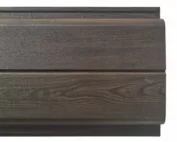
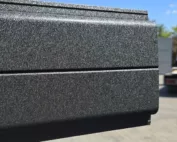
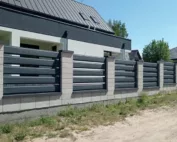
Metal fence pickets and fences
Are metal fence pickets enough for a secure fence?
In brief
A metal infill helps mark the property boundary. On its own, however, it does not guarantee the safety of children or animals, nor protection against entry from outside. What matters is the whole fence and how it is used. Metal fence pickets should therefore be chosen to suit real needs, without reducing the decision to a single slogan about strong steel. Equally important are the details that are not visible in a photo of the front. The gaps between the pickets are only part of the arrangement. Space remains at the posts, under the lower end and at the gate. A small animal may look for exactly such a place. For this reason, a dense front is not enough to assess the whole fence. The property must be walked around and all connections between sections checked.
The material does not replace an assessment of all openings
There is no single spacing suitable for every animal and every situation. Its size and behaviour matter. Likewise, safety for children should not be declared solely on the basis of gap width. An assessment of the whole solution, the method of supervision and the conditions of use is needed.
The end piece should be matched to the specific picket
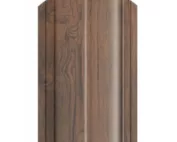
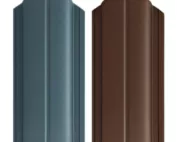
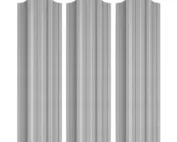
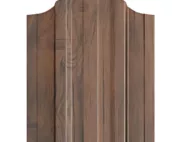
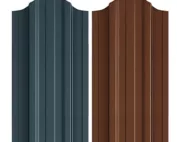
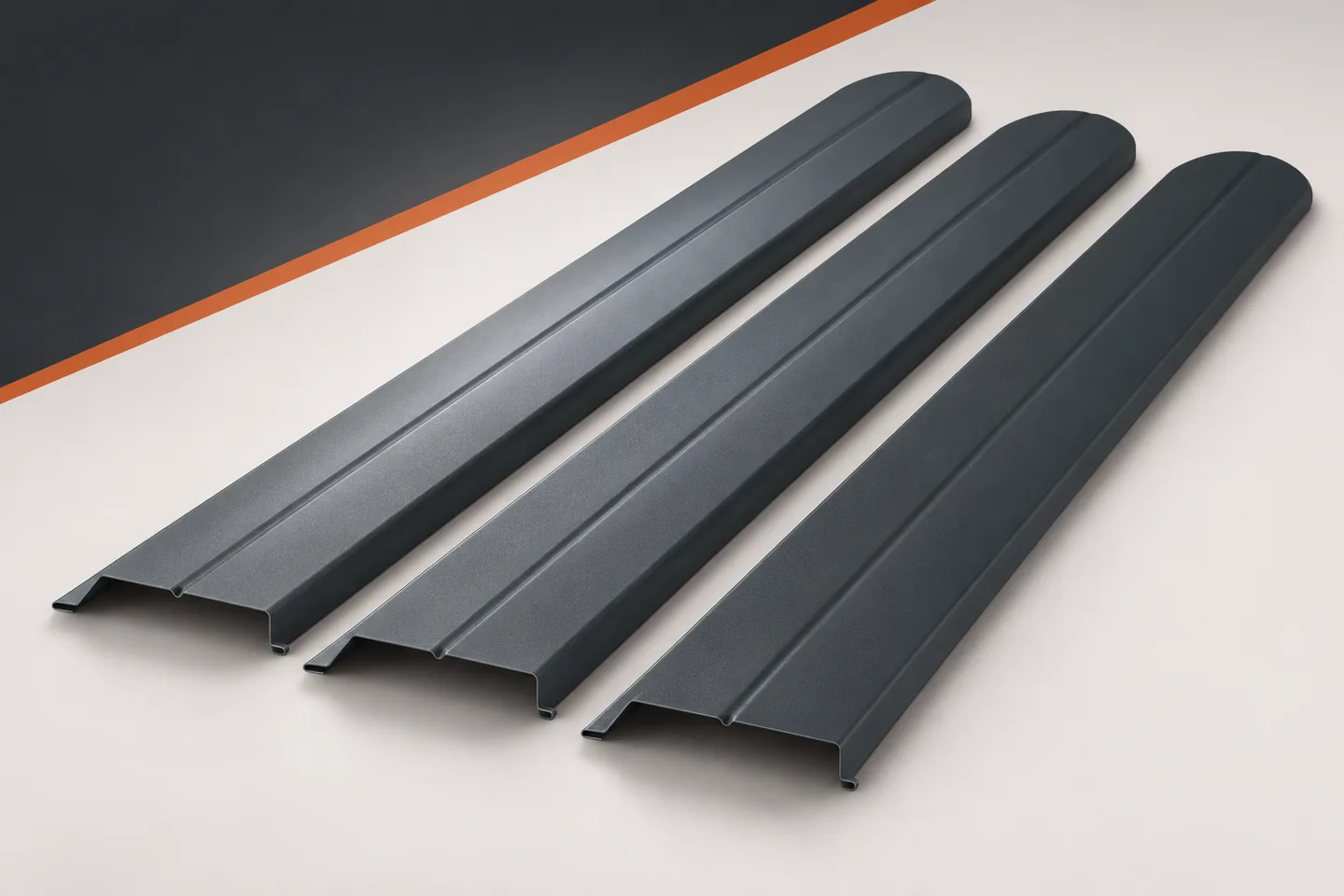
Sheet metal pickets may have straight, rounded or matching-piece finished ends. The shape should not arise by chance during cutting on site. It is worth checking the quality of the edges and conformity with the order. This also applies to the lower end, which is sometimes overlooked during inspection.
The cap must match the profile and be used in accordance with the instructions. It is not a universal way of repairing a tear or a poorly made edge. A loose detail requires checking. When accepting the fence, it is worth inspecting all end elements, not only those at eye level.
The fixing holds the infill in the correct position
Even straight and well-finished pickets will not fulfil their role with faulty connections. The choice of fasteners, their position and the condition of the support matter. A damaged hole or a loose crossbar can cause movement of the infill. Such a symptom should not be ignored simply because the fence still looks correct.
The inspection also covers protruding ends of fasteners and accessible contact points. The assessment must take both sides of the fence into account. Do not improvise with additional sharp elements to increase the sense of protection. Every change should be in accordance with the intended use of the system and properly assessed at the installation site.
A horizontal arrangement creates a different way of using it
Horizontal elements and crossbars may be perceived as an opportunity to rest a foot. This does not mean they were designed for climbing. Sheet metal pickets are infill, not steps. Such behaviour is worth taking into account when choosing the layout, particularly in places accessible to children.
The surroundings of the fence are similarly important. A planter, bench or stored items can make it easier to reach the top of the fence. The choice of metal alone does not remove this situation. A good solution requires looking at the whole site, including items placed by the fence after installation is complete.

The gate and the driveway gate are separate control points
Frequently used leaves have hinges, closers and clearances needed for movement. Infill made of pickets does not replace the proper functioning of these mechanisms. It is necessary to check whether the leaf rubs and whether the closer works as intended. The stability of the structure and its position after installation are also important.
With a powered gate, additional requirements apply to the entire device. Its safety should not be assessed on the basis of the appearance of the pickets. A change in the weight or density of the infill may require a reassessment of the leaf and the equipment. This is a task for the installer responsible for the given solution.
Installation and subsequent work also require attention
During installation, packaging, cut-off pieces and small fasteners are left behind. These should be removed from the work area. The pickets may have edges that require gloves when handling. The finished appearance of the component does not remove the need for caution during processing and installation. The work area should be separated from free access by household members.
After completion, it is worth walking around the whole installation and checking whether any loose details remain. A similar check is carried out after repairs and changes to equipment. Sheet metal pickets are convenient for local replacement, but even such a small job should end with an assessment of the fastening and tidying of the surroundings.
A safe choice begins with describing the requirements
Before purchase, determine who uses the property and what function the fence is to fulfil. Different priorities will arise for a small animal than for a busy driveway. Do not reduce them to a single word, “secure”. Pass on specific expectations to the installer and ask for an assessment of the whole system.
Metal fence pickets can be part of a well-thought-out fence. Their advantages are a repeatable form, a ready-made coating and the possibility of adapting the arrangement. However, the actual result is also determined by the structure, the connections, the moving parts and everyday use. Such an assessment is more useful than a promise of full protection resulting from the material alone.
7 branches. Materials closer to your project.

- SEROCK — Dzierżenin 34 E
- BŁONIE — ul. Sochaczewska 138A
- RADOM — ul. Grobickiego 8
- ŁÓDŹ — Natolin 8
- OLSZTYN — Barczewo, ul. Prosta 9
- WROCŁAW — ul. Jerzmanowska 10C
- GORZÓW WLKP. — ul. Zielona 33/34