PIR insulation
Is Thermano ETICS an ordinary PIR board? Construction and intended use
At a glance
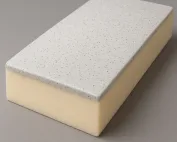
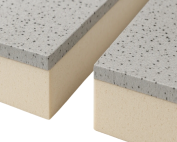
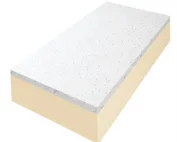
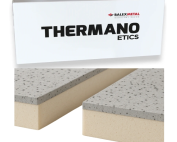
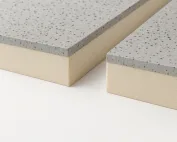
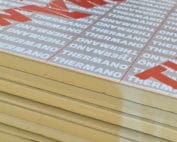
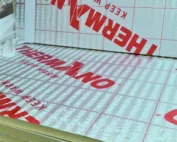
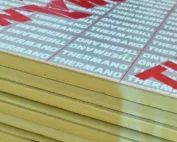
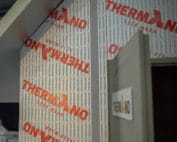
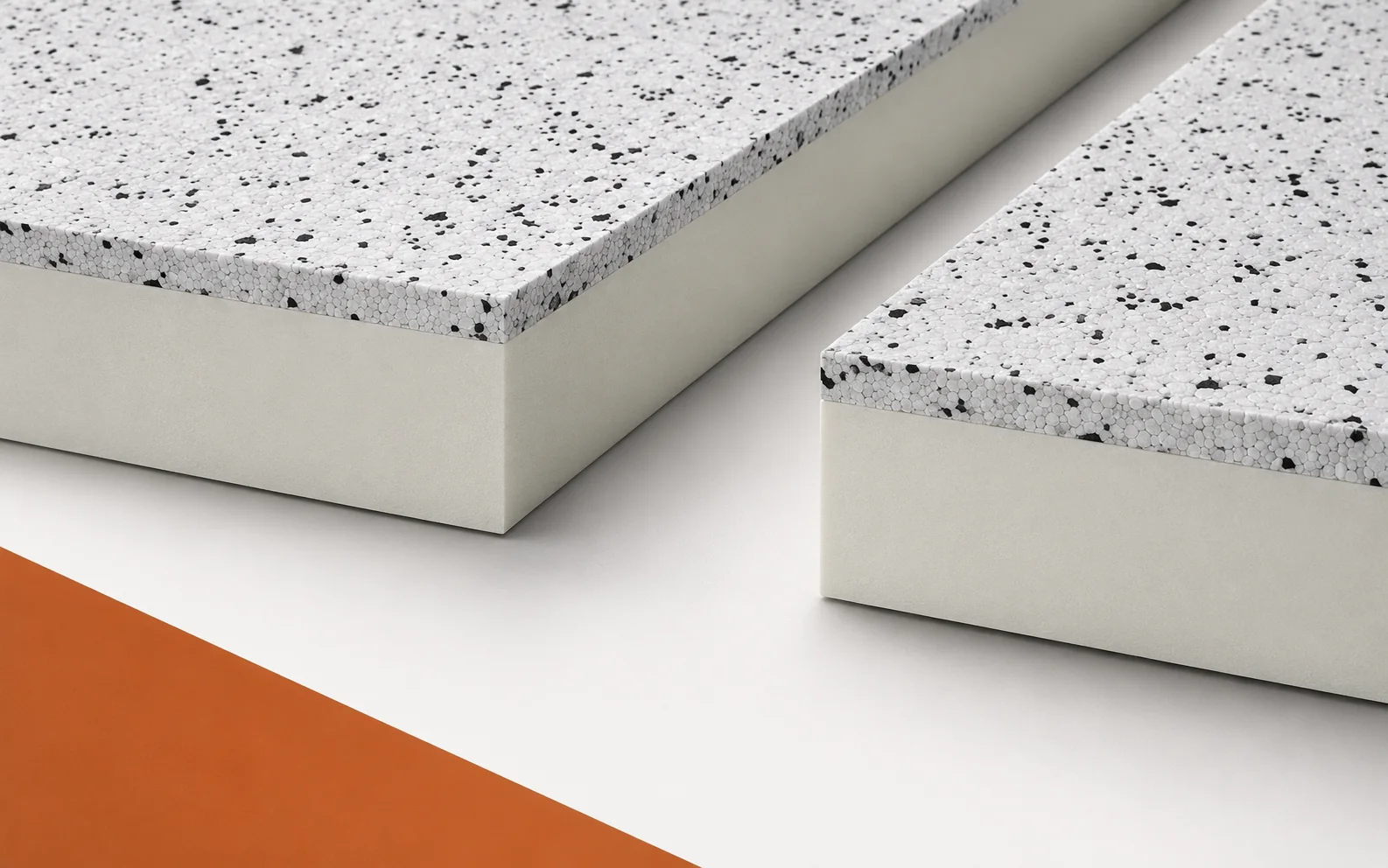
Thermano ETICS is not a homogeneous PIR board, even though its name and surface might suggest otherwise. It is a composite: the outer 20 mm is EPS, behind which lies the PIR core with gas-tight multilayer facings containing aluminium. This arrangement defines the product’s intended use and is the starting point when investigating the causes of defects in existing façades — it allows the properties of the board itself to be separated from the behaviour of the entire building envelope and reduces the risk of an incorrect substitute. During inspection, therefore, identify the cross-section: the PIR core and the outer EPS layer 20 mm thick, which is part of the composite and not an arbitrarily selected layer.
From the name to the actual board
When assessing existing thermal insulation, establish whether the visible EPS is part of the Thermano ETICS composite or a separate layer. Check the full product name, the side with the EPS layer, and whether the intended façade finish matches the documentation or the condition before the change. Only a scope established in this way allows you to assess whether correctly selected PIR boards preserve the construction of Thermano ETICS from the core to the surface prepared for further work.
How to read the thermal parameters
The value of 0.023 W/(m·K) applies only to the PIR component, not to the entire board. The insulation performance of Thermano ETICS is read from the thermal resistance R specified for the composite, because EPS and PIR conduct heat differently.
In Thermano ETICS, the value of 0.023 W/(m·K) applies to the PIR component, not to the entire board thickness. Read the thermal resistance of the composite from the R value for the whole product, because PIR and EPS conduct heat differently. Compare solutions on the basis of the R of the finished product, not the lambda of the core alone. Before assessing savings, establish the total thickness of the variant and the corresponding thermal resistance value of the composite.
Looking at Thermano ETICS, one can see EPS and wrongly take the product for a homogeneous board of that material. In reality it is a composite of PIR and outer EPS. This construction must be retained in the thermal calculation. Therefore neither the name of the core nor the appearance of the outer layer is sufficient to assess the whole product. It is worth looking up the R of the specific variant instead of independently assigning a single lambda to it.
Leak, vapour or airtightness failure
The 20 mm EPS layer in Thermano ETICS is the surface for the subsequent layers of the façade system, not protection against water. Protection at the window sill, plinth and top of the wall remains a separate component of the building envelope.
If damp in the building envelope is suspected, check the junction between the window sill and the façade, through which water can penetrate behind the finishing layer. The sill flashing and the top closure of the wall should drain water away from the surface and out of the insulation before you attribute the problem to the product name or facing. An additional 20 mm of EPS does not correct faulty flashing or the lack of a fall on the window sill. Compare the projection and ends of the window sill, the closing of the sides and the continuity of sealing at the window with the history of when the problem occurred.
Edge profiles and joint continuity
The Thermano ETICS board measures 600 × 1200 mm and has BASIC edges. The available variants of overall thickness range from 100 to 180 mm.
When checking the continuity of the thermal insulation, inspect the layout of the 600 × 1200 mm boards at the corners of façade openings. Determine the pattern of joints at the corners of openings before laying the BASIC boards, even when the surface looks level and neatly finished. The type of joint needs checking, because the wall area does not show the number of cut pieces where windows are closely spaced. To assess the performance of the polyurethane insulation at this point, gather the layout drawing of the elements and the method of terminating the composite at the window frames.
How to understand hardness and fire class
The Thermano ETICS data sheet states fire reaction class E, but this applies to the product, not to the entire façade. The final result is determined by the fixing, the reinforced layer and the render, so the board’s class cannot be transferred to any ETICS system, nor can it be replaced by an assessment of another system.
In the product data sheet, note that the Thermano ETICS board itself has a declared reaction to fire of E as a product. Assess the composite together with the fixing, the reinforcing layer and the render of the given system, so that the test result is not treated as permission for any arbitrary use. The product classes are not replaced by a random result found for a different ETICS system. In the event of discrepancies, ask for the set of system components, the fixing design and the conditions of the proper fire assessment, rather than for a general assurance about the quality of the board.
Practical inspection of the completed assembly
In the order for Thermano ETICS, record the full name and the total thickness of the composite, and compare the quotations being assessed within the same finishing system. Otherwise it is easy to compare a product with a different construction or an incomplete scope.
When pricing Thermano ETICS, compare the full specification with the total thickness, not just the trade name. Establish the name and thickness together with the scope of the façade finish, including the materials at the openings; without this, the comparison includes non-comparable items and does not give a reliable assessment of cost-effectiveness or completeness.
7 branches. Materials closer to your project.

- SEROCK — Dzierżenin 34 E
- BŁONIE — ul. Sochaczewska 138A
- RADOM — ul. Grobickiego 8
- ŁÓDŹ — Natolin 8
- OLSZTYN — Barczewo, ul. Prosta 9
- WROCŁAW — ul. Jerzmanowska 10C
- GORZÓW WLKP. — ul. Zielona 33/34