PIR insulation
Similar PIR boards, different properties: checking quotations and deliveries
At a glance
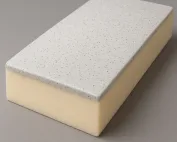
A silver facing and a light-coloured core are not enough to identify a board’s properties. PIR variants may differ in intended use, edge profile and mechanical parameters. Comparing the documents with the delivery allows discrepancies to be detected before the material is covered up. PIR boards may look similar yet have different facings, strength and intended use. Before purchase, a current technical data sheet, a declaration of performance and installation instructions are needed. A single trade name may cover several product versions. It is worth checking the full designation, the thickness and the document corresponding to the delivered version. In the offer, it is worth locating the full designation and then comparing it with the label on the pack. Boards of the same family may differ in facing or intended use.
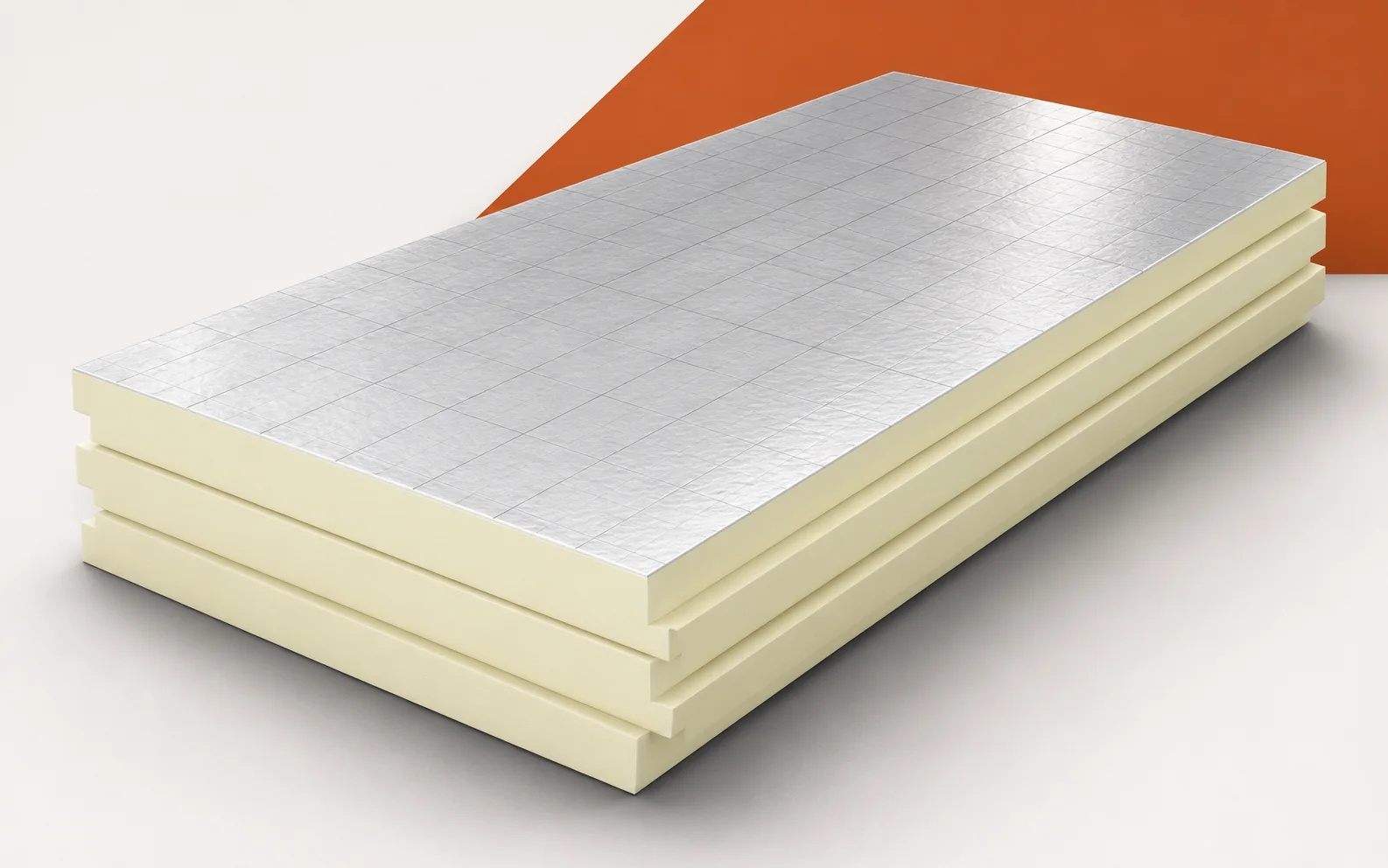
The document describes the correct variant
A photo of the silver surface is not enough for identification. If the document does not state the correct thickness or construction, this discrepancy must be clarified. This ensures that the assessment is based on the specific product that is to be installed.
Comparable scope of offers
Comparing offers only makes sense if they relate to the same task within the building component. Thickness alone does not determine thermal resistance, and an identical lambda does not guarantee that the facing is compatible with the given adhesive. A lower price for a different scope does not yet say anything about the quality of the board’s manufacture.
First, the common application and the required supplementary layers must be established. A lower price may result from a different format, scope of service or quantity of accessories. It should not immediately be taken as proof of poorer quality. First, the proposals must be brought to a common scope and function. It is also worth checking how the area is calculated. Only after these clarifications can it be assessed whether the price difference actually relates to comparable solutions.
Format and organisation of delivery
The format translates into the way of working: a large one reduces the number of elements to be laid, a small one makes it easier to carry in narrow spaces and to lay on a divided surface. An edge damaged during delivery can prevent a correct joint, even though the thickness remains the same.
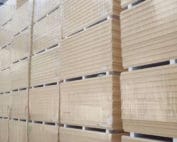
Acceptance should cover the condition of the components, not just the number of packs. On delivery, it is worth inspecting more than just the top board on the pallet. Damage to a corner or profile can make it difficult to maintain continuous contact. The material should be assessed before installation, in accordance with the acceptance rules for the given product. The number of correct packs does not confirm the condition of every component. Identifying the problem at the outset allows it to be resolved without searching for an incorrectly used board under a finished layer.
Cutting plan and edge connections
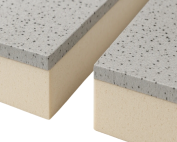
Cutting to size allows full boards to be used in repetitive locations and reduces waste. A straight edge, a shiplap edge and a tongue-and-groove edge require matching of adjacent components. A cut piece without a tongue requires a separate solution for the new joint, different from the factory edge.
It should not be assumed that every remaining fragment retains the function of a full board. After a component is cut, its end may require a different detail from the factory edge. This does not automatically mean that the cut piece is useless. It must be checked whether it fits dimensionally and can be correctly joined in the intended location. Cutting to size should take this function into account. Using every offcut without assessment may seemingly save material at the expense of joint quality.
Materials at the interface between layers
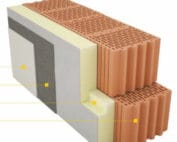
With PIR boards, most ambiguities arise at the joints: tape–facing, adhesive–substrate, fixing–structure. Tape detachment does not determine the lambda of the core; it points rather to the condition of the surface, moisture, dust or the choice of accessory. The repair must restore tightness at the correct layer, not merely cover the symptom.
This is not direct proof of an incorrect core lambda value. If the tape has detached, the surface, the preparation and the compatibility of the adhesive must be checked. Dust, moisture or the wrong product can produce a similar symptom. This is not information about the thermal resistance of the core. The repair should restore the required tightness at the correct layer. It is worth establishing the cause so that the new tape is not installed under the same unsuitable conditions.
Cost of use and subsequent maintenance
The price of the PIR boards alone does not exhaust the cost of the building element. To compare offers, substrate preparation, labour, cut-offs, supplementary components and protection of the works must be included. If one proposal omits a cost item, the difference concerns the scope, not the quality; the missing item must be clarified before assessment.
Replacing the entire technology is not always the necessary answer to an incomplete offer. An incomplete offer requires the items to be clarified, not always a change of the entire material. The cost of the missing fixings and surface preparation can be compared. If the solution remains in accordance with the design, such a calculation provides a clear basis for a decision. If, however, data on the application is missing, confirmation of that data is needed. Separating the pricing problem from the technical one helps to avoid unjustified conclusions.
Example of checking the quantity of material
Quantity check by way of example: for an area of 165 m² and a full board of 1200 × 600 mm, the geometry alone gives at least 230 pieces, and for 2400 × 1200 mm at least 58 pieces. This is not an order: the calculation omits cutting losses, the edge profile and the actual coverage area, so the result is corrected by the cutting plan and the product requirements. Order according to the full designation, separating PIR boards from gap-filling foam.
7 branches. Materials closer to your project.

- SEROCK — Dzierżenin 34 E
- BŁONIE — ul. Sochaczewska 138A
- RADOM — ul. Grobickiego 8
- ŁÓDŹ — Natolin 8
- OLSZTYN — Barczewo, ul. Prosta 9
- WROCŁAW — ul. Jerzmanowska 10C
- GORZÓW WLKP. — ul. Zielona 33/34