PIR insulation
PIR, PUR and polyurethane boards: making sense of insulation names
At a glance
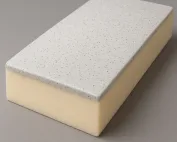
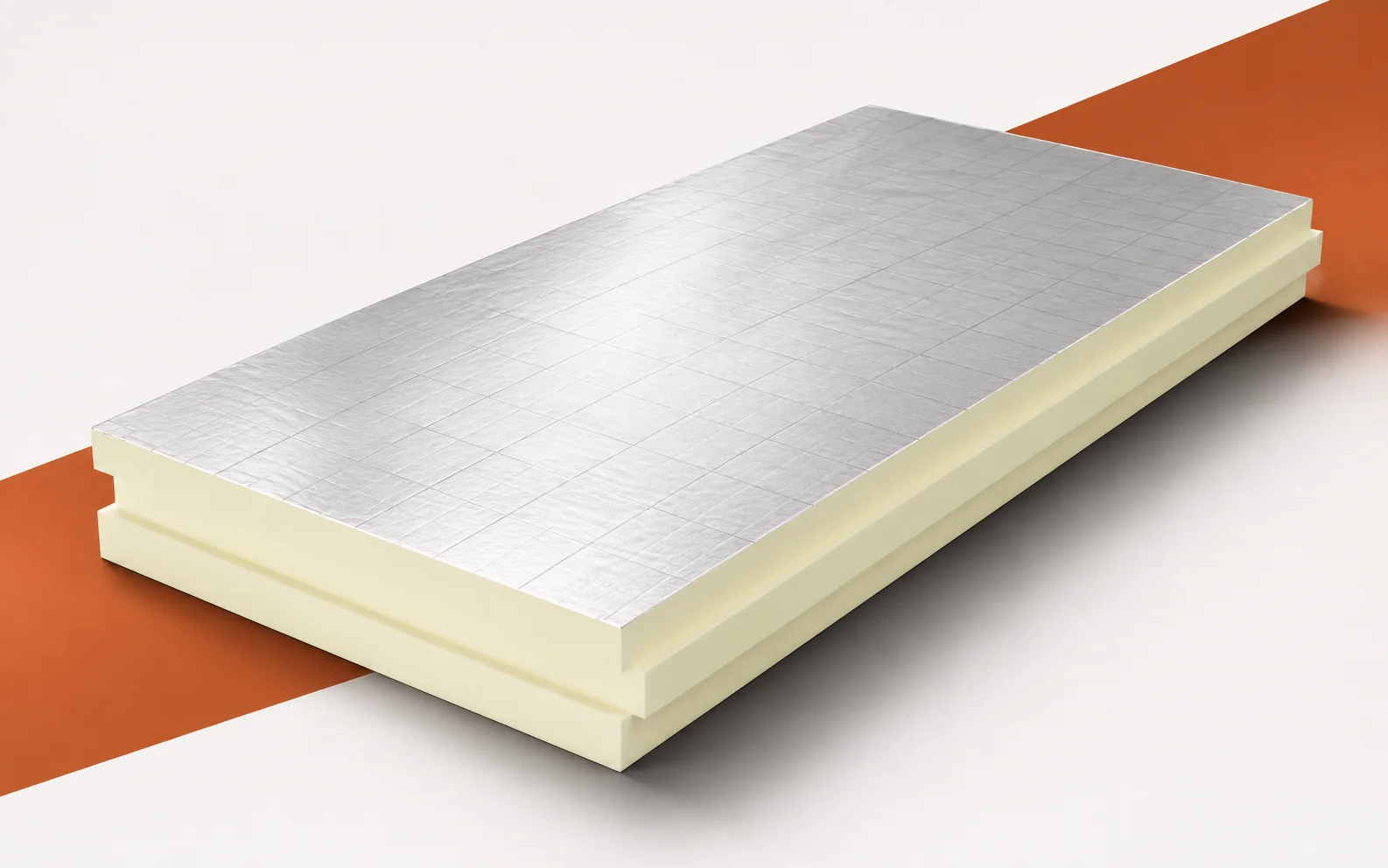
PIR and PUR are sometimes used in conversation as if they meant exactly the same thing. However, this simplification makes choosing insulation more difficult. It is worth separating the name of the material, the product form and the method of installation. This makes it easier to check which promises apply to the board being purchased. PIR means rigid polyisocyanurate foam. It belongs to the polyurethane family of materials, but it is not just any foam sold under the abbreviation PUR. In thermal insulation boards, the core is produced in the factory. It is given a specific thickness and works together with the facing selected for the given product. The term polyurethane foam does not yet indicate whether the material was produced as a finished board or will be made on site.
The PIR core and the meaning of the name
This difference matters more than the similarity of the abbreviations itself. A factory-made product has a defined form and documented parameters. A material applied on site requires assessment of the specific technology. Results from one group should not be transferred to the other without checking which product is actually being referred to.
The facing changes how it is used
Among the boards there are aluminium facings and multi-layer laminates with aluminium. There are also products with glass fleece and composite boards with other materials. The external appearance is not just a matter of aesthetics. The surface also helps determine bonding with adhesive, membrane or finishing layer.
The facing is part of the board, although it is sometimes omitted in short descriptions. If two materials share a common core but have different surfaces, their applications may differ. A good question is therefore not only what is inside, but also what will come into contact with the adjacent layer. This approach explains why one general bonding instruction does not suit the whole group. Polyurethane insulation does not have one universal installation surface.
Why a smaller thickness may be sufficient
For example, 100 mm of material with a lambda of 0.022 gives a calculated thermal resistance of about 4.55 m²K/W. This is the result for one layer, before taking the entire building component into account. It is not the U-value of a finished roof. When ordering, the declared R for the selected board thickness should also be used.
A lower lambda indicates that the material limits heat conduction. It is not a measure of the cold felt in a room. For this reason, a statement about good insulation can be true, while the promise of a specific temperature in summer is no longer justified. The whole building lies between these pieces of information. Glazing, shading and air exchange all come into play. It is worth asking whether the figure given comes from a proper calculation or is merely an impressive shorthand.
The application depends on the specific product
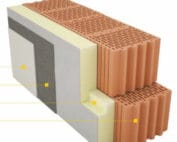
PIR boards are used in flat and pitched roof, floor and wall solutions. Individual products, however, have their own intended use. A board for a dry floor does not thereby become a material for permanent contact with water. Likewise, an ordinary aluminium laminate does not mean approval for every façade.
A photograph of a rigid board may suggest that the element is largely self-supporting. It does not prove, however, that the product will take over the tasks of the structure. Likewise, a visible silver surface does not make it a ready roof covering. Intended use is determined by the documents and the manner of application. Recognising these boundaries protects against a simple mistake: attributing to a material properties that arise solely from its appearance.
The edge helps, but does not replace care
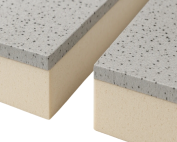
Boards may have a straight edge, a shiplap or a tongue and groove. The profile is a feature of the specific variant. A shiplap and a tongue and groove are not the same solution. It is worth looking at the edge drawing before purchase, particularly when a new delivery is to be joined to material already laid.
Descriptions of edges use terms such as interlock, rebate and joint without thermal bridges. The first two require the shape to be specified, while the last usually oversimplifies the phenomenon. Profiled edges can improve the continuity of the layer, but other points of heat flow remain in the building. The fastener, the support and the perimeter do not disappear when a shiplap is used. For this reason, it is worth looking at the cross-section of the entire building element instead of assessing it only by the joint between two boards.
Parameters worth checking alongside lambda
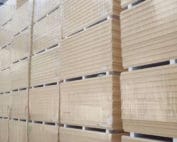
Store the boards in accordance with the manufacturer’s recommendations. Protection against precipitation and damage is needed even with low water absorption of the core. Transport packaging is not always intended for long-term storage outdoors. Before installation, inspect the facings and edges of every suspect element.
The symbols on the label correspond to specific test methods. They cannot be read in everyday terms alone. A high figure for compression does not mean arbitrary loading over decades. The material’s reaction-to-fire class is not the fire resistance duration of the entire construction. When a description combines these concepts, you have to go back to the source document. A reliable explanation states the scope of a given property and does not extend it to functions that have not been tested.
How to draw the correct conclusion
In online advice, the term foam is sometimes used for several products. Before comparing, check whether it refers to a factory-made board, a spray application or a material for gaps. Without this, even correct figures may relate to a different product than the one you are looking for.
When reading advice about PIR, check three things in turn: the name of the product, the conditions under which the parameter is given, and the conclusion drawn from that figure. This helps to spot overbroad generalisations. Polyurethane boards have specific advantages, but they do not need promises of performance in every situation. Insulation with polyurethane can be an appropriate choice where thickness is limited. However, assessing that choice remains a task for a specific building element, not for the abbreviation in the heading alone.
7 branches. Materials closer to your project.

- SEROCK — Dzierżenin 34 E
- BŁONIE — ul. Sochaczewska 138A
- RADOM — ul. Grobickiego 8
- ŁÓDŹ — Natolin 8
- OLSZTYN — Barczewo, ul. Prosta 9
- WROCŁAW — ul. Jerzmanowska 10C
- GORZÓW WLKP. — ul. Zielona 33/34