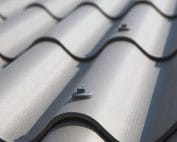
Fibre cement coverings
Replacing a discontinued corrugated sheet: how to find a compatible profile
In brief
Finding a replacement for a discontinued corrugated sheet is often harder than buying material for a whole roof. The name may have changed, and the sheet available today may have a different profile. Corrugated fibre cement sheets must be compared on the basis of data, not visual similarity. Asbestos-free fibre cement as a general category does not guarantee interchangeability. It is worth establishing whether an exact equivalent is needed or a designed repair solution covering a larger section of the roof slope. Purchase documents, markings, the date of the renovation and photographs of the whole roof will be useful. Information about earlier repairs is also important. Some sheets may already have been replaced with another product. If the composition of the old material has not been confirmed, a sample should not be taken by breaking or drilling.
Gather as complete an identification as possible
Appropriate identification must be organised. A cross-section drawing is valuable when searching for a replacement, but measurements should be taken safely. An illegible mark is better left as unknown than guessed as a name and used to order a product on that basis. Incorrect identification often leads to further seemingly matching offers.
Compare more than width and length
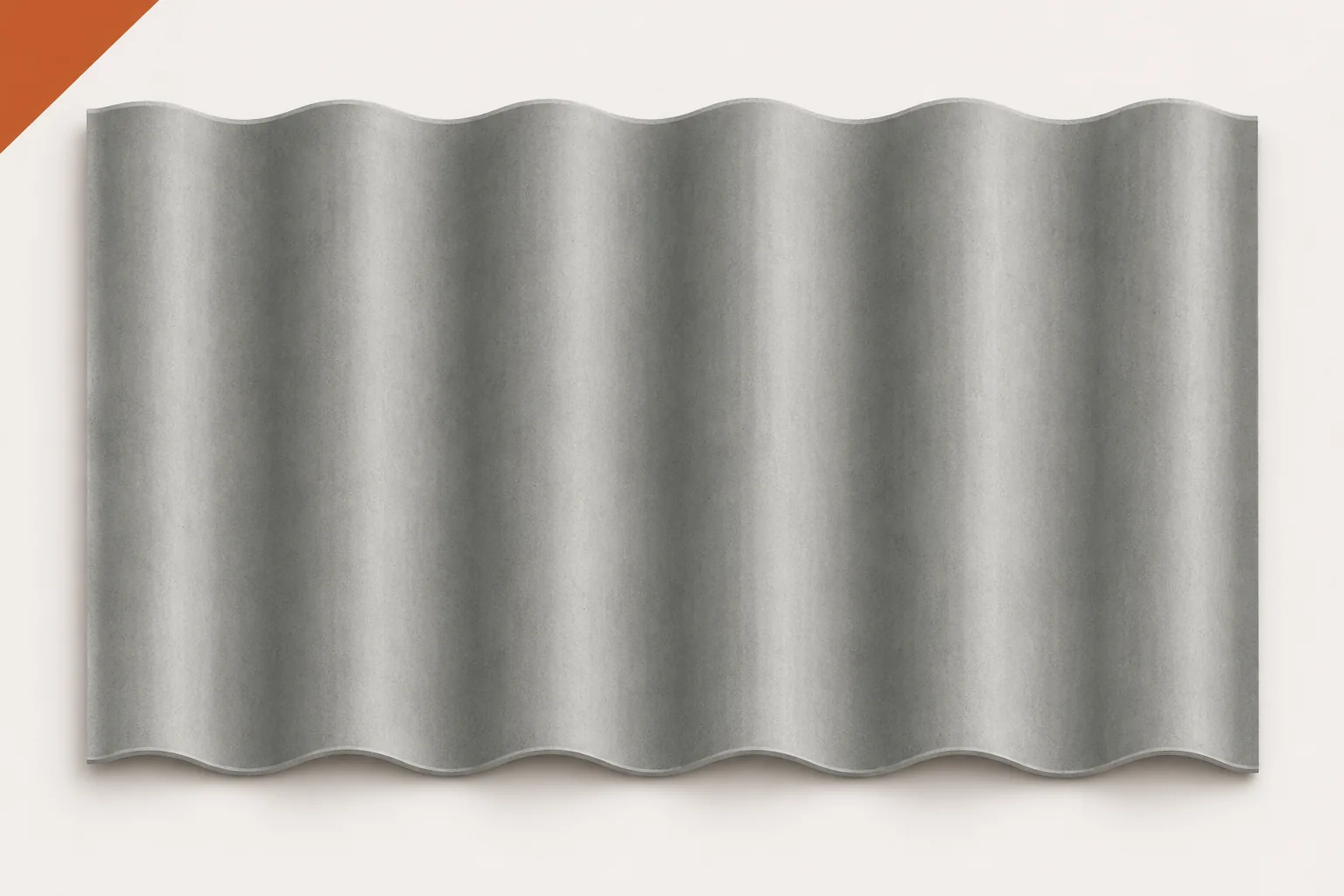
Pitch and wave height, thickness and the shape of the side edges affect the connection. Corrugated fibre cement sheets may have similar external dimensions but differ in cover width. The sheet then will not fit into the existing row as expected. The end laps and hole positions are also important. The number of waves given in the name alone does not replace a drawing. It is good to prepare a comparison of the old and proposed product at the same scale. This allows specific differences to be identified for assessment. They should not be hidden under a general assurance that the new sheet is standard and should fit.
A similar accessory does not confirm that the sheet matches
A seal or ridge tile may cover part of the roof, but it is not proof that the sheets are interchangeable. Corrugated fibre cement sheets must sit properly at the laps and bear on the supports. If the new profile touches the old only at isolated points, tightening the fasteners more will not create a correct connection. It may instead cause cracking. The whole detail must be assessed, including the adjacent skylight or flashing if these remain in place. A translucent element has its own material and requirements. It must not be treated as proof that any sheet with a similar wave will be a suitable replacement.
A change of product name requires checking the documents
Company takeovers, new designations and changes in product ranges can make the search difficult. An old name does not have to mean an identical current version. Asbestos-free Eternit must be identified by the specific type and delivery documentation. It is worth asking the supplier to confirm product succession and the differences between versions. Installation conditions and geometric parameters are particularly important. An old catalogue can help identify the product but does not confirm current availability. Nor should a warranty be carried over from a foreign document or another period. For a repair, more important than a familiar name is whether the data refer to the sheet actually being offered.
The absence of a direct equivalent may change the scope of the repair
If there is no confirmed replacement, replacing a larger area or a separate connection designed for two parts must be considered. Corrugated fibre cement sheets should not be joined into a random mosaic of profiles. Extending the scope does not have to mean the whole roof, but it requires defining the boundaries of a correct detail. It is worth comparing the cost of such a repair with continuing to search for a part of uncertain origin. A used sheet also requires assessment of its composition, condition and suitability. Shape conformity alone does not prove that properties are retained. A sensible decision takes into account the possibility of safe installation and future maintenance, not just the price of a single piece.
The condition of adjacent elements affects the success of the replacement
Even a matching replacement will not solve the problem if the surrounding sheets have cracks or stressed fastenings. Corrugated fibre cement sheets must be assessed across the entire repair area. The supports, seals and position of the laps must be checked. Dismantling may reveal earlier makeshift repairs. Provision should be made for agreeing additional work rather than assuming that every replacement will take exactly the same time. Safe access is an essential part of the cost. Do not stand directly on adjacent sheets, even when the repair concerns only one place. New damage during the work can increase the scope of the entire renovation.
Keep a record of the agreed solution
Once the part has been selected, it is worth recording its designation, the documents and how it connects to the old roof. The corrugated fibre cement sheets used in the repair should be identifiable during the next service visit. Photographs taken before the work, during installation and after completion will be useful. If a different section of the roof slope has been retained, its boundaries should be marked in the documentation. It is not worth relying solely on the contractor’s memory. After a number of years, similar colours may make it difficult to distinguish between the stages of the renovation. A clear record allows the next team to avoid repeating the same searches and unjustified combining of components from different systems.
When looking for asbestos-free fibre cement for a repair, prepare the designations and the full cross-section of the old product. Compatibility should be confirmed by the technical solution, not just a similar photograph.
7 branches. Materials closer to your project.

- SEROCK — Dzierżenin 34 E
- BŁONIE — ul. Sochaczewska 138A
- RADOM — ul. Grobickiego 8
- ŁÓDŹ — Natolin 8
- OLSZTYN — Barczewo, ul. Prosta 9
- WROCŁAW — ul. Jerzmanowska 10C
- GORZÓW WLKP. — ul. Zielona 33/34