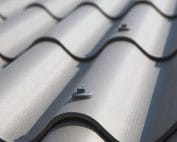
Fibre cement roof coverings
Renovating a barn while preserving its character: choosing the roof covering
In brief
Renovating a barn does not have to mean completely changing its appearance. A corrugated roof can retain the simple rhythm and the utilitarian character of the building’s form. Corrugated fibre cement sheets should, however, be chosen on more than just their similarity to the old covering. The condition of the structure, the proportions of the sheets and the details at the eaves and gables all matter. Asbestos-free fibre cement makes it possible to consider a contemporary material in a traditional form, provided the solution is matched to the building and its future function. A barn’s appearance is determined not only by the roof colour and the type of walls. The height of the ridge, the width of the eaves, the lines of the gables and the proportions of the large surfaces are also important. It is worth photographing these features before renovation and identifying which are to be retained.
Note what creates the building’s character
This will make it easier to compare material proposals. Sometimes an accidentally wide flashing changes the perception of the building volume more than a new shade of covering. For a building covered by special protection rules or local provisions, the requirements for the planned works should be checked. The intention to keep a similar appearance alone does not settle all the conditions of the investment.
Identify the old material without guessing
The old corrugated covering may contain asbestos or come from a later replacement. The composition must not be determined by colour alone. Corrugated fibre cement sheets for the new roof should have confirmed documentation, and the former material requires separate identification. Invoices, markings and the history of renovations help. In case of uncertainty, a suitably prepared contractor must be engaged, without breaking or drilling it yourself. The method of dismantling and waste management should be established straight away. This stage should not be hidden in a general ‘roof replacement’ item, because it affects the organisation and cost of the works.
Check the roof structure and connections
The large space of a barn is often spanned by a structure with considerable spans. The condition of a single visible beam is not enough to assess the whole. Corrugated fibre cement sheets must be supported on a system verified for the new covering and loads. Inspections are needed of connections, bearing points, bracing and signs of moisture. Columns removed earlier or altered walls may be significant. Preserving the character of the building does not mean a defective element must be left without repair. A well-designed reinforcement can improve safety with limited intervention in the appearance.
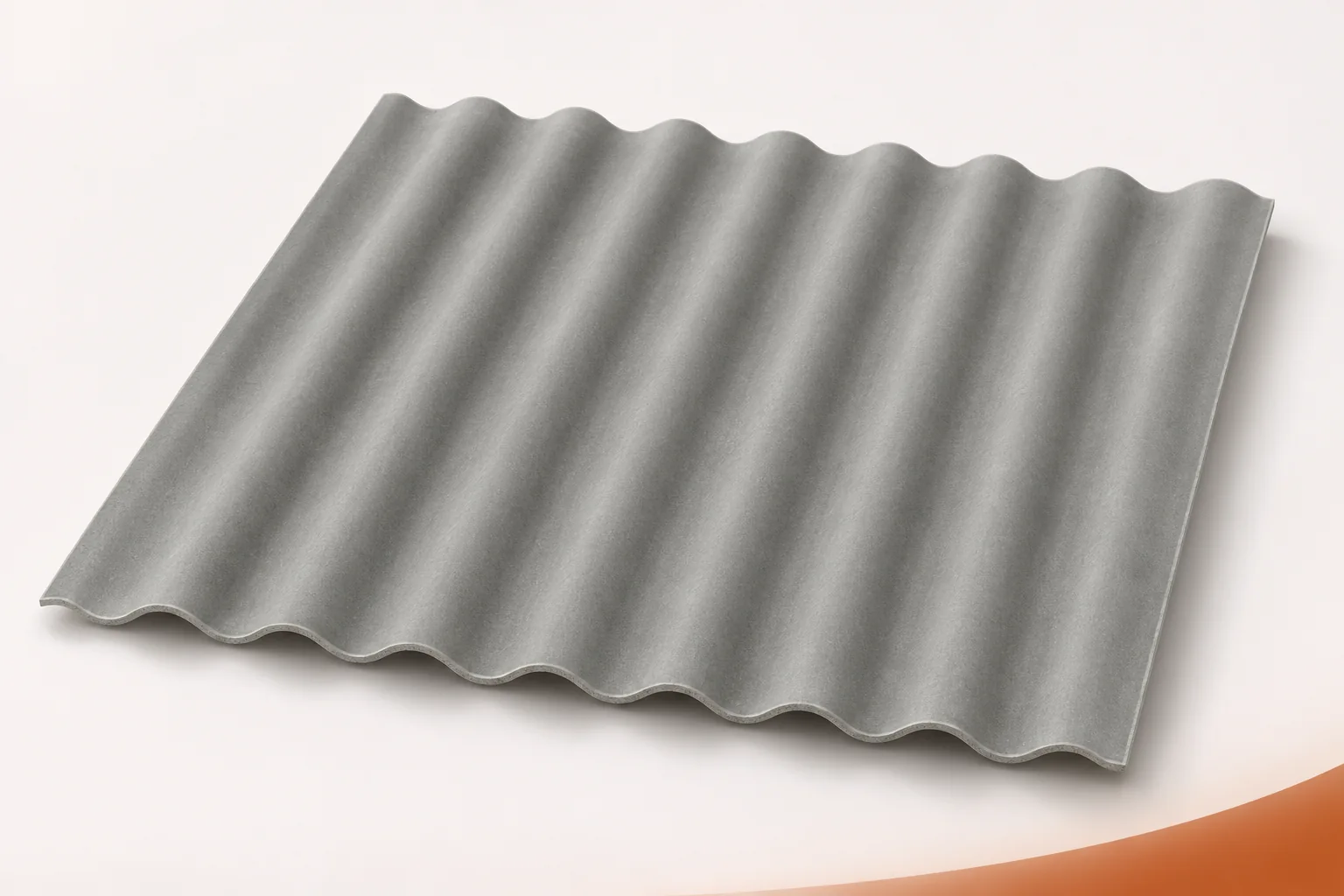
Profile and format change the rhythm of the roof slope
A larger corrugation gives a different interplay of light and shadow than a fine profile, and shorter sheets increase the number of visible joints. Asbestos-free fibre cement is worth assessing on a sample of the full cross-section and on a drawn roof. A photograph of the colour alone does not show these differences. The selection should take into account the arrangement of supports and the feasibility of proper laps. A profile should not be bought merely because it resembles the former one. Equally important is the availability of matching fittings and the detailing of special locations. A coherent effect comes from the whole set, not from a single sheet laid on the ground.
Details are worth simplifying in a controlled way
Clear lines of the eaves and gables work well in a traditional building volume. This does not mean giving up necessary finishes. Corrugated fibre cement sheets must have proper edge protection, water drainage and fixings. The details should be drawn so that they do not create accidental large bands of flashings. The new gutters must also be coordinated with the sheet overhang. An excessively long unsupported end is not a way to preserve the old roof line. If a detail requires change, it is worth refining it at the design stage, before available offcuts decide it.
A new function may require different layers
A barn that remains a store has different needs from a building adapted into a workshop or commercial space. Fibre cement sheets are a covering, and heating requires an assessment of insulation, airtightness and moisture. Do not add random insulation between old beams without checking ventilation and the ability to dry out. The structural load and the importance of daylight also change. It is worth defining the intended use before renovating the roof. This avoids removing the new material again when a decision is made a few months later to install heating or additional equipment.
Match the works to how the farm is used
If machinery or materials remain inside, their protection and exclusion zones must be planned. Dismantling and repairing the roof structure may require more space than the covering work itself. Fibre cement sheets should be delivered in line with the readiness of the structure. A dry storage area and a safe method of handing up the sheets are needed. The schedule should include protecting the building in the event of a weather-related break. It is not worth opening up the entire roof if the supply of fittings and finishing materials has not been secured. Good phasing limits damage without departing from the correct procedures for handling the old covering.
Keep documentation of the new solution
After the renovation, it is worth having a drawing of the supports, a list of the sheets and accessories, and photographs of the details. These will help with later repairs and with checking the compatibility of planned installations. A natural-looking roof does not mean it needs no inspection. Drains and ventilation must be kept clear, and the fixings should be monitored. Service access should be possible without walking directly on the sheets. Properly prepared maintenance helps preserve both the appearance and the function of the covering. A renovation is successful when the building retains its character and the new solution remains technically clear to the next contractor.
When choosing asbestos-free fibre cement for a barn, prepare photographs of the building form and a plan of its future use. This will allow the right roof parameters to be combined with preserving its simple character.
7 branches. Materials closer to your project.

- SEROCK — Dzierżenin 34 E
- BŁONIE — ul. Sochaczewska 138A
- RADOM — ul. Grobickiego 8
- ŁÓDŹ — Natolin 8
- OLSZTYN — Barczewo, ul. Prosta 9
- WROCŁAW — ul. Jerzmanowska 10C
- GORZÓW WLKP. — ul. Zielona 33/34