Steel profiles and structures
How much load can a cold-formed section carry? Why the answer varies
In brief
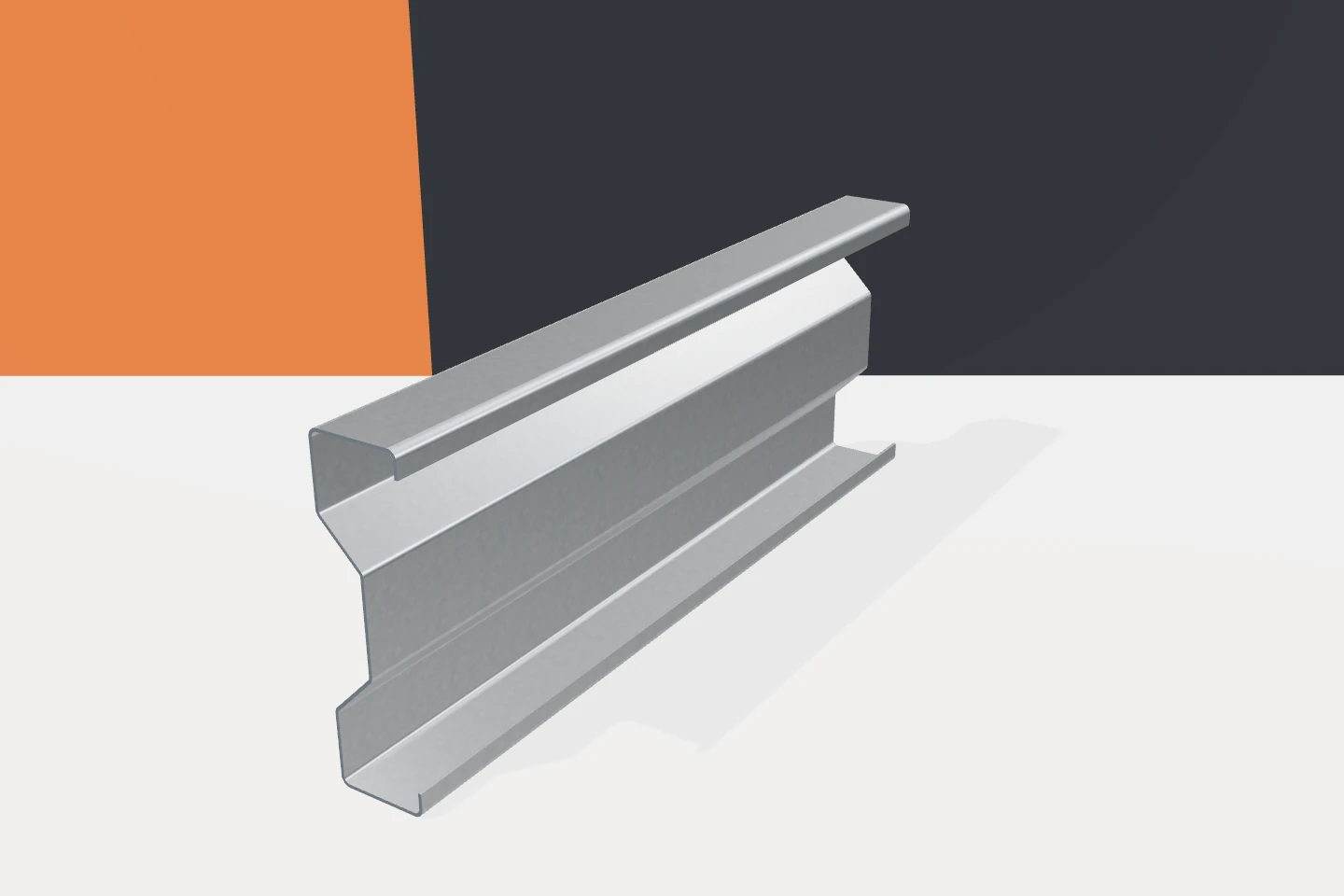
The question of a profile’s load-bearing capacity seems simple. In practice, it cannot be answered with a single number without additional data. The same channel section can act as a post, a rail or a purlin. A zed profile can have a different span and different lateral support. Cold-formed profiles must be assessed within a specific arrangement. It is worth understanding what information changes the result before comparing tables or offers. A uniformly distributed load does not act the same as a single force at mid-span. The direction of the action also matters. A roof is subject to self-weight, snow and wind, not just a mass placed on top. Suction can change the sign of bending and the working conditions of the flanges. A wall rail, in turn, receives loads from the cladding and wind in a different arrangement.
The load must be described first
For this reason, the statement that a profile will hold a given number of kilograms often omits the most important conditions. It is not known where this load acts or how it is distributed. Galvanised profiles are selected on the basis of the loads described in the design. Their origin and combinations matter. A default value from another project is not a safe reference point.
Span and element length are different concepts
The length of the ordered profile need not equal the distance between supports. An element may span several bays, have a cantilever or form a lap. The span describes the part of the system in which it works. Without this information, the commercial length alone says little about load-bearing capacity. It is worth marking the supports on a simple diagram before starting a discussion about the section.
Increasing the span changes both the internal forces and the deflections. A result for a shorter span therefore cannot be transferred to a longer one by a simple comparison of masses. Z-sections, C-sections and sigma profiles respond to these changes in accordance with their geometry. A solution suitable for one frame spacing may require adjustment at another.
The type of support affects beam behaviour
A simply supported, continuous and cantilever element are different cases. Continuity requires suitable connections, not merely physical contact between two parts. Laps of Z-sections and splice plates of C-sections must correspond to the intended scheme. If the connection is made differently, the same table cannot be used without verification. The conditions for which the result was given change.
The width of the support and the way the reaction is introduced are also important. A thin web may require a local check. Additional reinforcements should not appear by chance. Cold-formed profiles need a consistent bearing detail. High load-bearing capacity at mid-span does not prove that the zone at the support is correct.
Thickness and steel have different roles
The sheet thickness affects the geometry, mass and behaviour of the walls. The steel grade determines the material properties. Increasing one parameter does not automatically replace changing the other. A higher yield strength does not mean a proportionally smaller deflection. This is important when comparing offers in which suppliers propose different combinations of material and thickness.
It is also worth distinguishing the nominal thickness of the product from an incidental measurement at a single point. The documentation specifies how it is stated and the tolerances. Interchangeability should not be determined on the basis of the appearance of the edge alone. Galvanised profiles may look similar even though they differ in material. The full designation is needed for identification.

Thin walls require a stability assessment
In a cold-formed profile, the entire geometric width of the web does not always work in the same way. Under compression, local deformation and loss of stability may occur. A change in the shape of the entire cross-section can also be significant. This is why effective quantities appear in the documentation. Their interpretation requires knowledge of the load case.
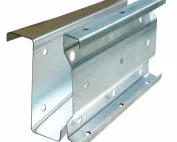
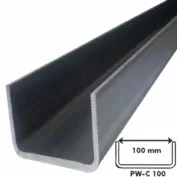
This issue also concerns the torsion of open cross-sections. Z-sections and channel sections may require lateral restraint. Sigma profiles have additional bends, but they are also subject to such checks. Omegas are assessed in accordance with their specific geometry and function. There is no shape whose name alone removes the need for a stability analysis.
Deflection may be decisive before strength
A structure must not only transfer forces but also serve users correctly. Excessive deformation can hinder the performance of the cladding, flashings or other parts of the building. For this reason, the requirements for load-bearing capacity and serviceability are checked separately. The permissible deflection level depends on the application. It should not be selected on the basis of the more convenient result.
For additional installations, the method of fixing must also be taken into account. A suspended weight may introduce a local force and torsion that were not present before. The assessment then concerns both the profile and the bracket. Cold-formed profiles should not be treated as an arbitrary suspension point. Every new function requires verification of the existing conditions.
How to prepare data for a sensible selection
A cross-section drawing, the material, the thickness, the span lengths and the support arrangement are needed. The loads, the spacing of members, the connections and the bracing must be described. The type of cladding and whether its composite action may be taken into account are important. A set prepared in this way allows the designer to compare actual variants. It also reduces the number of misunderstandings with the supplier.
Galvanised profiles can provide an efficient and lightweight structure, but they are not selected by guessing the load capacity. A catalogue table is useful only under consistent assumptions. If even the support method is missing, a single number gives false certainty. A good answer to the question of load capacity therefore begins with a description of the task and ends with the selection of a specific element.
7 branches. Materials closer to your project.

- SEROCK — Dzierżenin 34 E
- BŁONIE — ul. Sochaczewska 138A
- RADOM — ul. Grobickiego 8
- ŁÓDŹ — Natolin 8
- OLSZTYN — Barczewo, ul. Prosta 9
- WROCŁAW — ul. Jerzmanowska 10C
- GORZÓW WLKP. — ul. Zielona 33/34