Steel profiles and structures
Small omega sections and hat-section purlins: why they are not interchangeable
In brief
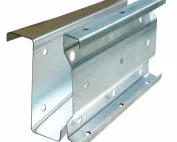
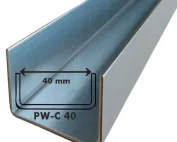
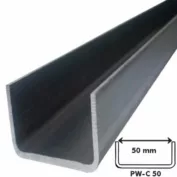
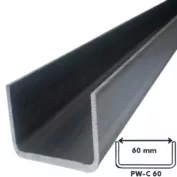
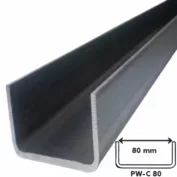
The name omega covers profiles with a similar cross-section concept but very different capabilities. A low element under the cladding and a high hat purlin are not equivalent. They differ in dimensions, thickness and the way they are used. It is worth remembering this when cold-formed profiles are chosen from a photo or a short description. A similar outline is not enough to assess the function in a building. An omega profile has a central part set away from two side feet. The feet form surfaces through which the element can be fixed to the substrate or to other parts of the structure. The central section provides spacing and a surface for the next layer. This construction is useful in subframes. It allows the fixing plane to be separated from the plane supporting the cladding.
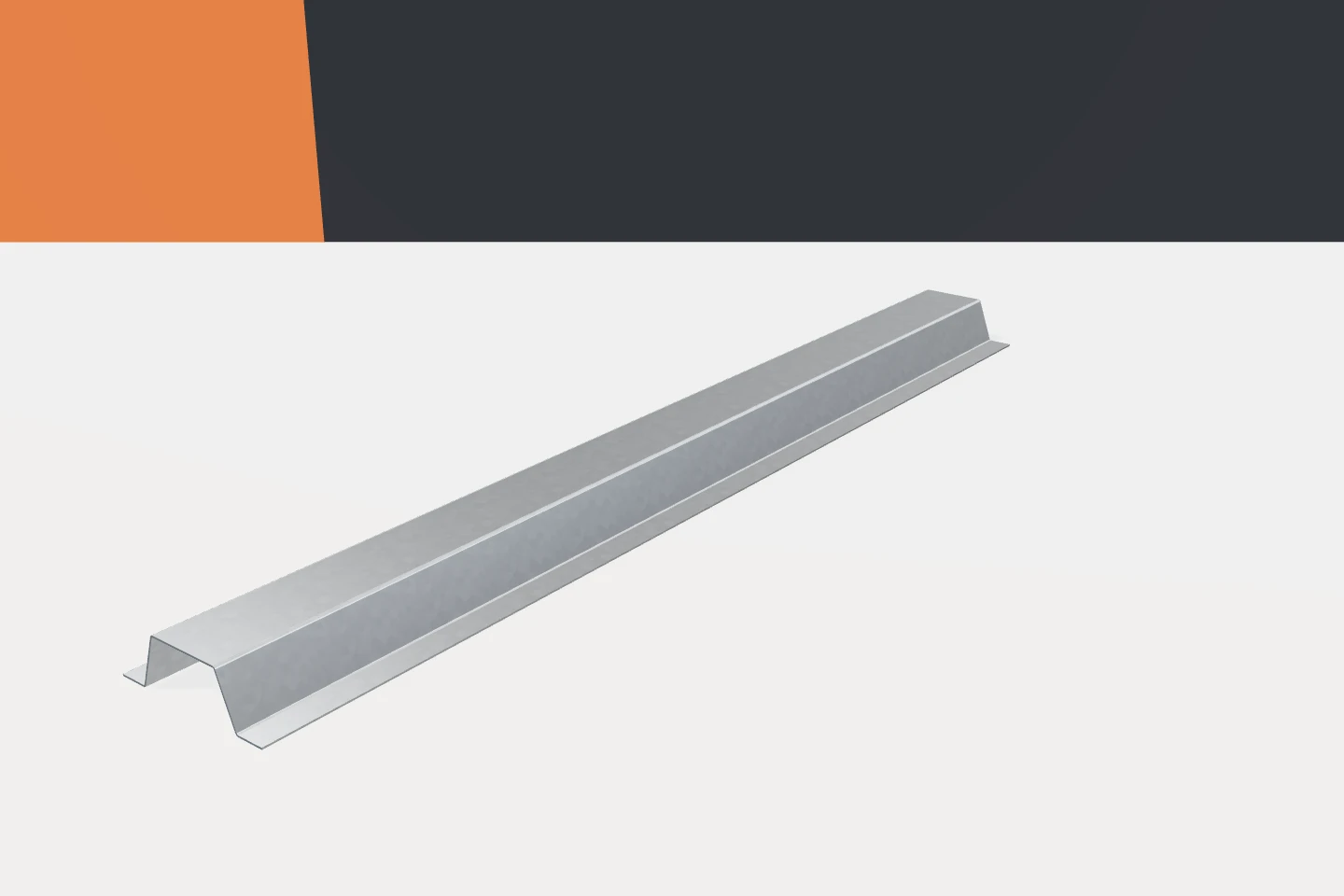
What distinguishes the hat cross-section
The angle of the webs, the height and the width of the feet depend on the specific product. One should not assume a single standard dimension for all omegas. Some sections have additional bends, others a simpler form. Each version must be read from the drawing. Galvanised profiles sold under a similar name may also come from different technical families.
The frame carries loads even though it looks light
The substructure under the cladding has its own structural task. It takes loads from the fixed layer and transfers them onwards. Omegas should therefore not be treated solely as spacer battens. Their spacing, the length between fixings and the method of connection must be taken into account. This applies both to loads acting towards the substrate and to uplift loads.
It is not enough to check the profile alone. Fasteners and the substrate can limit the load-bearing capacity of the entire solution. A long screw does not automatically become a suitable fixing. Its parameters must match the materials being joined. The selection of the framework therefore requires the interaction of geometry, steel element and fixing. This is a similar principle to that for larger cold-formed profiles.
The purlin requires a different scope of checks
An element working between the frames of a hall has a different task from a short omega fixed at many points. The purlin transfers roof loads to the main structure. Its cross-section, connections and stabilisation must correspond to this scheme. There are systems with hat-shaped purlins. Their properties derive from the documentation of the specific family, not from the name omega alone.
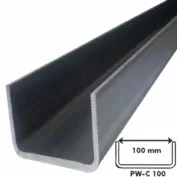
A Z-section or channel cannot be replaced by a thin strip of similar width. Z-sections, channels and sigma profiles have their own characteristics. The required loads and spans are needed for comparison. Only then can it be seen whether a given hat-shaped section is a structural solution. A photograph does not provide information about the steel grade or wall thickness.
Fixing through the feet has advantages and limitations
The two feet can facilitate the arrangement of fasteners and the positioning of the element. However, it must be checked whether both are adequately supported. An uneven substrate or random shims can cause local deformation. The required edge distances of the holes must also be maintained. Tightening the profile with a screw should not serve to compensate for an incorrect substrate geometry.
The width of the feet affects installation options. Too narrow a surface can make it difficult to seat the fastener correctly. The details should account for tool access and the sequence of work. Cold-formed profiles facilitate prefabrication when the details are prepared in advance. Improvised installation negates this benefit and increases the number of uncontrolled changes.

Distance does not mean automatic thermal insulation
Omega can create a space beneath the cladding, but the steel itself conducts heat. The resulting gap does not solve all thermal bridges. The thermal properties of the building envelope are determined by the entire system of layers and connections. If separators or decoupling of the substructure are needed, a designed solution should be used. Random material inserted under the foot can alter the behaviour of the fixing.
Similarly, the gap behind the cladding is not automatically correctly ventilated. Its continuity, inlets, outlets and edge details are what matter. Galvanised profiles can be part of such a system, but they do not replace its design. It is worth separating the spacer, load-bearing and thermal functions. This makes it easier to assess what is actually expected of the omega.
Water retention points require attention
The orientation of the cross-section can encourage moisture retention in certain places. The zinc coating helps protect the steel, but it should not justify creating permanent pools. The detail should be designed to limit dampness. This also applies to connections with other layers. Water trapped under the cladding can remain invisible during a routine inspection.
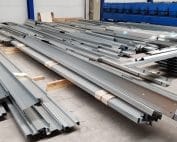
Omegas must also be stored properly before installation. Tightly stacked, wet galvanised profiles have difficulty drying out. A dry, well-ventilated space and support for the bundle reduce the risk of problems. Elements should not be dragged over one another or over the ground. Minor surface damage is easier to avoid than later repairs within a closed frame.
How to order the right omega
In the enquiry, it is worth showing the cross-section and the function of the element. The height, the width of the central part and of the feet, the thickness and the length are needed. In addition, there are the material, coating and hole pattern. If the omega is to act as a load-bearing element, the design requirements must be provided. The phrase ‘strong galvanised omega’ alone does not allow offers to be compared.
Well-chosen omegas help to organise the substructure and simplify the fixing of claddings. Larger hat profiles can perform other, verified tasks. It is worth making use of this diversity. Cold-formed profiles offer many possibilities, but they require a precise description. The right product is one whose parameters match the specific function, not just the desired appearance.
7 branches. Materials closer to your project.

- SEROCK — Dzierżenin 34 E
- BŁONIE — ul. Sochaczewska 138A
- RADOM — ul. Grobickiego 8
- ŁÓDŹ — Natolin 8
- OLSZTYN — Barczewo, ul. Prosta 9
- WROCŁAW — ul. Jerzmanowska 10C
- GORZÓW WLKP. — ul. Zielona 33/34