Flashings
Inspecting sheet metal flashings after the season: what to check and record
In brief
A roof inspection is most useful when it provides a specific description of the condition of individual locations. A general statement that the sheet metal looks good says little about the laps and seals. It is worth examining ridge tiles, barge flashings, gutter aprons and chimney flashings separately. Each group performs under different conditions. A good inspection record helps distinguish ordinary soiling from a defect requiring repair. From the ground it is possible to assess the line of the flashings, larger bends and traces of water on the façade. A detailed check of the fixings usually requires suitable access. It is worth commissioning this to a contractor equipped to work at height. There is no need to go onto the roof yourself to begin documenting a problem you have noticed.
Plan a safe scope of inspection
Before the inspection, gather information about previous repairs and the type of covering. Photographs taken after strong wind or intense rain will also be useful. They make it easier to identify the places to be checked. The assessment should not be based solely on the appearance of the roof on a dry day.
Ridge and gable edges
Ridge tiles are checked for their position, joints and ends. In a ventilated roof, it is important to maintain the intended air outlet. In a sandwich panel enclosure, the detail specific to that system is checked. These solutions should not be standardised during routine sealing.
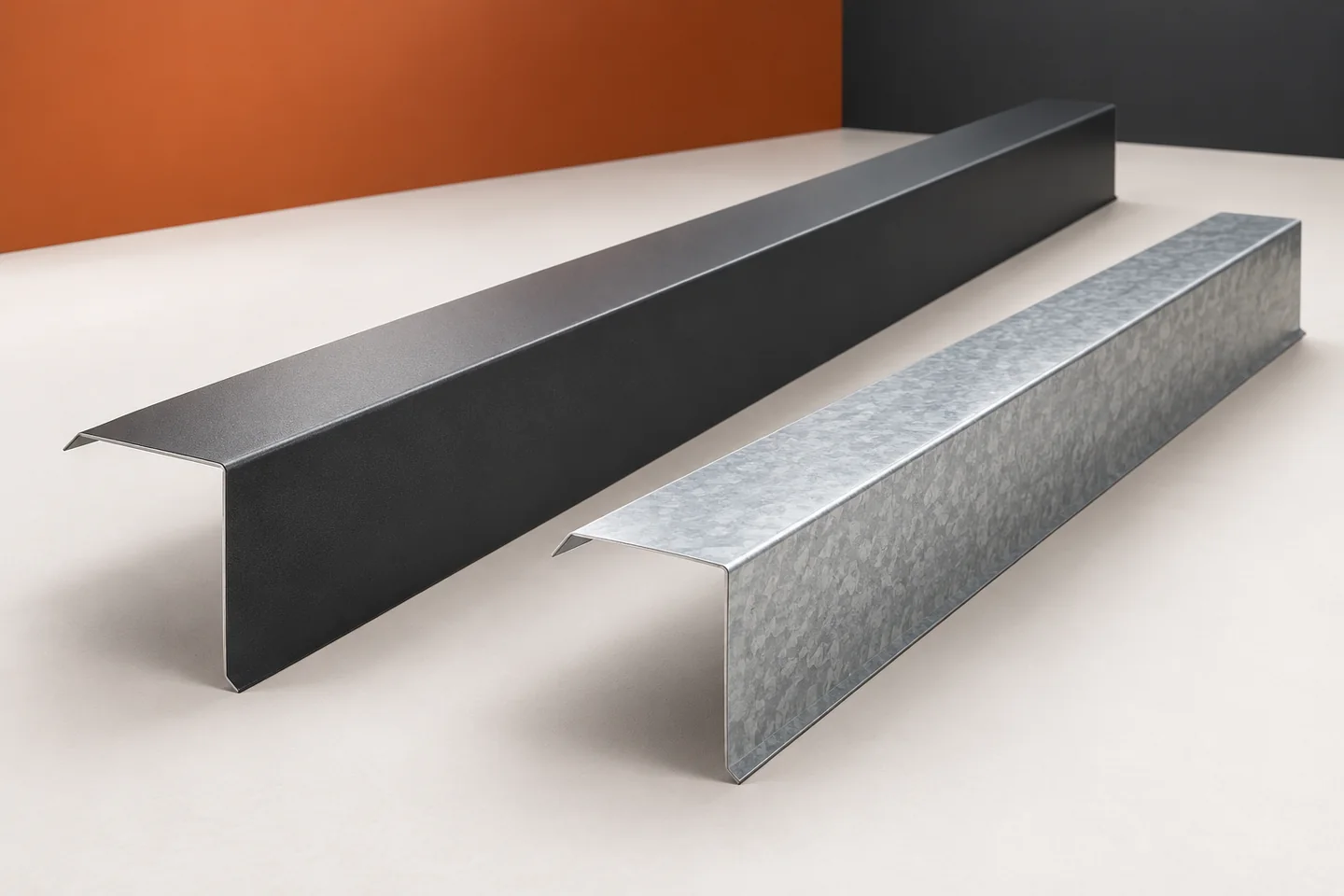
Barge flashings require assessment of straightness, laps and fixings. A bent end may indicate local damage. A wave over a wide area, however, requires checking the support and the method of fixing. Tightening every visible screw does not replace identifying the cause.
Eaves and water drainage
At the eaves, it is worth checking the position of the strip relative to the gutter. Gutter aprons should convey water to the designed drainage path. The termination of the underlay should also be inspected, if accessible. Runoff from the covering is assessed differently from moisture drained from beneath it.
Gutter flow must be checked independently of the condition of the flashings. Leaves or sediment can cause overflow despite a correct gutter apron. In the report, it is worth recording the clearing of the outlet and the repair of the sheet metal separately. This makes it possible later to establish which measure caused the leak to stop.
Chimney, roof valleys and difficult corners
Chimney flashings are inspected on all sides. Particular attention is required at the junction with the wall and the drainage behind an obstruction. The condition of the cover strip, connections and available seals must be checked. Water visible at the chimney may also originate above the level of the flashing.
Roof valleys require checking for free drainage and the edges of the covering. Unusual flashings at roof slope intersections should be assessed against their individual detail. It is worth photographing corners from two directions. A single shot often does not show the course of the lap or the actual path of water.

Sheet surface and edges
Cracks, discolouration, corrosion and residues from works are checked. Swarf must be removed by the appropriate method so as not to damage the coating. Galvanised, aluzinc and coated steel sheets require handling in accordance with their documentation. A single aggressive preparation is not a good choice for all materials.
Touch-ups are carried out where they are permitted and justified by the condition of the surface. Painting over dirt or extensive damage without preparation should be avoided. The coloured layer will not restore the lost metal section. In the report, it is worth distinguishing coating repair from replacement of the entire component.
Don’t overlook the lower façade details
Starter profiles, plinth flashings and flashings at openings can be assessed together with the roof. At these locations, the continuity of the covering, drainage and condition of connections are checked. With a ventilated façade, the required openings must be maintained. In a sandwich panel, the correctness of the proper sealing detail matters.
Parapet flashings require checking of the slope, drip edges and corners. Stains on the wall may indicate places where water detaches too close to the façade. The current cross-section of the wall must be checked. After external insulation, the old projection of the coping may no longer correspond to the new layers.
A record that will be useful next year
Each defect should have a location, a photograph and a short description. It is worth noting whether it requires urgent repair, observation or ordinary cleaning. After the works are completed, the scope and the material used are added. Such documentation allows the condition of the flashings to be compared at the next inspection.
Inspection intervals result from the conditions of use and the system recommendations. Additional inspections are justified after an event that may have damaged the roof. The entire set does not need to be replaced because of a single scratch. What is needed is a factual assessment that combines the condition of the sheet metal with the performance of the specific detail.
Questions and answers
Can the inspection be limited to removing leaves?
No. Cleaning is one of the activities. You also need to assess the joints, fixings, seals and the condition of the coating in areas exposed to damage.
What should be included in the defect description?
The exact location, a photo, the type of damage and the recommended action. After the repair, it is worth adding the scope of works so that the condition can be compared at the next inspection.
7 branches. Materials closer to your project.

- SEROCK — Dzierżenin 34 E
- BŁONIE — ul. Sochaczewska 138A
- RADOM — ul. Grobickiego 8
- ŁÓDŹ — Natolin 8
- OLSZTYN — Barczewo, ul. Prosta 9
- WROCŁAW — ul. Jerzmanowska 10C
- GORZÓW WLKP. — ul. Zielona 33/34