Costs and formalities
Which roof coverings can keep the weight down?
In brief
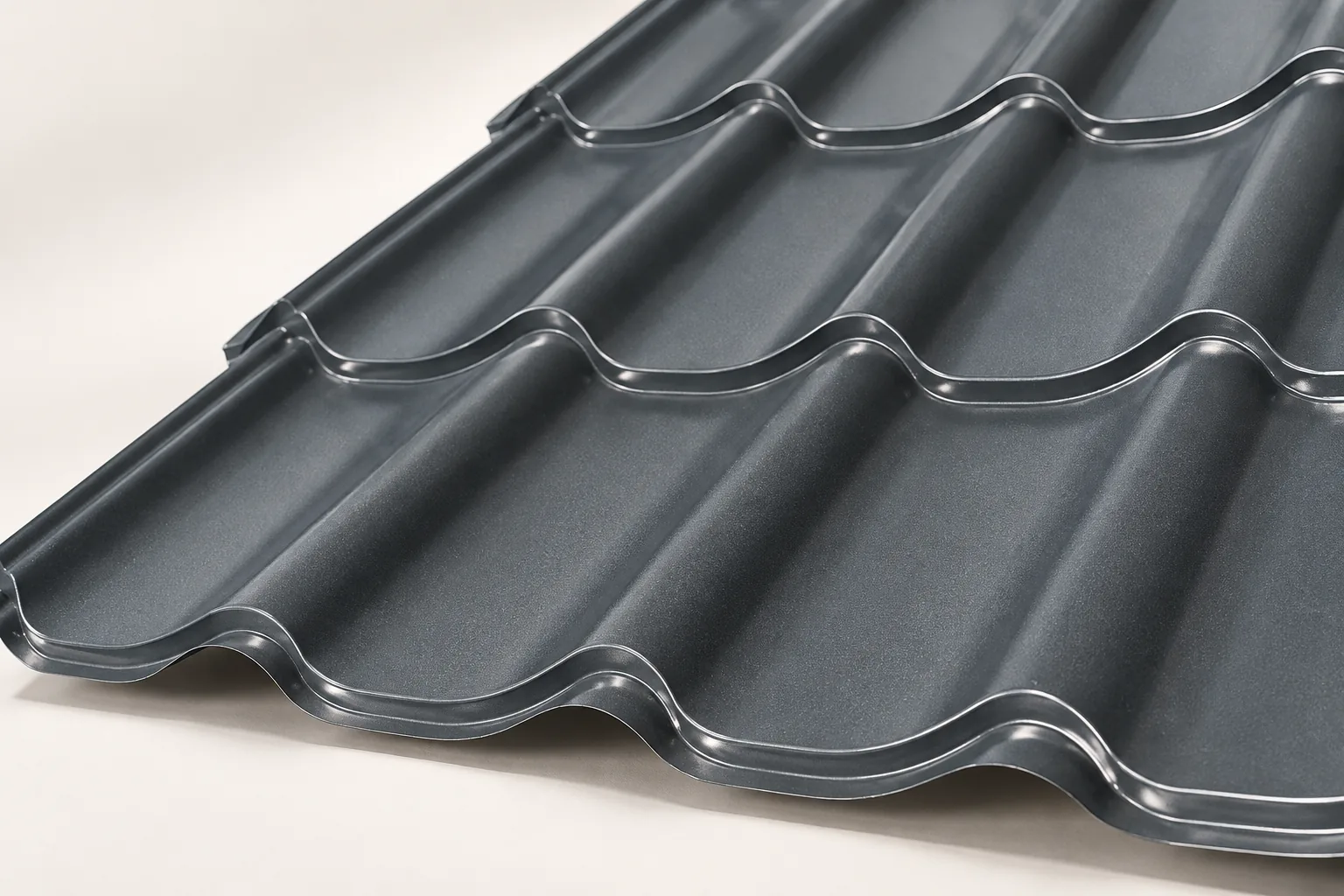
When choosing a lightweight roof covering, the key is to compare complete roof systems rather than the sheets alone. Metal roof tiles and trapezoidal sheets have low mass, which eases transport and can help during renovation. You should check whether the offer states the mass of the whole system, including battens, membranes and insulation, and whether both proposals use the same measurement boundary. It is also worth establishing which profile, steel thickness and support spacing are assumed, because stiffness depends on the entire assembly, not just the material name.
What actually needs to be considered?
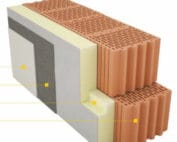
The weight of the covering stated on the product data sheet is not the weight of the entire roof. Battens, counter-battens, membranes, any sheathing, insulation and internal lining are added to the steel sheet. In a roof with sandwich panels, one element combines several of these functions, so a direct comparison of the sheets alone can be misleading.
When comparing offers, the same boundary must be established. Either coverings or complete building envelope systems can be compared. The two approaches must not be mixed. The unit of area is also important. The mass per square metre of total width may differ from the mass referenced to effective coverage, because part of the sheet is taken up by overlaps.
Why can thin metal sheet be sufficient?
A sheet gains rigidity through profiling. In tile-effect metal roofing this is created by waves and transverse ribs, and in trapezoidal steel sheet by longitudinal ribs. However, resistance to load is also determined by the thickness and grade of the steel, the widths of the flanges and the spacing of the supports.
Reducing the thickness solely to obtain a lighter roof is the wrong approach. The material must meet the structural and installation requirements. Profile T35 is not automatically a substitute for any structural steel sheet, and T18 is not suitable for every batten spacing. The choice should follow from the documentation for the specific profile and from the roof design.
When does low weight help during renovation?
A lightweight covering can reduce the dead load on an old roof structure. It also makes it easier to bring materials onto the building and to work on a building with difficult access. Tile-effect metal roofing modules are convenient to carry, whereas long sheets require more people or equipment to protect them from bending.
Before changing the covering, the condition of the structure must be assessed. Rotten rafter ends, damaged connections and deformations will not disappear with the use of lighter steel sheet. It must also be checked whether the new batten spacing matches the existing substrate. The renovation should address the cause of the problem, not merely replace the visible layer.

Is lightweight roofing more susceptible to wind?
Wind acts not only through pressure on the roof. It can also generate suction that tries to lift the covering from the substrate. The resistance of the system depends on the connections of the sheets, the fixings to the battens or purlins and the anchoring of the structure. The mass of the material alone does not determine safety.
Particular attention is paid to corners and edge zones. The screw spacing adopted in the middle of the roof slope should not be transferred there without verification. Flashings and ridge tiles also require designed fixing. A loose detail can be damaged earlier than the main covering and open the way for water.
How can low weight be reconciled with comfort?
The steel sheet is thin, so it does not itself provide significant thermal insulation. Comfort in the attic results from the entire building envelope. The thickness of the insulation, airtightness, ventilation and solar shading all matter. The sound of rain also depends on the substrate and the other layers, not only on the type of sheet.
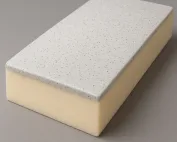
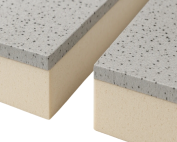
A roof sandwich panel combines facings with an insulating core. It is heavier than a single steel sheet, but the comparison should take its function into account. Separate PIR boards, in turn, allow insulation to be achieved at a small thickness. In both cases, the fire and acoustic requirements of the specific assembly must be checked rather than assumed on the basis of the material name alone.
How to decide before purchase?
First, the permissible structural system and the minimum roof pitch for the covering are determined. Then the full weight, cost, logistics and aesthetics are compared. For a small garage, trapezoidal steel sheet may be a good solution, while for a house, tile-effect metal roofing. A heated workshop may require yet another solution with insulation.
In a request for quotation, it is worth asking for the product data sheet and a statement of the measurement basis. The term “light steel sheet” is not enough. The profile, thickness, coating and complete set of accessories are needed. A saving in weight is an advantage when accompanied by proper selection. It should not lead to giving up support, fixings or the layers needed for the roof to perform correctly.
A good test of an offer is to ask what will change once the entire system is taken into account. If the lightest sheet requires heavier decking or a denser substructure, the difference may be smaller than the catalogue weight of the covering suggests. It is worth calculating this before placing an order.
7 branches. Materials closer to your project.

- SEROCK — Dzierżenin 34 E
- BŁONIE — ul. Sochaczewska 138A
- RADOM — ul. Grobickiego 8
- ŁÓDŹ — Natolin 8
- OLSZTYN — Barczewo, ul. Prosta 9
- WROCŁAW — ul. Jerzmanowska 10C
- GORZÓW WLKP. — ul. Zielona 33/34