Façades and aesthetics
Five reasons to consider sheet metal façade cladding
In brief
A metal sheet façade can transform a building’s appearance and provide durable cladding, provided the T18 or T35 trapezoidal sheet is correctly selected and fixed. It is worth checking whether the chosen profile suits the project and the product’s intended use, and assessing the condition of the substrate and the load-bearing capacity of the substructure. Planning sheet divisions and the arrangement of windows and corners is also key, as it facilitates installation and orders the façade’s rhythm. Design decisions should be left to the designer.
1. A clear pattern without elaborate decoration
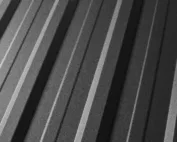
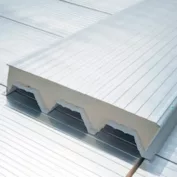
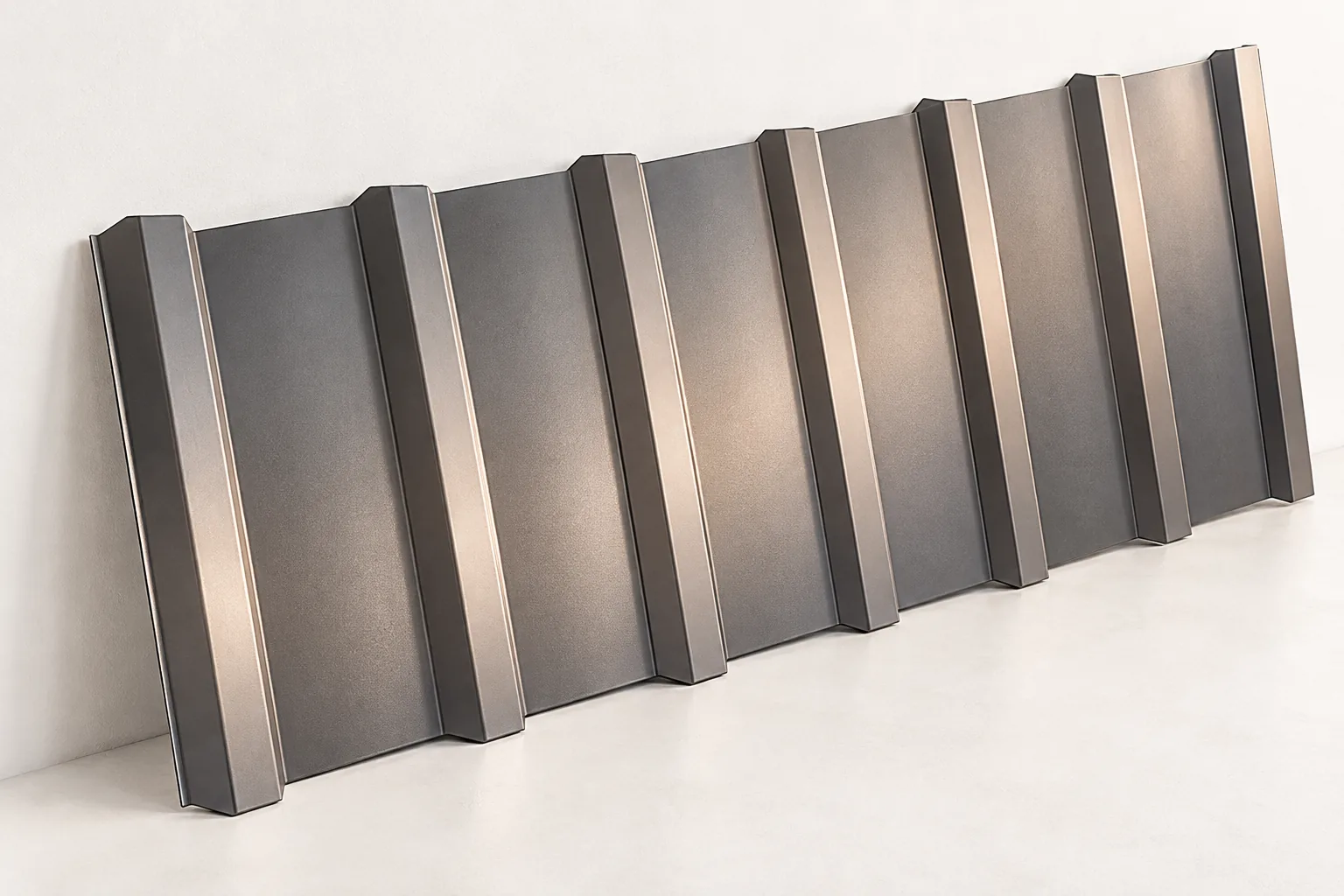
The trapezoidal profiles create a repeating pattern of light and shadow. This can be used to emphasise a simple volume or to highlight a section of the façade, such as a garage or entrance area. A lower profile gives a more delicate texture, while a higher one gives a stronger rhythm. The choice should be checked on a larger sample viewed from the planned distance.
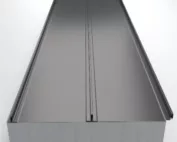
The laying direction affects the appearance and the connection details. It must correspond to the product’s intended use and the design. A roof sheet should not be turned around for use on a façade without checking the coating side and the shape of the overlap. Equally important are the corners, plinths and reveals, which tidy the ends of the profile.
2. Low weight of the cladding itself
Profiled steel sheet can form a relatively light outer layer. This makes it easier to consider for building modernisation, but does not remove the need to assess the substrate. The substructure and anchors must carry the weight of the cladding and the wind action. Particular conditions occur at corners and wall edges.
The framework should not be fixed solely on the basis of the appearance of the old masonry. The material and condition of the load-bearing layer must be determined. Insulation is not automatically a substrate for the anchor. If the design provides for a bracket passing through the insulation, the effect of such fixings on thermal bridges must also be taken into account.
3. Efficient covering of a large area
Sheets of a selected length allow substantial sections of wall to be covered. Planning the divisions in advance limits random cuts at windows and corners. This can streamline the work and give the façade an even rhythm. Large elements, however, require suitable transport and space for manoeuvring.
Before installation, the plane of the framework must be checked. In side light, unevenness is clearly visible, especially over a large area. The substrate should not be levelled by drawing the sheet in with screws. This can leave dents and stresses. Speed of installation is a benefit only after the supports have been carefully prepared.

4. The possibility of matching protection to the surroundings
The available coatings allow the protection of the steel sheet to be matched to the conditions of use. Precipitation, contamination and the method of cleaning the façade must be taken into account. The lower part of the wall may be exposed to splashing, salt or impacts. This requires assessment of the plinth detail and sometimes a separate material in the most heavily stressed zone.
Colour and gloss are selected together with the technical parameters. Dark surfaces heat up more, so the design should account for thermal movement of the cladding. The fixing method and permitted lengths follow from the documentation. The metal’s movement should not be blocked by random additional screws.
5. Access to local repairs
In a properly designed system, a damaged section of cladding can be replaced without dismantling the entire wall. The scope of work depends on the sequence of laps and flashings. It is worth keeping a record of the model and coating. Later matching of a sheet by trapezoidal height alone may not be possible.
Repair will not always restore an identical shade. New material may differ from the part exposed to weather conditions for years. The division of the façade should therefore be planned so that any replacement forms a clear section. Small scratches are repaired using the method recommended for the coating, after establishing the actual extent of damage.
What conditions must be met to take advantage of these benefits?
The steel sheet is a cladding layer, not insulation on its own. The wall design must specify the insulation, protection against moisture and any ventilation gap. In a ventilated system, unobstructed air inlets and outlets are required. Fire details are selected for the entire building envelope and the type of building.
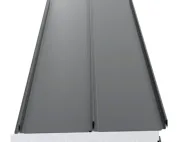
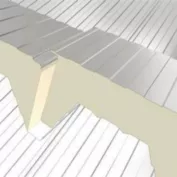
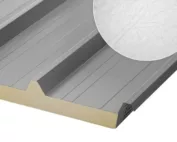
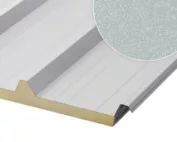
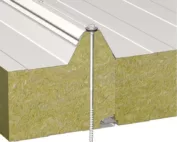
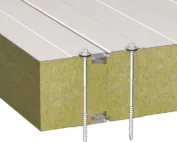
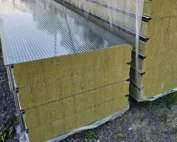
For a heated building, a façade made of single steel sheet can also be compared with a suitable wall sandwich panel. These are two different structural solutions. The panel has an insulating core and its own locks, fixings and parameters. The choice should follow from the function of the building, not merely from a similar colour of the outer surface.
Include the substructure, anchors, flashings and installation in the quote. The price per metre of steel sheet alone does not show the cost of a complete façade. Well-designed connections determine both the appearance and resistance to water and wind. The five advantages of the material only take effect in a correctly executed system.
7 branches. Materials closer to your project.

- SEROCK — Dzierżenin 34 E
- BŁONIE — ul. Sochaczewska 138A
- RADOM — ul. Grobickiego 8
- ŁÓDŹ — Natolin 8
- OLSZTYN — Barczewo, ul. Prosta 9
- WROCŁAW — ul. Jerzmanowska 10C
- GORZÓW WLKP. — ul. Zielona 33/34