Sheet metal roofing
Choosing trapezoidal steel sheets for a pavilion, shelter or small workshop
In brief
When choosing a trapezoidal profile, it is worth starting from the inside of the building. A dry shelter, a heated pavilion and a workshop with damp processes place different demands. Then comes the time for the profile, coating and cutting layout. This order helps match the material to everyday use, not just to the look of a colour sample. Determine whether the building will be heated and where moisture may come from. Wet tools, vehicles or the work performed change the conditions under the roofing. Sheet metal alone does not form an insulated building envelope. If insulation is needed, the entire layer build-up must be designed.
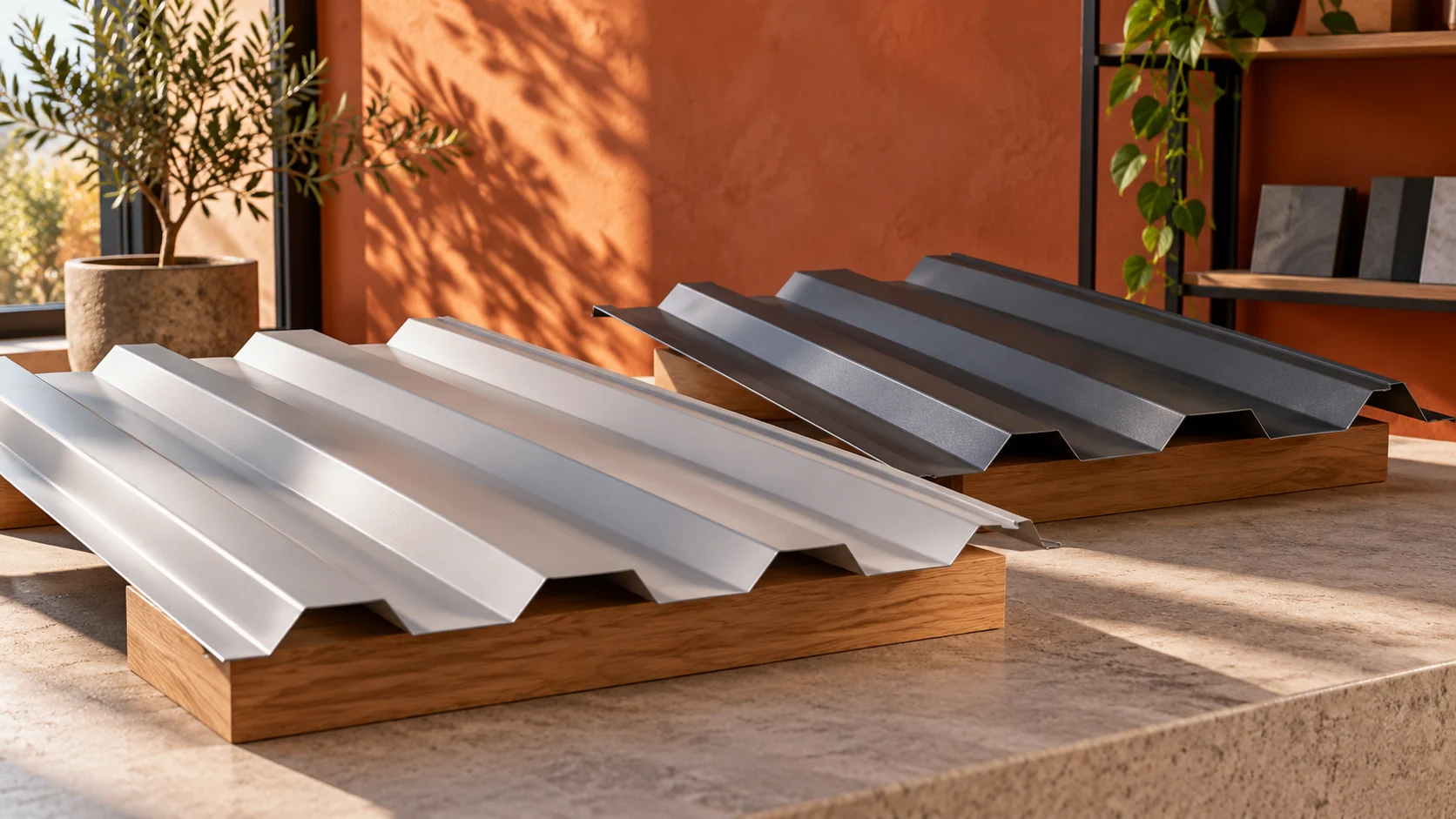
How do conditions inside affect the choice?
In a small pavilion, acoustic comfort also matters. Rain strikes the metal covering, and an empty interior can amplify the perception of sound through reverberation. The assessment should cover the roof, ceiling and finish. A single thin layer should not be expected to fully soundproof the room.
Check the cleaning method and the presence of substances that may affect the surface. A coating suitable for ordinary atmosphere does not have to be suitable for every workshop environment. The conditions of contact, temperature and the agents used during cleaning are important.
How to match the profile to the supports?
The trapezoidal height and steel thickness affect how the sheet performs. However, data for the specific section must be used. Two materials described as T18 may differ in width and arrangement of ribs. The symbol alone does not replace the parameter table.
The support spacing is checked for loads and the structural scheme. A sheet supported on two supports does not have identical conditions to a multi-span system. When selecting, deflection must also be taken into account, not only load-bearing capacity. A small floor area of the structure does not remove these requirements.
On the roof, the slope and the design of the laps are important. The conditions specified for the selected profile must be applied. Suitability of the sheet for a façade does not automatically mean suitability for every roof slope. Confirm the installation side and the method of water drainage.
How to check the coating and the risk of moisture?
The offer should state the steel thickness and the type of surface protection. Colour is separate information. Two sheets of the same shade may have different coatings. When assessing durability, the cut edges, fastenings and subsequent maintenance must also be taken into account.
Condensation may form on uninsulated sheet. Anti-condensation fleece temporarily retains some of the condensate but requires the possibility of drying out. It does not replace ventilation or the repair of a leaking joint. Its use should correspond to the actual function of the roof.
At the eaves and laps, prevent the fleece from drawing in rainwater. The method of preparing the edges depends on the instructions for the specific solution. It is worth establishing this when ordering. Later improvisation may damage the sheet’s protection.

How to calculate coverage on a small building?
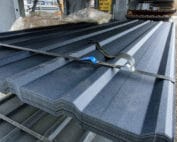
Use the effective width. In the example variant T18, it is 1128 mm, and the overall width is 1173 mm. A sheet of 3 m length therefore has 3.384 m² of area calculated according to coverage. The total area of the same sheet is 3.519 m².
This is still not a complete cutting plan for the entire roof. At the edge, the last strip may need trimming. Openings and longitudinal connections also affect material utilisation. The set of lengths should follow from the drawing, even if the order covers only a few sheets.
For the façade, check the layout around doors and windows. A very narrow section at the corner can make fixing and finishing difficult. A well-distributed module helps achieve order without random cuts. However, all changes must retain proper support.
What should be compared before purchase?
Prepare a brief specification: purpose, profile, steel, coating, colour and lengths. Include flashings and fasteners. The price of the sheet alone will not show the cost of the finished enclosure. In a small order, transport and accessories can significantly change the cost per metre.
Check the storage and unloading conditions. Even a small structure may require sheets that cannot be moved safely in an improvised way. Ensure the material is supported and the coating protected. During installation, use tools approved for coated sheet.
After completion, remove swarf and check the edges, fixings and flashings. Establish inspection and cleaning rules appropriate to the environment. The right choice of trapezoidal sheet includes how it will be used later. The parameters from the order should be maintainable in the everyday operation of the structure.
What else is worth asking about
Is any low trapezoidal sheet sufficient for a small shelter?
The size of the shelter does not determine the selection. The supports, loads and installation conditions must be known. The profile should be verified for the specific arrangement.
Does the colour of a sample allow you to assess the sheet’s resistance to washing?
No. You need information on the type of coating and the permitted cleaning agents. The concentration of the preparation, the temperature and the method of use are also relevant.
7 branches. Materials closer to your project.

- SEROCK — Dzierżenin 34 E
- BŁONIE — ul. Sochaczewska 138A
- RADOM — ul. Grobickiego 8
- ŁÓDŹ — Natolin 8
- OLSZTYN — Barczewo, ul. Prosta 9
- WROCŁAW — ul. Jerzmanowska 10C
- GORZÓW WLKP. — ul. Zielona 33/34