Fixing and installation
How do you cut an insulated panel and keep a good edge?
In brief
A good cut does not end with achieving the right length. The condition of the coating, the bond between the facings and the core, and the geometry of the edge must be preserved. Support and the removal of swarf matter. Hot cutting can damage the panel. The working method should correspond to the documentation for the specific product and the type of core. Shortening a full element differs from cutting an opening for a service. A large opening can change how the panel performs and may require framing. A narrow strip at the edge should also not be treated as a full panel. Before you make the cut, check its place in the design and the supports required.
Are all cuts equally straightforward?
For a series of small pavilions, it pays to prepare a shared cutting list. Determine which dimensions can be ordered factory-made and which result from on-site measurement. This reduces waste and the number of operations. Do not order all elements with a large allowance just because they ‘can be shortened’.
How do you prepare the panel for work?
Place it on a stable stand in accordance with the recommended method of support. The facings should be protected against scratching. The cut piece must not fall freely and tear the sheet metal away from the core. Provision must be made for safely catching the cut-off part, especially with a long and heavy element.
Check the panel side, the joint direction and the final dimension. Sometimes a single measurement error deprives the element of the required overlap. Mark lines using a method that does not damage the coating. Before starting the tool, clear cables and objects that could scratch the sheet metal from the path. Maintain the required protective measures during processing.
Why is an angle grinder a bad choice?
It generates high temperature and hot particles. These can damage the coating during cutting and on adjacent surfaces. Such damage does not always look serious at first. Later it can become a point of corrosion. Sparks are also undesirable in contact with materials in the surroundings.
Cold-cutting tools approved in the panel instructions are used. The choice of blade and method of guiding depends on the sheet metal, the core and the thickness. The name of the device alone does not guarantee correct work. The tool must allow controlled cutting without overheating, tearing and detachment of the facing.
What difference does the type of core make?
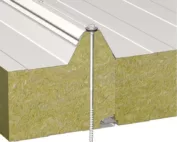
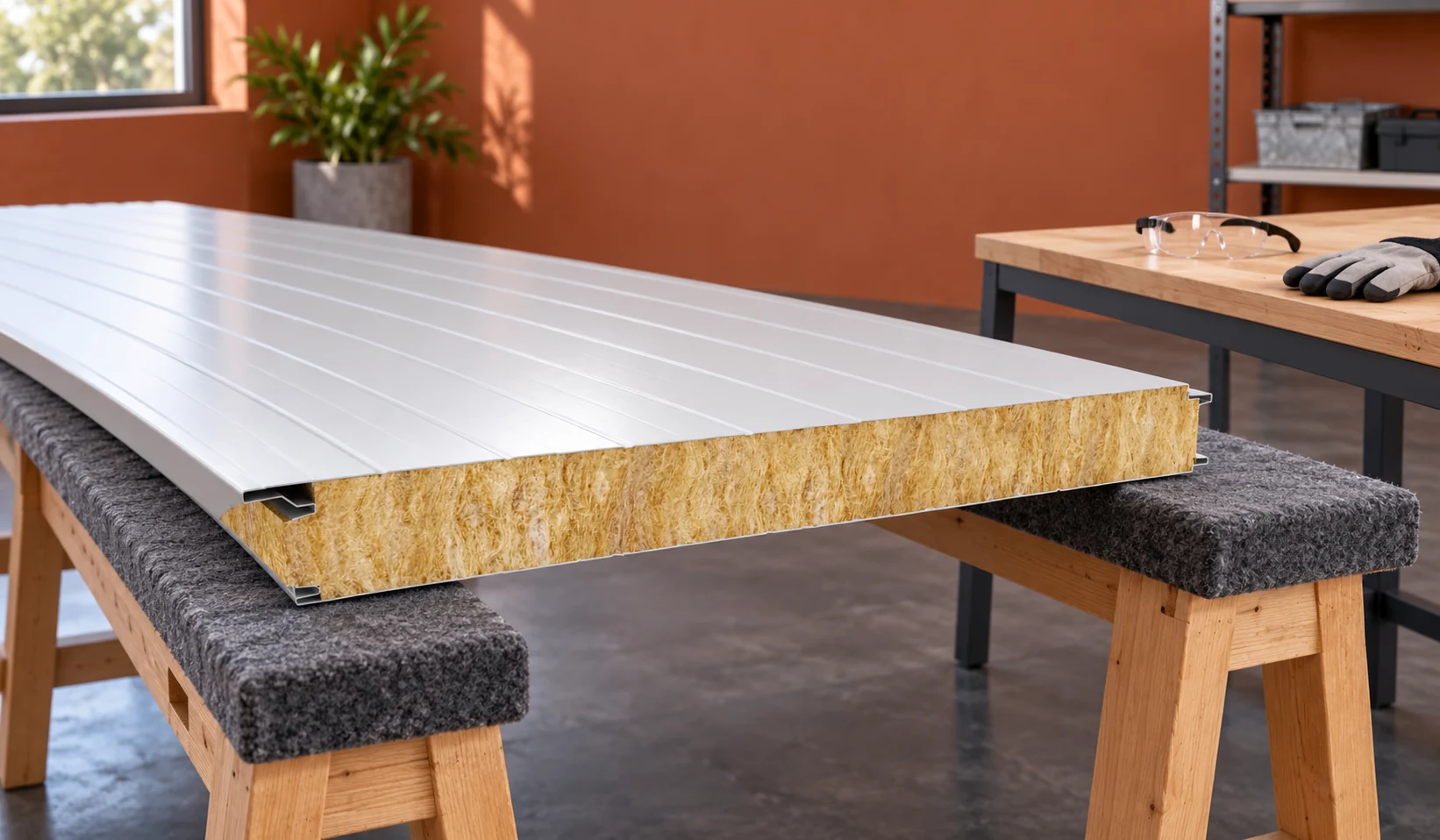
The mineral core has a fibrous structure, PIR is fine-celled, and EPS consists of expanded granules. Processing therefore produces a different type of waste. The method of collecting dust and chips must be selected accordingly. Residues must not be allowed to get into the joint and hinder subsequent bringing together of the elements.
The exposed core must be protected from water and damage. The cut edge requires the intended finish. This is not a place to be left without protection in the finished enclosure. Particularly important are the lower ends of walls and the edges of openings, where water can accumulate if the detailing is not properly executed.

How to clean and assess the edge?
After cutting, remove filings from both sides and from the profiling recesses. Do not leave them under the protective film or in the overlap. Check whether the sheet has been torn and the core detached. Carry out the assessment before lifting the panel into place. Later access to a damaged edge may be difficult.
The method of protecting the cut should correspond to the recommendations for the coating and the detail. Accidental paint or sealant are not a universal solution. If the cut has affected an important part of the joint, further action must be agreed. Covering with a flashing alone does not automatically restore the original properties.
What to check before fitting the cut element?
Compare the dimension with the actual space. Take into account the intended clearances and the method of termination. The panel should not be forced between crooked supports. Check the possibility of achieving a tight contact and fixing the flashing. Only then can the cut-to-size piece be considered ready for installation.
At openings, ensure that the installation does not transfer accidental weight to the cladding. Thermal, fire and penetration sealing requirements must be maintained throughout the detail. After completing the work, clean the adjacent panels again. One correct edge is not enough if filings remain on the finished wall.
How to mark the remaining pieces?
Set aside cut-to-size pieces intended for reuse separately from waste. Note their dimensions and panel type on the packaging or an attached card. Do not mix elements with different joints. Store them with the core protected and support that protects the sheet. Before use, check whether the piece has the required factory edge and fixing length. A sufficient rectangle dimension alone does not determine that a correct joint can be made from it.
What else is worth asking about
Will a metal flashing repair every uneven cut?
It can cover the intended edge, but it does not remove detachments and a damaged joint. The condition of the panel must be assessed before covering it.
Can a cable opening be treated as a simple shortening of the panel?
An opening requires an assessment of its impact on the building envelope and appropriate sealing. Its location, size and the function of the wall or roof are significant.
7 branches. Materials closer to your project.

- SEROCK — Dzierżenin 34 E
- BŁONIE — ul. Sochaczewska 138A
- RADOM — ul. Grobickiego 8
- ŁÓDŹ — Natolin 8
- OLSZTYN — Barczewo, ul. Prosta 9
- WROCŁAW — ul. Jerzmanowska 10C
- GORZÓW WLKP. — ul. Zielona 33/34