Insulation materials
Why does the north wall get damp and how can you find the cause?
In brief
Stains on the north wall do not point to a single cause. Water may come from a leak, the ground or humid air in the room. Less sunlight makes drying more difficult and encourages cooler surfaces. Before choosing insulation, establish the source of the problem. Covering the stain with a board may only hide further dampness. Observe the connection between the stains and rain and wind direction. Check gutters, flashings, window sills and cracks in the façade. A mark under the window may result from a leaking detail. Dampness at the floor may require an assessment of the insulation at ground level. However, the shape of the stain alone does not give a reliable diagnosis.
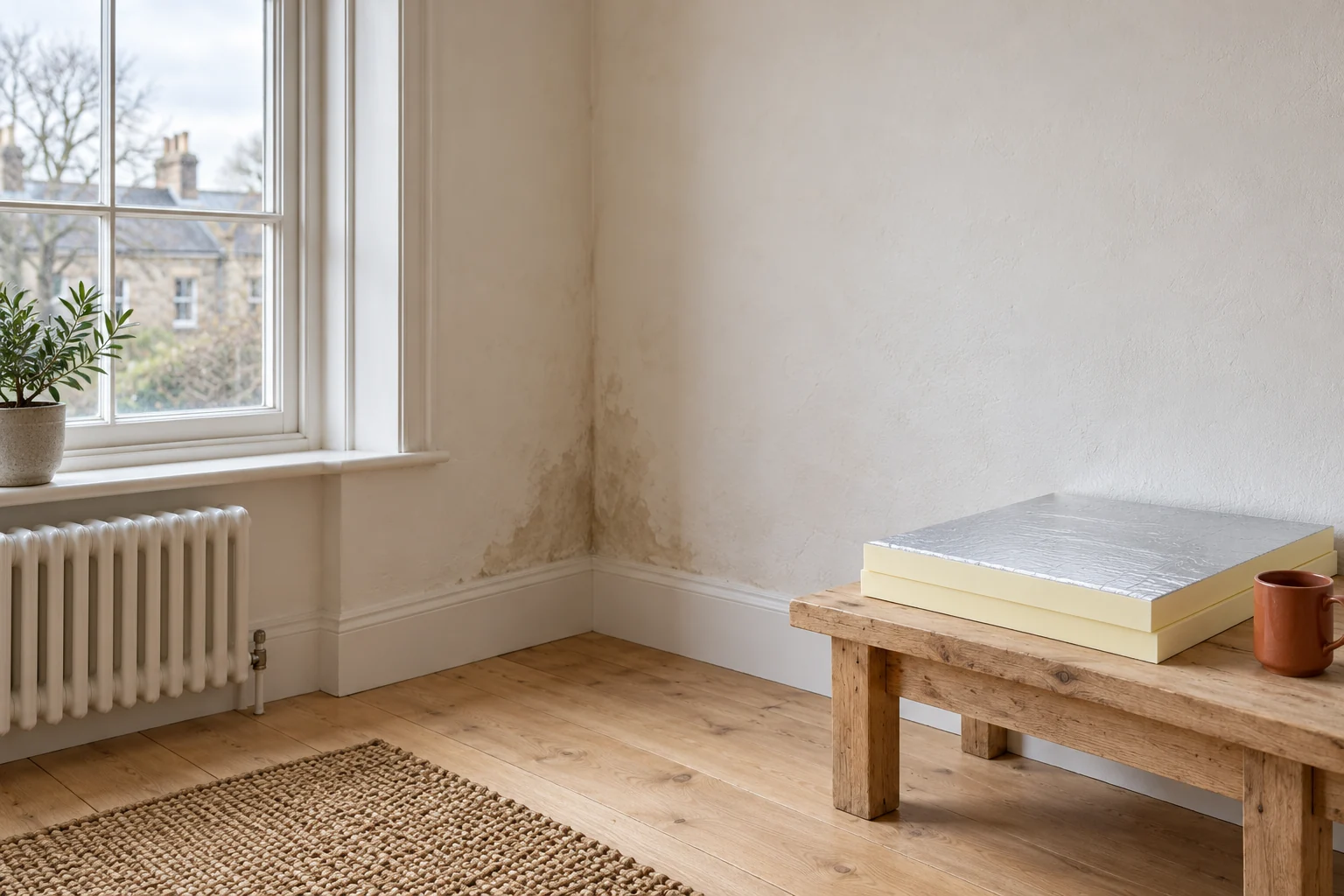
When should you suspect water entering from outside?
It is worth comparing the condition of the wall at several points in time. An inspection only after a long dry period may not reveal an active leak. Moisture measurement also requires the right method and interpretation. Not every simple meter gives a directly reliable moisture percentage in every type of masonry.
A thermal image can help indicate a cooler area, but does not identify the source of water on its own. The result depends on the test conditions, the temperature difference and the condition of the surface. Shading, draughts or reflection can make reading difficult. It is good to combine such an observation with an external inspection and measurements, rather than treating every dark patch in the image as proof of wet insulation.
When is the problem condensation of water vapour?
Vapour can condense on a surface that is sufficiently cool relative to the conditions in the room. The risk increases with high humidity and a low wall temperature. Corners, reveals and areas behind large furniture are particularly vulnerable. Restricted air flow makes it harder to warm such an area.
A north-facing elevation usually receives less direct sunlight. This does not mean that every north wall must be damp. Insulation, details, heating and ventilation all matter. These factors must be assessed together. The compass direction alone does not explain why the problem appeared only after renovation.
What can be checked in everyday use?
Record the temperature and humidity in the room. Pay attention to cooking, drying laundry and periods without heating. Check that the ventilation works and that the air supply needed for it is present. Conditions may change after windows are replaced. New joinery is often tighter, but the sources of vapour remain the same.
Do not replace the necessary ventilation with continuous cooling of the room. The way air is exchanged should suit the building and its equipment. Moving furniture away from a cool wall can improve local circulation, but will not repair a serious thermal bridge. User actions and building repairs have different tasks.

Will additional insulation solve the problem?
Well-designed insulation can raise the temperature of the internal surface. However, it does not remove water entering through a defect. The source must first be identified and repaired. If an active leak remains, the new layer may make it harder to monitor the wall’s condition and its drying.
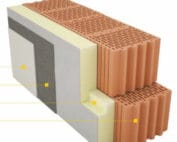
External and internal insulation affect the masonry differently. Internal insulation restricts heat supply to the existing wall. It therefore requires a moisture assessment and detailing at ceilings and reveals. It should not be selected solely from a thermal resistance table or from a promise of quickly covering up the problem.
What role can PIR boards play?
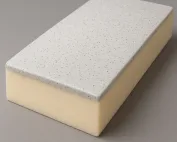
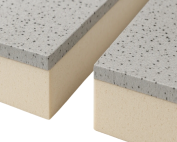
PIR allows a high thermal resistance to be achieved with limited thickness. The foil facing can have a high vapour resistance. However, the effectiveness of the solution depends on the continuity of the entire layer. An open joint or unsealed penetration can allow moist air to flow behind the insulation.
There are also boards with other facings and purposes. Installation principles cannot be transferred between them without verification. The choice of material should result from an analysis of the specific wall. In some situations a different arrangement, external repair or more extensive renovation will be needed instead of simply adding PIR.
How can the result after repair be assessed?
Document the locations of previous stains and the conditions in the room. Check how the wall behaves during rainfall and in cooler weather. The masonry may take longer to dry than the surface finish. Do not assume that fresh paint means the cause has been eliminated. If the problem recurs, return to the diagnosis.
With greater dampness or a recurring problem, an assessment by a building envelope specialist is needed. The extent of removal of damaged layers depends on their condition. The most important sequence remains fixed: identify the moisture ingress, repair the cause, select the solution and verify its performance in use.
What else is worth asking about
Does the north-facing orientation alone determine the insulation thickness?
This cannot be decided by orientation alone. Surface temperatures, thermal bridges, interior conditions and the actual wall construction must be assessed.
Does painting over a stain solve the dampness?
It changes the appearance of the surface but does not remove the source of the water or the excessive moisture. Before renewing the finish, the cause and the condition of the substrate must be identified.
7 branches. Materials closer to your project.

- SEROCK — Dzierżenin 34 E
- BŁONIE — ul. Sochaczewska 138A
- RADOM — ul. Grobickiego 8
- ŁÓDŹ — Natolin 8
- OLSZTYN — Barczewo, ul. Prosta 9
- WROCŁAW — ul. Jerzmanowska 10C
- GORZÓW WLKP. — ul. Zielona 33/34