Steel profiles and structures
Do galvanised profiles really never rust? Facts about steel protection
In brief
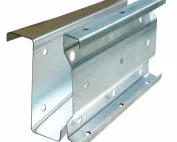
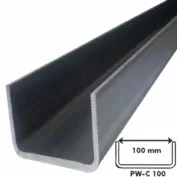
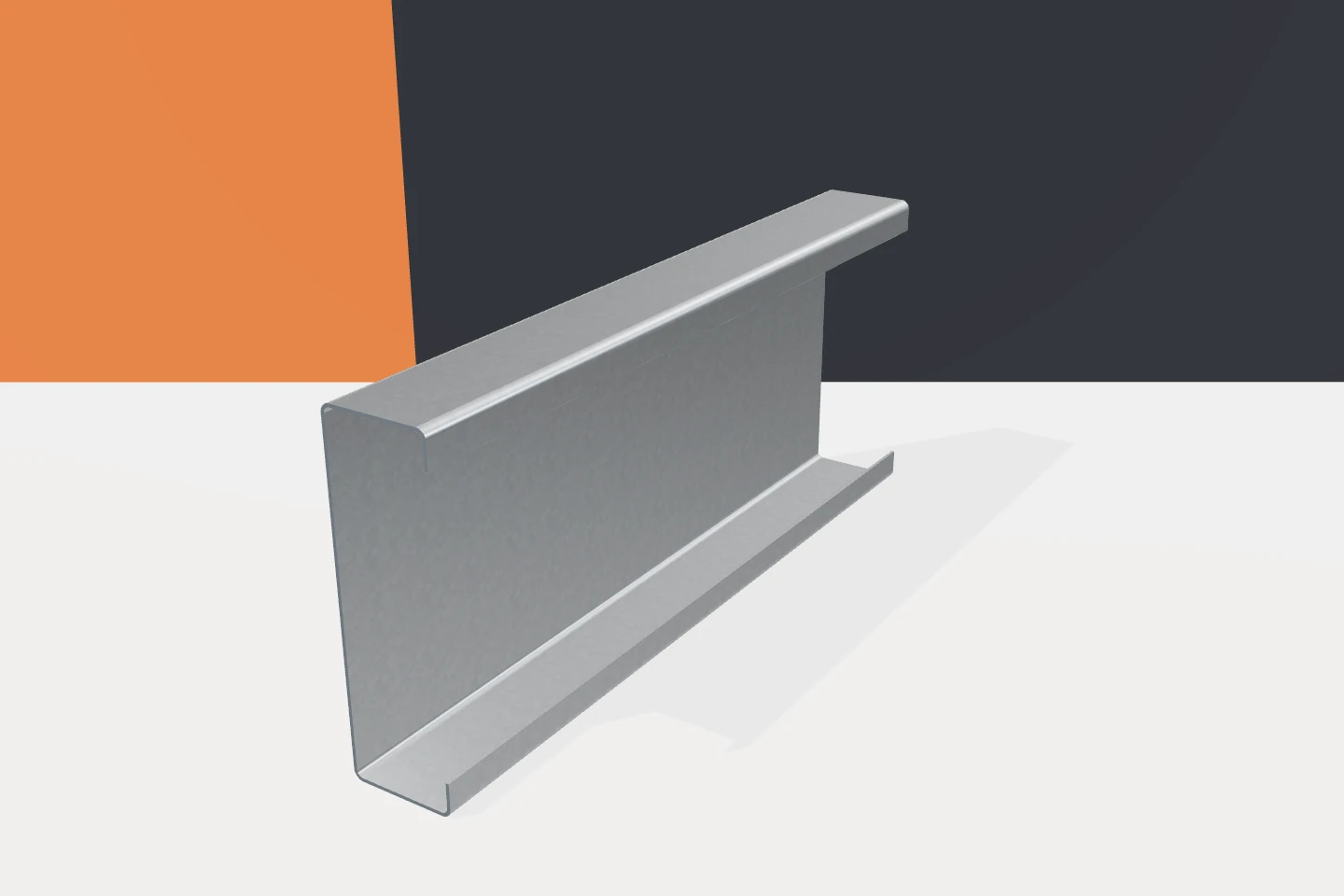
The silver coating is often treated as a guarantee of durability without any conditions. That is an oversimplification that goes too far. Galvanised profiles are protected against corrosion, but how they are used still matters. This applies to Z-sections, C-sections, sigma profiles and omega profiles. Good protection is created together by the right product, the correct detail, dry delivery and subsequent inspection. The colour of the surface alone does not replace any of these elements. The zinc coating separates the steel from its surroundings and provides electrochemical protection under certain conditions. It is not an inert layer that remains the same throughout. Reactions involving air and moisture take place on its surface. The rate of change depends on the environment. Durability therefore cannot be reduced to a single period valid for all structures.
Zinc protects steel, but it also undergoes changes
In a dry hall, cold-formed profiles face different conditions than in a damp room or in a location exposed to aggressive contamination. The choice of coating should follow from the actual exposure. Zones that are harder to see, such as the joints between elements, must also be taken into account. A general assurance about galvanising does not say whether a specific product is suitable for a given location.
The coating designation matters more than the gloss
The material description may include the type and amount of protective coating. This data must be read in accordance with the product documentation. It must not be compared solely with a photograph. Differences in shade, gloss or surface pattern are not a simple measure of resistance. A matt profile may be fully adequate, while a glossy one may have damage that is not visible from a distance.
When buying, it is worth asking for an unambiguous designation of the coating. This also applies where galvanised profiles are to remain visible. Aesthetic requirements must be established separately. The functional protection of the steel and the expectation of a uniform appearance do not always lead to the same specification. A well-documented quote reduces misunderstandings at acceptance.
A wet pack can be a problem before construction
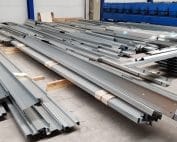
Cold-formed profiles are often supplied in tightly stacked bundles. This is convenient for transport, but moisture between the elements may dry out slowly. Leaving a wet bundle under a sealed cover does not provide proper protection. Conditions in line with the supplier’s instructions are needed. The ingress of water should be limited and its removal and drying enabled.
Bundles should be properly supported and separated from the ground. Air circulation is also important. Z-sections pushed one into another can trap water in places not visible from outside the bundle. A similar risk applies to channels, sigmas and omegas. Acceptance of the delivery should therefore include not only counting the pieces but also assessing moisture.
White corrosion requires identification, not guesswork
A white deposit may form on a damp zinc surface. It should not automatically be equated with red corrosion of the steel. Nor does it mean that every case is insignificant. The extent of the changes, their intensity and the condition of the coating all matter. The assessment should be related to the specific product and the supplier’s recommendations. A photograph alone is sometimes insufficient.
First, the cause of the dampness must be removed and suitable storage conditions ensured. Aggressive sanding can cause further damage to the protective layer. It is not worth starting with an arbitrary chemical agent. Galvanised profiles require a compatible method of cleaning or repair. Where there is extensive change, a professional assessment is needed before installation.

Edges and damage are not the same thing
In a profile made from coated coil, the cut edge has different conditions from an undamaged surface. The influence of the zinc protection on adjacent areas depends on many factors. This does not, however, justify ignoring every cut and every scratch. The method of protection must be determined for the given product and environment. Larger defects and on-site fabrication require particular attention.
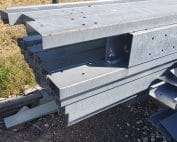
A dent in the web is a separate matter. It can affect load-bearing capacity even if the coating looks correct. Repairing the surface does not automatically restore the structural geometry. Damaged Z-sections, channels and sigma profiles must also be assessed in structural terms. The coating and the shape perform different functions, so they require different acceptance criteria.
Additional painting must be planned
In some applications a system comprising zinc and a paint coating is specified. This does not mean that any paint can be applied to any profile without preparation. Adhesion depends on the condition of the substrate and the correct technology. Cleaning, preparation and the compatibility of the layers must be taken into account. It is worth agreeing such an intention already when ordering the profiles.
Galvanising is also not fire protection in the sense of the required resistance of the structure. If the design requires protection in fire, a suitable solution is selected for the entire element. Such a property cannot be derived from the presence of zinc alone. Cold-formed profiles must be described precisely, without combining different properties into a single promise of durability.
Durability starts with the detail
A good detail limits water retention and allows critical points to be controlled. Drainage, ventilation and contact with adjacent materials should be taken into account. The operating conditions of the facility are equally important. A change in the use of the hall can change the humidity or the type of contamination. This is a reason to reassess the protection even when the profiles themselves have remained unchanged.
Periodic inspections make it possible to detect leaks, dirt and damage before they become extensive. Joints, edges and zones that dry with difficulty are checked. Galvanised profiles are a practical solution for many structures. Their advantages are best used when the coating is treated as part of a planned protection system rather than as an exemption from caring for the steel.
7 branches. Materials closer to your project.

- SEROCK — Dzierżenin 34 E
- BŁONIE — ul. Sochaczewska 138A
- RADOM — ul. Grobickiego 8
- ŁÓDŹ — Natolin 8
- OLSZTYN — Barczewo, ul. Prosta 9
- WROCŁAW — ul. Jerzmanowska 10C
- GORZÓW WLKP. — ul. Zielona 33/34