Insulation materials
How to sensibly insulate a garage, storage room and seasonal cottage?
In brief
A small building does not always need the same insulation as a heated house. A garage, storage room and summer cottage have different sources of moisture and different patterns of use. A cost-effective renovation starts with defining the objective. Only then are the material, thickness and scope of work chosen. The cheapest board does not have to give the cheapest result. Possible objectives are shorter heating-up times for the interior, reduced losses during operation or a more stable temperature. In an unheated storage room, insulation alone will not ensure a positive temperature throughout the winter. It slows down heat exchange but does not generate heat. If stored items must not freeze, heating must also be considered.

What should improve after insulation?
In a garage, moisture brought in with the car matters. In a seasonal cottage, rapid cooling after the heaters are switched off can be a problem. In a workshop, comfort over several hours a day counts. These differences are worth writing down before purchase. This helps avoid insulating all buildings according to a single scheme.
With occasional heating, the mass of the building envelope also matters. Heat first warms the air and the furnishings, and over time the walls as well. Two buildings with a similar U-value can react differently to a short burst of heating. It is therefore worth describing whether rapid warm-up over an hour matters, or maintaining a constant temperature.
Should walls, roof or garage door be insulated first?
Check the areas of greatest loss and leakage. A large, draughty door can limit the effect of very good wall insulation. An uninsulated ceiling has a similar effect. The order of work should follow from an assessment of the whole envelope. It is not worth being guided solely by which surface is easiest to measure.
Uncontrolled draughts must also be distinguished from necessary ventilation. Sealing all openings is not a method of thermal renovation. Heating appliances and the function of the room may require a certain air exchange. This is particularly important where flue gases, steam or other contaminants occur.
When can thin PIR be beneficial?
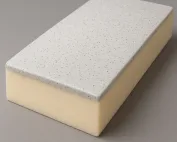
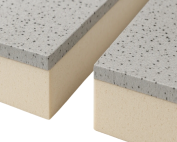
PIR with a low declared λ allows a given thermal resistance to be achieved with limited thickness. For an example foil-faced board with λ 0.022, a 50 mm layer gives a calculated R of about 2.27 m²·K/W. This can matter in a narrow passage or at low height. It is not, however, a stand-alone U-value result for the whole building.
The choice also depends on the facing and the installation location. An insulation board does not replace a load-bearing sheathing or any finishing layer. Fire requirements and protection against damage must be checked. In a workshop, exposed material may be exposed to impacts, sparks and dirt.
How to calculate the budget without overlooking the details?
For example, 32 m² of insulation at €15.04/m² costs €481.28 for the material alone. If fixings, sealing and finishes add €12.73/m², the total comes to €888.64. Transport and labour may be charged separately. These figures are for illustration.
In a small building, fixed costs for travel and setting up account for a large share. It is worth asking for a quote for the whole job and the scope of finishing. Two packages with the same insulation price may end up at different amounts. Also allow for waste from openings and the available board formats.

How can you avoid trapping moisture within the building envelope?
Before insulating, check the roof, plinth and gutters. Damp masonry requires the cause to be identified. Internal insulation changes the temperature of the old wall and its ability to dry out. In such an arrangement, a moisture assessment and detail design are needed. A small room area does not remove this problem.
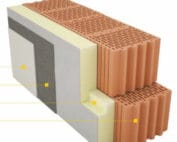
Establish continuity of layers at the floor, ceiling and doors. Do not leave an accidental air channel behind the boards. The junction solution must match the specific system. After renovation, the building still needs to be ventilated or aired according to its function. Insulation does not remove vapour from dried equipment and damp items.
Is it worth dividing the renovation into stages?
Yes, if each stage makes sense and does not hinder the next. First, leaks can be removed and the gate repaired. Then carry out the justified scope of insulation. However, the junctions of layers must be planned in advance so that the new finish does not have to be dismantled later. The saving should come from the sequence, not from omitting necessary details.
In a cottage planned for year-round use, it is worth assessing the target requirements today. In an unheated storeroom, limiting the scope may be more sensible. There is no single thickness suitable for both situations. A good budget describes the achieved effect, the full cost and the conditions under which that effect will be possible.
What else is worth asking about
Will insulation protect an unheated cottage from frost?
It does not provide such a guarantee. It slows cooling, but over a long cold period a heat source or other protection for the installation may be needed.
Can I compare only the cost of boards per metre?
That is only part of the bill. Include substrate preparation, fixing, sealing, finishing, waste and delivery. In a small building, fixed costs can be significant.
7 branches. Materials closer to your project.

- SEROCK — Dzierżenin 34 E
- BŁONIE — ul. Sochaczewska 138A
- RADOM — ul. Grobickiego 8
- ŁÓDŹ — Natolin 8
- OLSZTYN — Barczewo, ul. Prosta 9
- WROCŁAW — ul. Jerzmanowska 10C
- GORZÓW WLKP. — ul. Zielona 33/34