PIR insulation
Insulating a home in stages: count the cost of stopping and restarting work
At a glance
Insulating a home in stages spreads expenditure over time, but is not automatically cheaper than a single order. A comparison also needs the costs of renewed façade access, deliveries, protection of unfinished areas and restarting work. Some items may occur once; others can return at each stage. This guide helps organise a programme, identify unfinished junctions needing a technical solution, and distinguish a smaller first payment from a lower total project cost. It covers the records needed before a pause and when the contractor returns. It does not recommend leaving insulation exposed or dividing work at arbitrary points. Stage boundaries should follow the design, the selected construction system and the conditions of the particular building.
Compare the same completed outcome
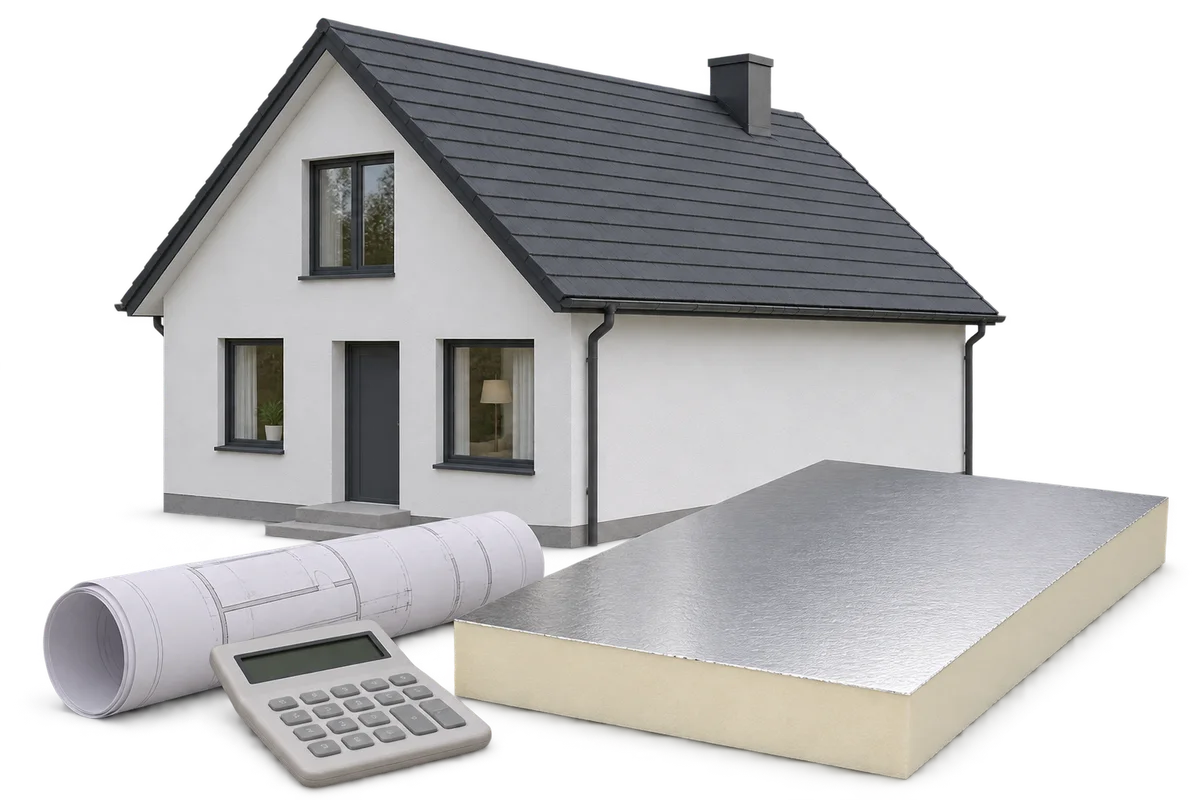
Two programmes can be compared fairly only when they lead to the same agreed final scope.
Describe the walls to be insulated, the finish and associated work. Then split the timing, rather than labelling an incomplete scope a cheaper alternative. If one programme omits the plinth or flashings, show this as an unresolved scope difference, not a saving caused solely by staging.
Identify costs that return with the crew
Request two clear schedules: continuous delivery and the proposed split. For each item, state whether it occurs once, at every return visit or according to the length of the pause. Dividing the total price by the number of stages is insufficient; separate site visits may carry their own quotation items.
Treat access to the wall as a defined task. Agree whether access equipment or scaffolding will remain, be moved or be brought back. Each option involves different arrangements. Do not assume that an earlier access charge covers every future visit or an unlimited period of use.
Plan suitable stopping points
Sharing access arrangements for roof repairs and façade insulation can avoid duplication if the jobs are coordinated and the equipment suits both crews. Confirm scope and timing first. The presence of scaffolding alone does not establish that it is suitable for every planned task.
The stopping point should be defined by the designer or appropriate specialist for the selected construction. Weather protection and the later connection between layers need a solution. Do not set an allowable period for leaving material unfinished from a general statement about the board’s resistance alone.
Review purchasing and storage
Before pausing, photograph completed areas and details that will be concealed. Record the materials and agreed protection, and assign responsibility for checking the condition during the interval. Documentation should help identify changes or damage; it does not replace the required protection itself.
Compare buying the full quantity in advance with staged deliveries. Consider space, storage conditions specified for the product, unloading and handling damage. A lower unit price does not settle the overall cost when suitable storage for the remaining stock is unavailable.
Account for the interval between stages
For later orders, check that the product still matches the design and, for visible finishes, check batch and appearance requirements. A similar material name does not prove an identical system specification. Resolve substitutions before delivery, rather than when components from different stages are being joined.
Do not credit the full insulation benefit from the start when completion is scheduled later. A partially upgraded façade needs its own assessment; savings need not match the percentage of area completed. Where this has not been calculated, mark the performance during the interim period as unassessed.
Agree the conditions for restarting
Before the crew returns, confirm the date, remaining scope and condition of earlier work. Clarify whether the next stage’s prices are already agreed or require a fresh quotation. Include necessary changes to protection and access in the actual schedule rather than treating them as unlisted minor arrangements.
Base the staging decision on all work packages and the intervals between them. Show the anticipated total cost separately from the amounts needed on individual dates. A smaller initial payment can be important for organising the renovation, but should not be presented as proof that the complete insulation project costs less.
7 branches. Materials closer to your project.

- SEROCK — Dzierżenin 34 E
- BŁONIE — ul. Sochaczewska 138A
- RADOM — ul. Grobickiego 8
- ŁÓDŹ — Natolin 8
- OLSZTYN — Barczewo, ul. Prosta 9
- WROCŁAW — ul. Jerzmanowska 10C
- GORZÓW WLKP. — ul. Zielona 33/34