Roofs and roof coverings
Water beneath a metal garage roof: what to establish before replacing the covering
At a glance
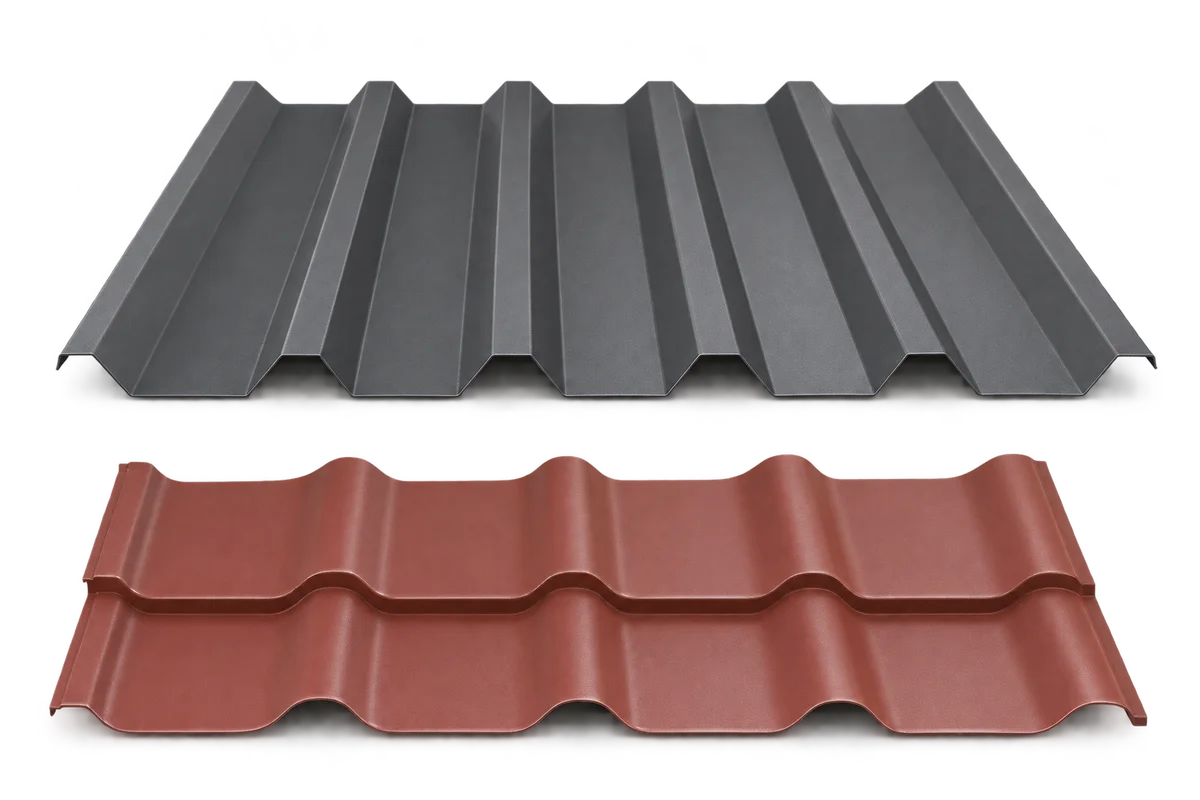
Drops beneath a metal garage roof do not establish that choosing trapezoidal sheeting rather than metal roof tiles was a mistake. First determine where the water comes from and when it appears. Izoprofil.org explains how to prepare information for an assessment: timing, weather, damp locations and interior use. Leakage and condensation require different investigation, and a photograph of a wet surface cannot identify the cause by itself. Changing the sheet profile or adding anti-condensation fleece should not replace that assessment. This guide organises observations for discussion with an installer; it does not prescribe a universal ventilation arrangement or repair for every garage.
Record when water appears
Note whether water was seen during rainfall, afterwards or on a dry morning. Record the last time the interior was observed without visible moisture. This creates a timeline, but does not by itself prove a particular cause.
Map the wet areas
Do not draw a conclusion solely because the problem occurred in winter. Keep dated photographs with a short description of conditions. If it recurs, photograph the same location so the comparison does not accidentally cover different roof areas.
Mark traces on the underside of the covering, the structure and the floor on a simple sketch. Distinguish where a drop was observed from where water is suspected to originate. Refer to the sketch labels when briefing the specialist rather than saying only “near the corner”.
Describe the interior and its use
Have elevated inspection carried out by someone appropriately equipped and prepared for safe access. From floor level, collect information available without climbing the structure. Recording the problem does not require walking onto wet roofing or removing sheets yourself.
Include heating, ventilation practices and activities in the garage. Note recent changes such as sealing the door or repurposing part of the room. These are assessment inputs, not automatic evidence that one component is responsible.
Ask what the fleece is intended to do
Gather existing information about roof layers and ventilation openings. Mark anything unknown or concealed without opening up the assembly. Before proposing alterations, the specialist should be able to distinguish confirmed conditions from the owner’s assumptions.
The 2024 Plannja Profiles instructions describe a coating or fleece that temporarily takes up condensate, followed by removal of moisture through ventilation. This does not mean unlimited water absorption. Details must be checked against the particular product and its instructions.
Separate investigation from purchasing
Ask the proposed solution to state the purpose of each change. Is it intended to reduce moisture entry, permit drying or repair an identified leak? Without that distinction, extra material may be purchased for a task unrelated to the established cause.
If covering replacement is needed, compare trapezoidal and tile-effect sheets as complete, suitable assemblies. The sheet price alone is not the cost of resolving a moisture problem. The work scope should follow the investigation rather than a promotional offer.
Agree how the result will be checked
Agree before the work what will be checked afterwards and under which conditions. One dry afternoon may not reproduce the circumstances in which the problem appeared. Keep the earlier log so the later assessment can use comparable observations.
Separate the identified cause, completed work and outstanding observations in the final record. A later damp incident then does not restart the discussion from scratch. Assess new symptoms rather than automatically attributing them to the previous mechanism.
7 branches. Materials closer to your project.

- SEROCK — Dzierżenin 34 E
- BŁONIE — ul. Sochaczewska 138A
- RADOM — ul. Grobickiego 8
- ŁÓDŹ — Natolin 8
- OLSZTYN — Barczewo, ul. Prosta 9
- WROCŁAW — ul. Jerzmanowska 10C
- GORZÓW WLKP. — ul. Zielona 33/34