EPS and insulation
When does internal insulation require its own design?
At a glance
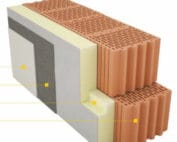
Internal insulation requires a thermal and moisture assessment of the specific wall. Placing EPS on the room side changes the temperature of the masonry and its drying conditions. The junctions with the floor slab, reveals and internal walls must be resolved. A low lambda value alone is not enough. This solution should be considered as a complete system, especially in an existing building. The reason may be that the façade cannot be changed, limited access, or the renovation of a single unit. This does not mean that internal insulation is a simple substitute for external insulation. In both cases the layers are positioned differently relative to the masonry and the heated interior. The way junctions with adjacent building elements are resolved also changes.
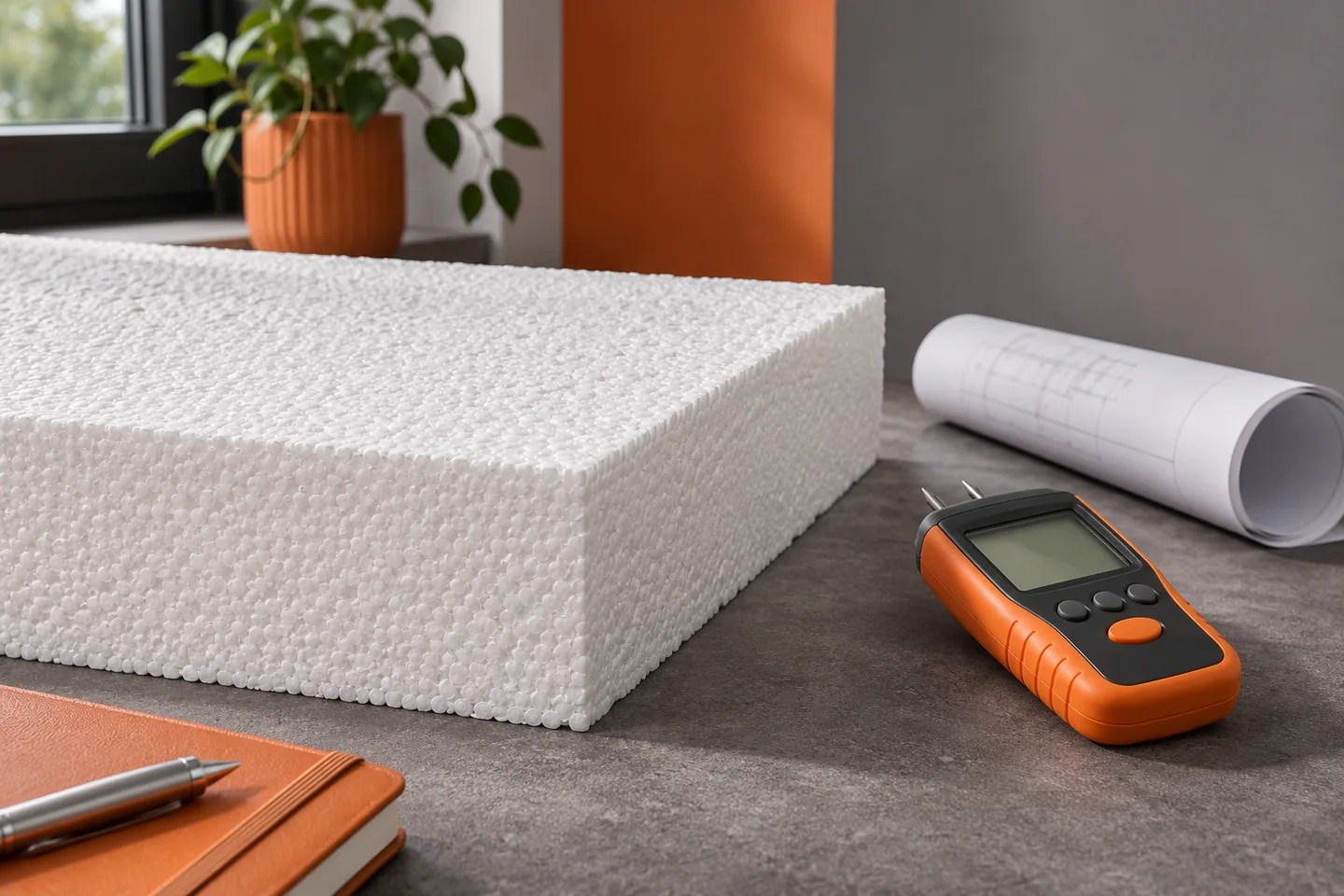
When is internal insulation considered?
Before making a choice, you need to check the condition of the wall, its material and any existing damp. The thermal insulation should not conceal a leak or capillary rising damp from the ground. If the façade is not airtight, the masonry may still absorb water from outside. In that case, the change in drying conditions requires particular attention. First the cause of the problem is removed, and only then are the new layers designed.
What does the position of the EPS change?
After adding insulation from the inside, less heat from the room reaches the existing wall. Its temperature may be lower than before the renovation. The conditions for moisture transport and the risk of condensation therefore change. The entire temperature profile and the possibility of drying out must be assessed, not just the temperature felt at the new wall surface.
The λ coefficient describes heat conduction. It says nothing about resistance to water vapour or the airtightness of joints. The analysis takes into account the properties of all layers, the internal and external conditions and the way the building is used. Two walls insulated with the same EPS board can behave differently if they differ in thickness, material or external coating.
Is adding a vapour control layer enough?
There is no single layer that can be added to every solution without analysis. The design specifies how moisture transport is to be limited or controlled. If it provides for a vapour control barrier, this must have airtight joints and service penetrations. A break in it at sockets or the ceiling can change how the entire system performs.
Other solutions use materials and systems with different moisture behaviour. The components of these methods should not be mixed without verification. An EPS board, any foil and a random cladding do not automatically form a system. Limiting air flow behind the insulation is also important. Leaving leaky voids can supply moisture to cooler places.
Why do details matter so much?
Internal insulation terminates at the ceiling, floor, window and transverse walls. At these points, three-dimensional heat flow paths arise. A warm field of the new lining does not prove that all corners are correctly resolved. Sometimes it is necessary to carry the insulation onto a section of the adjacent building element or another detail specified in the design.
Particular attention must be paid to the ends of timber elements embedded in the masonry, if these occur in the building. Changes in temperature and humidity can affect their service conditions. They should not simply be covered over. The design should also take account of the locations where equipment is fixed. Accidental penetration of the finished layers can impair the planned airtightness.
How do you choose EPS and the finish?
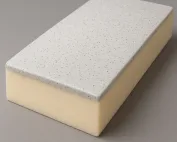
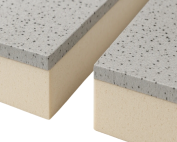
The board must be intended for the adopted method of application. In addition to the lambda value and thickness, the mechanical properties, adhesive compatibility and the required finish also matter. The reaction-to-fire class E alone does not describe the finished wall lining. The requirements apply to the entire solution. Accidentally exposed EPS should not be left in an occupied room.
Thickness affects the thermal resistance, but also the geometry of the room and the conditions of the masonry. More insulation does not always mean a solution that is simpler to execute. The reveals, radiators, window sills and services must be checked. The U-value describes the building element, whereas moisture safety requires a separate assessment. These issues should be resolved before purchasing the boards.
What should the design and the acceptance inspection include?
What is needed is a description of the existing wall, a thermal and moisture analysis and connection details. The documentation should specify the materials, the fixing, the airtightness and the substrate preparation conditions. In difficult cases the analysis must take account of variable conditions over time. A simplified calculation of the resistance of a single layer will not answer all the questions concerning an old masonry wall.
During acceptance, continuity and connections are checked before they are covered. In use, correct ventilation and heating must be ensured. Even a well-designed wall does not remove the vapour generated in the room. It is worth monitoring humidity and the condition of the corners. If worrying symptoms appear after the renovation, the cause should be investigated instead of adding another lining.
EPS manufacturers include Knauf Therm, Austrotherm, Ekobud and Justyr. For internal insulation, a material is selected in accordance with a separately developed solution.
7 branches. Materials closer to your project.

- SEROCK — Dzierżenin 34 E
- BŁONIE — ul. Sochaczewska 138A
- RADOM — ul. Grobickiego 8
- ŁÓDŹ — Natolin 8
- OLSZTYN — Barczewo, ul. Prosta 9
- WROCŁAW — ul. Jerzmanowska 10C
- GORZÓW WLKP. — ul. Zielona 33/34