Metal fence pickets and fences
What protects metal fence pickets beneath the colour layer?
In brief
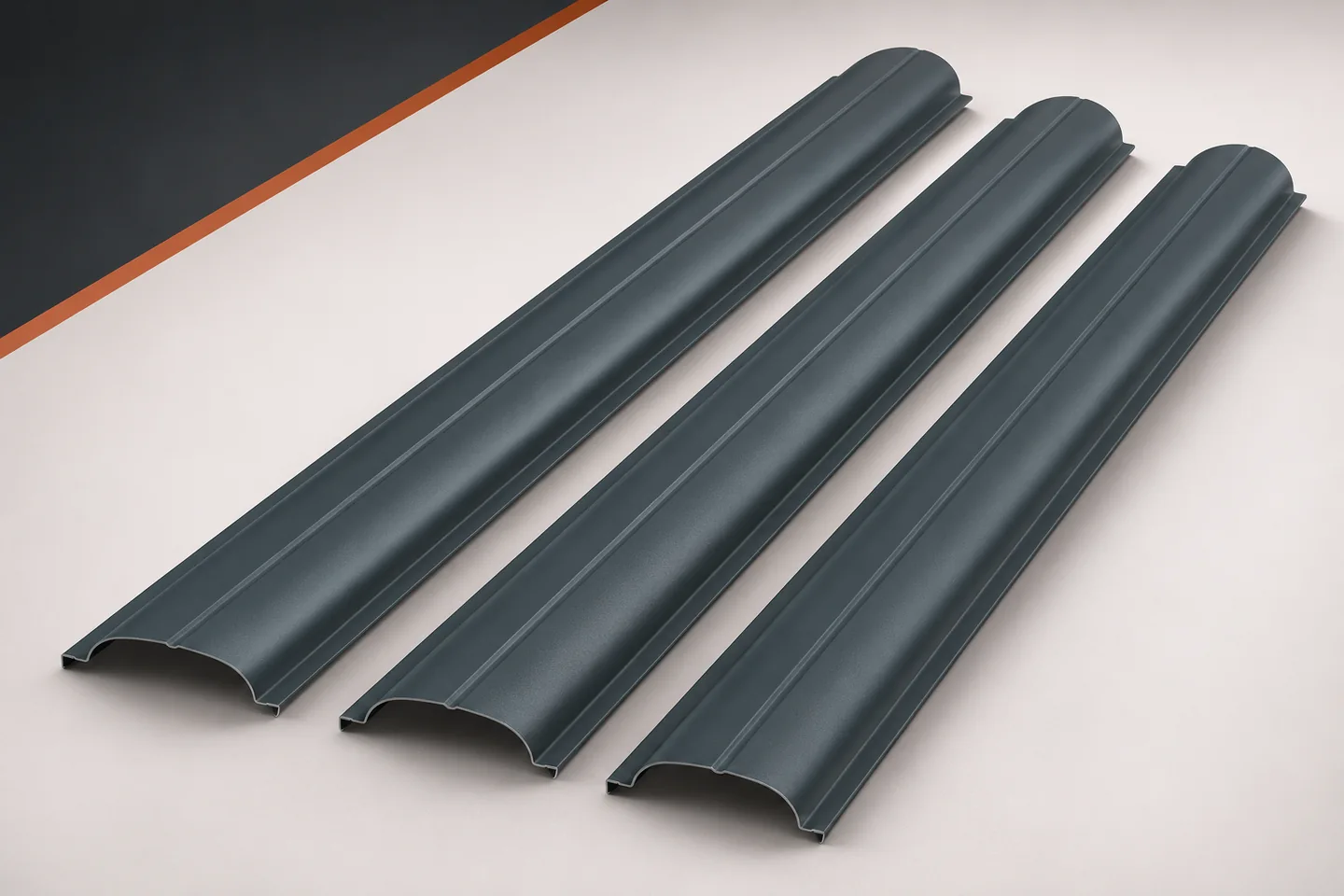
The colour of a fence is visible immediately. How metal fence pickets will age is also determined by the layers hidden beneath the paint. It is worth distinguishing between them. The term ‘coated sheet’ alone does not describe the whole material. A good specification should state the substrate, the metallic protection and the finish on both sides. This makes it easier to compare pickets that look almost identical in photographs. The core of a typical sheet-metal picket is steel. A thin strip is formed from it and given a specific cross-section. Folded edges and pressings change how the element behaves when it bends. That is why the width and thickness of the material alone are not enough to assess rigidity. The geometry of the finished picket and the way it is supported also matter.
Steel gives the element its basic properties
A coloured surface does not turn thin sheet into a solid bar. Sheet-metal pickets serve primarily as infill for a prepared structure. Crossbars, posts and connections must work together with this infill. Assessing the paint alone says nothing about the correct selection of the entire bay.
Galvanising forms a separate protective layer
In popular solutions the steel is protected by a zinc coating. Zinc limits the substrate’s contact with the environment and also provides electrochemical protection. This is an important difference from unprotected steel painted with an arbitrary paint. It does not mean, however, that any damage can be ignored. The scope of protection depends on the material and the conditions of its use.
In the documentation you may come across a figure for the zinc mass per square metre. You need to check exactly what the number refers to. For sheets with a typical zinc coating designation, the total mass on both surfaces is given. It should not be presented as the amount per side. This is a common error in offer comparisons.
The primer and surface preparation have a specific task
Between the metal and the visible decorative layer there is a layer system matched to the given product. Surface preparation improves the adhesion of subsequent coatings. The primer helps with corrosion protection and with bonding the topcoat to the substrate. From the outside you will usually not recognise these layers. The material description confirms them.
It is not worth assessing a picket by counting layers in an advertising graphic. Different descriptions may group the same system differently. More important is the unambiguous name of the coating type, its intended purpose and the delivery documentation. A declaration of ‘many layers of protection’ does not replace information about which sheet the ordered pickets were produced from.
The paint is responsible for more than just the shade
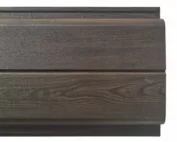
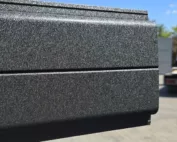
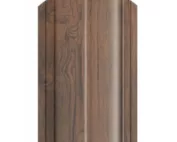
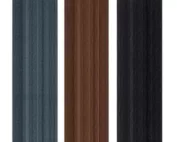
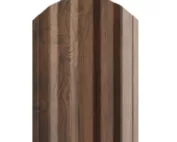
The external organic coating provides the colour and the surface finish. It also plays a part in protection against environmental influences. The choice of matt, gloss or wood decor is therefore part of a broader decision about the material. Matt alone does not yet indicate the highest resistance. Likewise, strong gloss does not automatically mean lower quality.
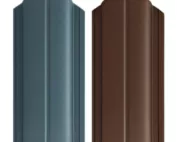
A sample lets you see the texture and how light is reflected. However, it does not confirm all coating parameters. Two similar colours may be subject to different usage rules and different warranty terms. Metal fence pickets should therefore be chosen on the basis of a sample combined with the data sheet for the specific variant.

The reverse side also requires inspection
Single-sided decorative pickets do not have to have exposed steel on the back. In available solutions, the reverse side may have a primer and a technical protective layer. However, its colour and appearance may differ from the front. This matters for a fence that is seen every day from a terrace or from the windows of a house.
The version with a coloured coating on both sides solves the problem of a different finish on the reverse. It does not mean two rows of pickets. The number of rows is a separate feature of the fence layout. In the order, it is worth specifying the surface finish and the arrangement of the elements separately. The short word “double-sided” is often too imprecise.
The edge and the cut-out are part of the finished product
After cutting the material or making a hole, a location with a different structure from the wide, lacquered surface appears. It cannot be assumed that painting the front alone resolves every aspect of protecting such locations. The processing and protection method specified for the given system must be used. This also applies to fasteners.
On acceptance, inspect the ends of the pickets, the bends and the areas around the fastenings. Signs of overheating, burrs or deep scratches require clarification. Do not repair them with any preparation just because it has a similar colour. Touch-up should be compatible with the type of coating. Sometimes the right solution is to replace the element.
How to use this knowledge when buying
Ask for a description of the material, the nominal sheet thickness, the type of coating and the finish of the reverse. Add to this a cross-section drawing and the instructions for use. Only such a set explains what you are actually buying. A photo of the fence helps to assess the appearance, but it does not replace information about the protective layers.
Pickets made of coated sheet have a practical advantage. They arrive on site with a ready finish and do not require impregnation like untreated wood. They still need to be protected from damage and kept in the condition described in the instructions. Understanding the structure of the material makes it easier to choose pickets for a specific location and to assess the seller’s promises sensibly.
7 branches. Materials closer to your project.

- SEROCK — Dzierżenin 34 E
- BŁONIE — ul. Sochaczewska 138A
- RADOM — ul. Grobickiego 8
- ŁÓDŹ — Natolin 8
- OLSZTYN — Barczewo, ul. Prosta 9
- WROCŁAW — ul. Jerzmanowska 10C
- GORZÓW WLKP. — ul. Zielona 33/34