PIR insulation
Damaged swissporPIR Alu boards: which problems should be identified before installation?
At a glance
Damage to a swissporPIR Alu board is easiest to overlook when only the appearance of the surface is assessed. With moisture, it is necessary to establish the condition of the component and the route by which it became wet, not merely to dry the facing. The board is rigid and has low thermal conductivity, but its core and thin facings are easily damaged during handling. The terms “polyurethane boards” and “polyurethane foam” are broader than the PIR product designation, so they do not replace the name of the material. The condition of the core and facings is therefore checked directly after delivery, and the acceptance of packs is linked to the place where the boards will later be used. Removing the cause of the wetting and applying the recommendations in the instructions protect subsequent batches from a repetition of the problem.
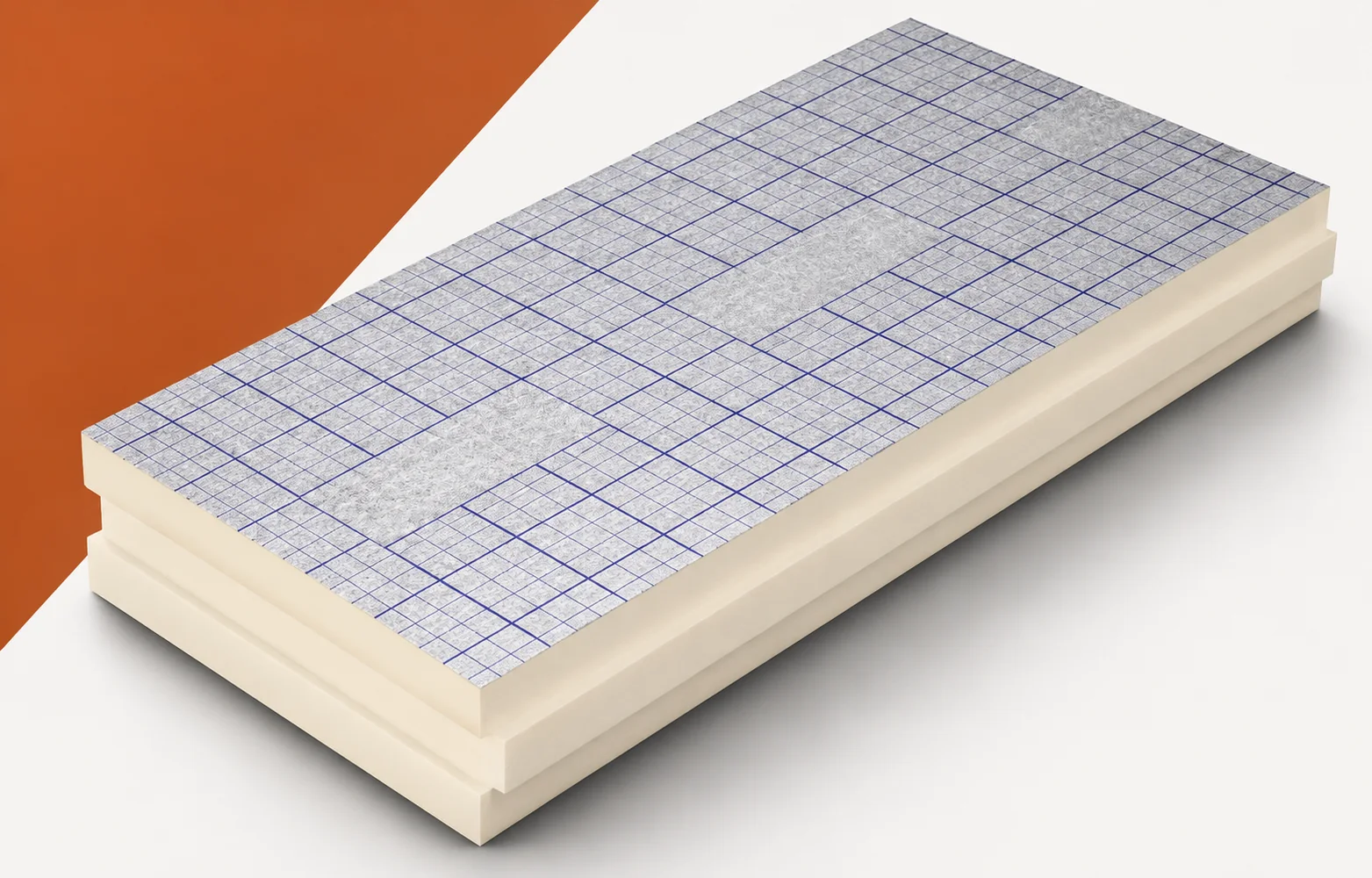
PIR boards from receipt to the place of use
Corner damage is often hidden once subsequent layers have been installed, so the diagnosis must identify the non-conformity before the material is split between installation stations. During the inspection, compare the batch markings, the photographs of the edges and the scope of the elements requiring assessment with the information on how the work is to be carried out.
Document parameters and the actual condition of the material
The parameters in the declaration relate to a product with a specific construction and thickness; a lambda of 0.022 W/(m·K) for swissporPIR Alu is not permission for arbitrary storage conditions. When interpreting the thermal result, check whether the board is not locally crushed.
The parameters of swissporPIR Alu must be related to the actual condition and thickness of the material. Sealing the surface does not restore broken foam or lost support, so a similar notation does not have to mean the same thing. Before drawing a conclusion, ask for the actual thickness, the continuity of the core and the possibility of a correct connection with the adjacent board, so that the figures relate to the actual layer.
Polyurethane insulation requiring protection on the construction site
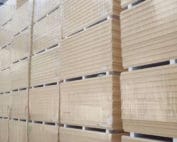
Store swissporPIR Alu boards horizontally on even, hard supports with a gap from the substrate and protect them from sunlight, UV radiation and precipitation. Such an arrangement limits deformation and moisture before installation.
The transport packaging protects the boards in transit, but does not replace permanent roofing over an exposed site, so the installation rules must be checked separately. By protecting swissporPIR Alu from water, sunlight and transport damage, you keep the material dry and the edges in good condition for installation. The inspection should cover the storage location, the covering of the packs and the route used to move the large elements.
Inspection after rainfall and before covering
Before installation, the boards must be dry and undamaged, because the roof specification requires damp insulation to be replaced. Before covering the joints, check that swissporPIR Alu is dry and that the cut edges are clean.
Check the condition of swissporPIR Alu after rainfall and the cleanliness of the edges before specifying a repair. Appearance alone is not enough: the roof specification requires damp insulation to be replaced, not enclosed within the assembly. The next stage also requires the removal of dust, protection of the open work edge and a history of previous work.
Safe storage location for the batch
Storing pallets on the roof requires checking the load-bearing capacity of the structure at the place where they are set down and securing them against wind. The low weight of a single board does not mean that the entire stock can stand at one point. In the documentation, therefore, the conditions for temporary storage of swissporPIR Alu pallets must be kept separate from the other provisions.
The load-bearing capacity of the storage location for swissporPIR Alu and the securing of packs against wind require an assessment of the conditions on site. The declaration of the board’s properties does not confirm that any number of pallets may be placed at a single point on the roof. The unloading plan should indicate the approved storage zones and the access routes for the teams, in order to limit excessive pressure and damage to the laid layers.
Insulation with polyurethane: deliveries in appropriate stages
The delivery schedule for swissporPIR Alu should correspond to how large a section can be laid and closed with the subsequent layers on a given day. Stock remaining on the exposed site requires additional covering and moving. The assessment of work organisation therefore includes linking the quantity of boards delivered to the actual progress of the works.
Before assessing quality or price, determine how much swissporPIR Alu can be stored and covered in the planned stage. Excess stock increases the protection requirements, while a shortage of a few elements can halt completion of a section. Dividing the batch, the order in which boards are taken and the acceptance dates before covering limit unnecessary moving and downtime without risk to the condition of the insulation.
A case worth considering
After unpacking swissporPIR Alu, the presence of moisture requires establishing the condition of the board and applying the requirements of the instructions, rather than an assessment based only on the fact that the surface dried later. In the roof, dampened elements must be replaced. Identifying the cause of the pack getting wet makes it possible to eliminate it and protects subsequent batches from a repeat of the problem.
7 branches. Materials closer to your project.

- SEROCK — Dzierżenin 34 E
- BŁONIE — ul. Sochaczewska 138A
- RADOM — ul. Grobickiego 8
- ŁÓDŹ — Natolin 8
- OLSZTYN — Barczewo, ul. Prosta 9
- WROCŁAW — ul. Jerzmanowska 10C
- GORZÓW WLKP. — ul. Zielona 33/34