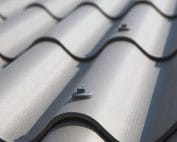
Fibre cement roof coverings
Converting an outbuilding with a fibre cement roof: what to check
In brief
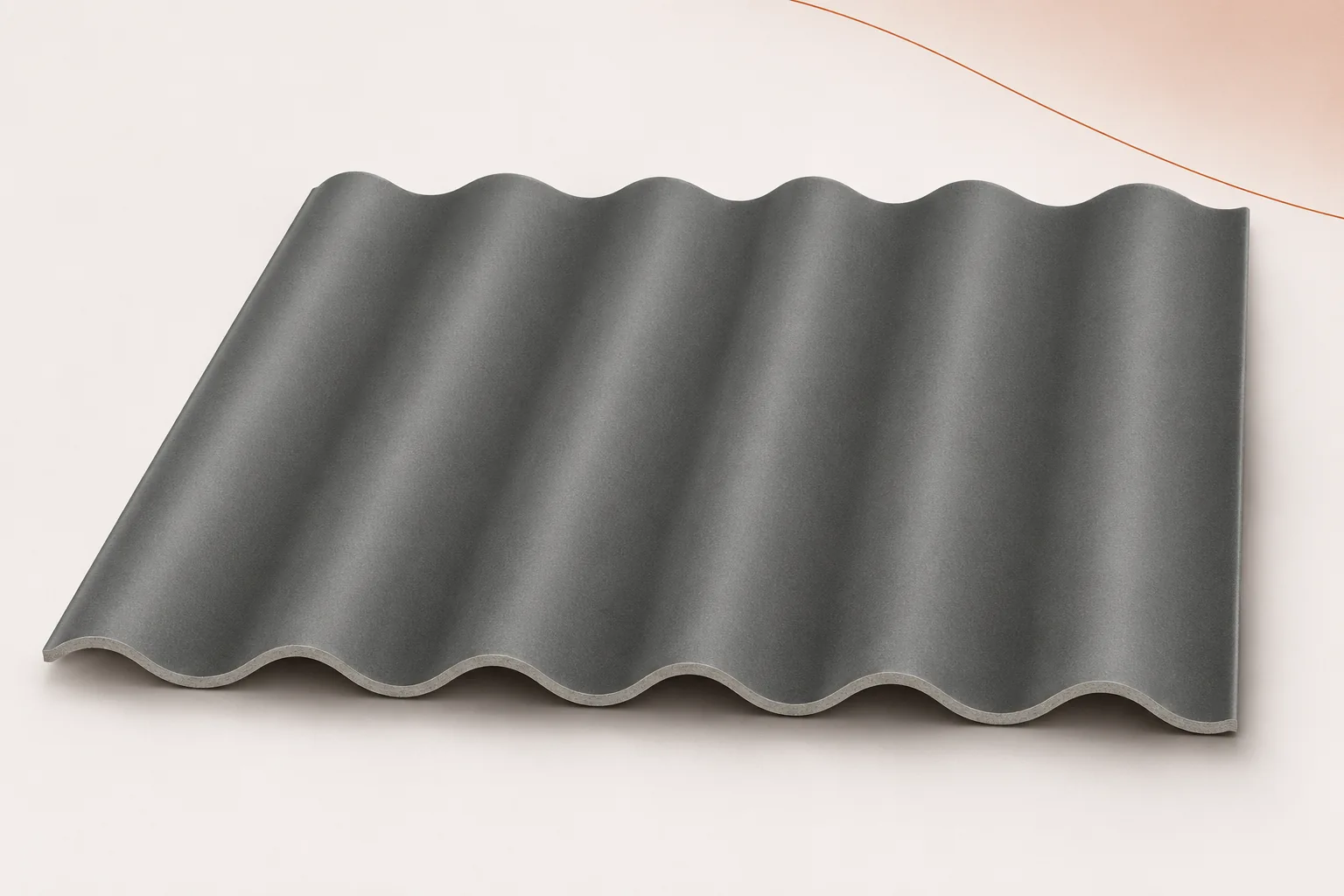
An agricultural building can become a workshop, a warehouse with different conditions or a commercial space. The roof then no longer performs exactly the same function. Corrugated fibre cement sheets can remain part of the solution, but they must be assessed together with the structure and the new layers. Asbestos-free fibre cement does not on its own provide the comfort of a heated interior. Adaptation is best begun with the requirements of the future use, rather than with the idea of quickly covering the old ceiling. The statement that ‘the building will be used commercially’ is too general. It is necessary to establish whether it will be heated continuously, how many people will be inside and what work is planned. Sources of moisture, heat, noise and pollutants are important.
Describe the intended use specifically
Different conditions arise in a dry workshop than when washing or storing wet materials. The need for daylight, ventilation and access must also be defined. On this basis the designer assesses the requirements for the building envelope. Without such a description it is easy to choose a system suited to a warehouse that does not match the later workshop. A change of equipment can after all change the roof’s exposure to moisture and temperature.
Identify all existing layers
An older building may contain membranes, sheathing and fragments of insulation from various renovations. The corrugated fibre cement sheets visible outside do not reveal what is happening beneath them. The condition of the materials, traces of leaks and the possibility of drying out must be established. With an unknown old covering, the composition also needs to be identified without accidentally damaging the sheets. A damp structure should not be sealed with new cladding simply because the interior is to look better quickly. The conversion should eliminate the causes of the problems. Retaining a layer is sensible when it is known what function it will perform in the new system.
The structure must carry the new loads
Insulation, ceiling, equipment and ducts can increase the dead load. Installations on the roof slope and changed operating conditions are added to this. Corrugated fibre cement sheets require their own arrangement of supports and fixings, but the assessment must cover the entire roof. Heavy equipment should not be suspended from random battens. The path by which forces are transmitted to the structure must be established. In an old building, connections, bracing and the condition of the material matter. A good-looking covering does not confirm the load-bearing capacity of the elements beneath it. A structural assessment makes it possible to determine what can be retained and what requires repair or reconstruction before the new layers are installed.
Heating changes the moisture conditions
A previously cold, draughty interior may become warm and more tightly sealed after conversion. Water vapour will affect the roof in a different way. Asbestos-free fibre cement does not remove the need to control moisture. The insulation, airtightness and vapour resistance of the layers must be selected, and ventilation of the rooms provided for. The system should allow the required drying out. Adding a membrane in a random place can make matters worse. An analysis of the entire section is worthwhile, especially when some of the old layers remain. The conversion then does not amount to hiding the cold roof slope behind a new ceiling.
Plan service penetrations before the roof is closed
Fans, ducts, roof hatches and rooflights require openings and matching flashings. The corrugated fibre cement sheets must be laid out around these locations. Random small cuts or holes close to the edge can make proper fixing difficult. Each installation also has its own requirements for support, safety and maintenance. A sheet should not be loaded with equipment without a provision for transmitting forces to the structure. In an insulated roof, the internal layers around the penetration must also be connected. Executing these details during a single planned reconstruction is usually simpler than subsequent interventions after the interior finish is complete.
Fire and acoustic requirements may increase
A new function may mean different expectations for the entire building. Corrugated fibre cement sheets have a declared reaction to fire, but they do not automatically confer the same class on the structure and insulation. The assessment of the complete building envelope cannot therefore be omitted on that basis. Likewise, acoustic comfort depends on the covering, the layers and the interior. A warehouse and a classroom do not require the same solution. It is worth defining the needs before choosing the finish. A change of function may also involve formal requirements that must be checked for the specific project. These cannot be settled solely on the basis of the name of the new covering.
Compare retaining the roof with converting it
If the covering is in good condition and suits the intended solution, retaining it may reduce the scope of work. However, corrugated fibre cement sheets should not be kept at all costs. A lack of compatible accessories, numerous defects or unsuitable geometry may argue in favour of replacement. A cost comparison should cover the whole outcome: the structure, layers, services and subsequent maintenance. A cheap adaptation with hard-to-access details can mean expensive repairs. It is worth keeping documentation of the changes made so that the next contractor knows how the old and new elements work together and where the important protective layers run.
Before adapting a building with non-asbestos fibre cement sheets, describe its future function. An assessment of the structure and the full section will allow you to decide what to retain and what to change in the roof.
7 branches. Materials closer to your project.

- SEROCK — Dzierżenin 34 E
- BŁONIE — ul. Sochaczewska 138A
- RADOM — ul. Grobickiego 8
- ŁÓDŹ — Natolin 8
- OLSZTYN — Barczewo, ul. Prosta 9
- WROCŁAW — ul. Jerzmanowska 10C
- GORZÓW WLKP. — ul. Zielona 33/34