Roof and structure
Winter roof maintenance: which checks help prevent damage?
In brief
Before winter arrives, the owner should establish which drainage and fixing faults need repairing ahead of frost rather than leaving them until later. It is worth checking that gutters and downpipes flow freely, the condition of flashings and the completeness of snow guards, and removing leftovers from earlier work. For sandwich panels, the tightness of joints and the condition of the core are assessed. A fault list makes it easier to plan actions before the weather hampers access and the use of repair materials.
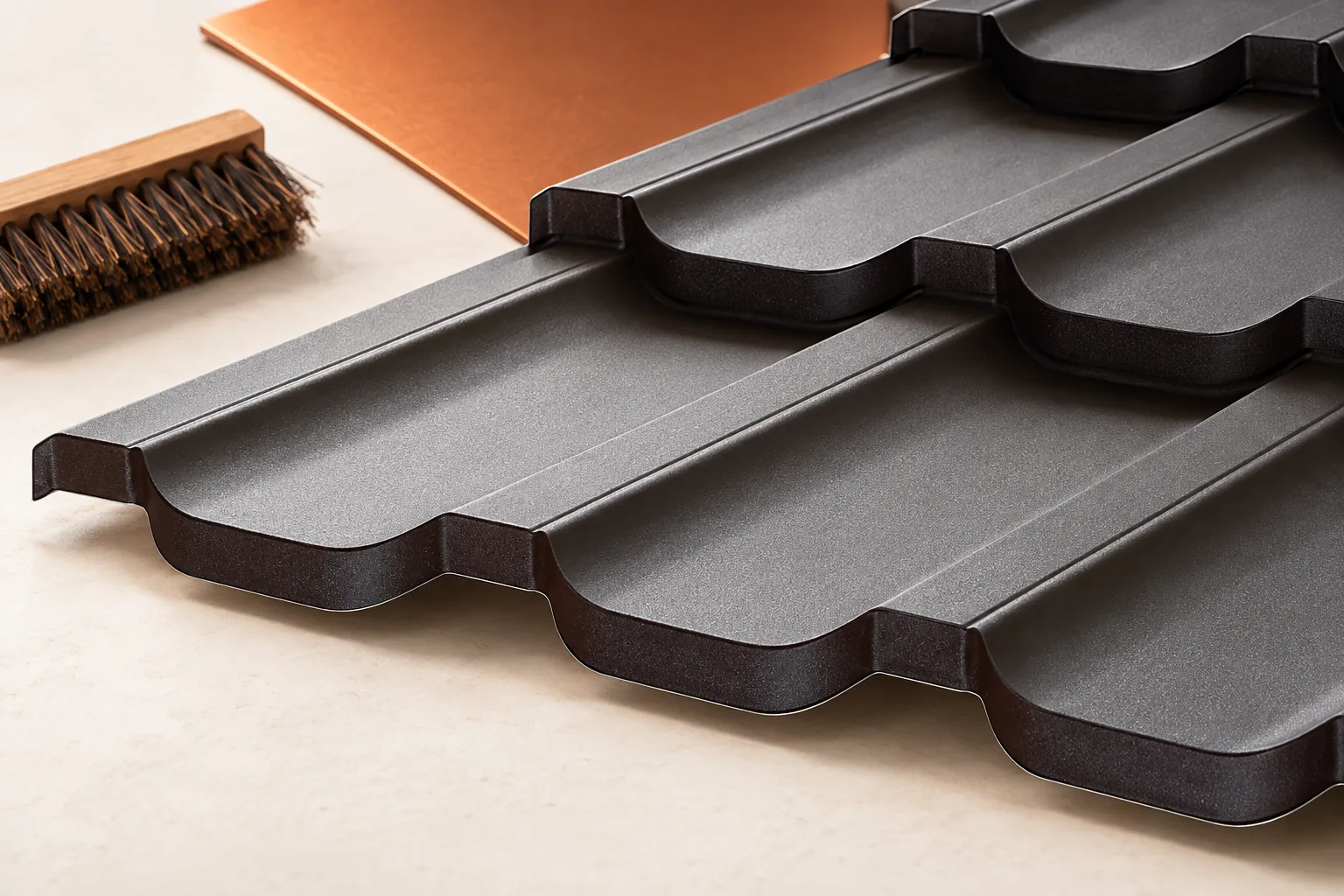
What to repair before the temperature drops?
Loose flashings, a damaged underlay and an unsealed installation penetration should be checked before the frost period. Winter weather makes safe access difficult and can limit the use of repair materials. It is worth drawing up a list of defects, marking those related to water and to the fixing of components. A surface patch alone will not fix a poorly made joint.
Residues from earlier work should also be removed: swarf, scraps of membrane and small debris. Contamination can trap moisture or get into the drain. With sandwich panels, the completeness of flashings and the tightness of joints are checked in accordance with the documentation. An exposed or damp core requires assessment, not temporary covering with any tape.
How to prepare the water drainage path?
During a thaw, water must be able to drain from the roof slope through gutters and downpipes. Before winter, leaves are removed and outlets, bends and rainwater outlets (silt traps) are checked. Standing water can indicate a problem with the slope or the support. The system should be checked after rain to confirm that cleaning has actually restored the flow.
The discharge point at ground level should not be forgotten. A blocked outlet can cause water to back up and the surrounding area to ice over. If the building has a gutter heating system, its inspection is carried out by a person prepared to operate such a system. A heating cable does not replace proper design and maintenance of drainage.
What to check in the snow guards?
Snow guards, barriers, point elements and their fixings are inspected. Deformation from the previous winter should prompt an assessment of loads and the substrate. Straightening the visible part is not enough. It must be checked whether the system was properly selected and whether the connection to the structure or covering has been damaged.
If protection is missing, the selection must be carried out for the specific roof. The length and pitch of the slope, snow conditions and locations under the eaves are significant. A random single row does not provide reliable protection for the entrance. Installation of new brackets should take into account load-bearing capacity and tightness, particularly on an existing covering.

Why should ventilation not be blocked for winter?
Ventilation openings provided beneath the covering have a specific function in the roof system. Closing them with foam or random insulation can restrict drying out. If draught is noticeable in the attic, the tightness of the layers from the interior side must be checked. Ventilation of the covering and uncontrolled air flow into rooms are two different phenomena.
In winter, it is worth watching for signs of moisture around windows, the chimney and the junctions between slopes and walls. Condensation may result from high indoor humidity, a thermal bridge or an air leak. Greater insulation thickness alone will not always solve the problem. A diagnosis of the entire building envelope and ventilation measures for the rooms are needed.
When is additional inspection needed during winter?
Signals to have the roof checked are new deformations, unusual noises, leaks and damage visible after strong wind. Significant snow accumulation requires assessment in relation to the structure and local conditions. There is no single safe snow depth for all buildings. Fresh powder and wet, compacted snow differ in weight.
In case of doubt, access to the endangered zone should be restricted and an assessment commissioned from a person with appropriate knowledge. An iced-over roof surface should not be walked on to check the weight of the snow cover oneself. Any snow removal requires preparation and protection of the roof and surroundings. The falling mass must not land on people, installations or lower roofs without assessing their load.
What should not be done when the roof is iced up?
Breaking ice with a hammer, sharp scraping of the sheet metal and pulling on a frozen gutter can damage the coating and the joints. Random chemical agents should also not be used. Their effect on the material and on water drainage may be detrimental. If icing recurs, an analysis of drainage, insulation and thermal conditions is needed, rather than increasingly forceful intervention.
A well-prepared roof has defects removed, clear drainage and a known maintenance procedure. The owner should have documentation of the materials and contact details for the service team. Such a plan makes it easier to react when the weather deteriorates. After winter, it is worth inspecting the fixings, flashings and gutters again to detect damage before the next heavy precipitation.
7 branches. Materials closer to your project.

- SEROCK — Dzierżenin 34 E
- BŁONIE — ul. Sochaczewska 138A
- RADOM — ul. Grobickiego 8
- ŁÓDŹ — Natolin 8
- OLSZTYN — Barczewo, ul. Prosta 9
- WROCŁAW — ul. Jerzmanowska 10C
- GORZÓW WLKP. — ul. Zielona 33/34