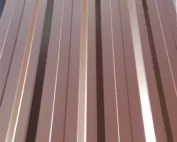
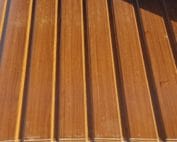
Trapezoidal and structural steel sheets
Reading the markings on trapezoidal steel sheets
In brief
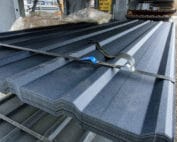
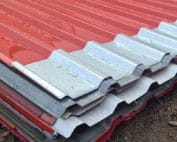
In Poland, a trapezoidal sheet designation helps identify the profile family but does not replace the technical data sheet. The letter T indicates a trapezoidal profile, and the number usually refers to the height of the corrugation; the symbol alone is not an exact drawing of the product, as different catalogues may use similar names for different geometries. Before ordering, check the thickness, cover width, length and type of coating, as well as the actual dimension on the cross-section – even within the T18 family. These data determine whether the sheet fits the roof or façade.
What do the letter T and the number mean?
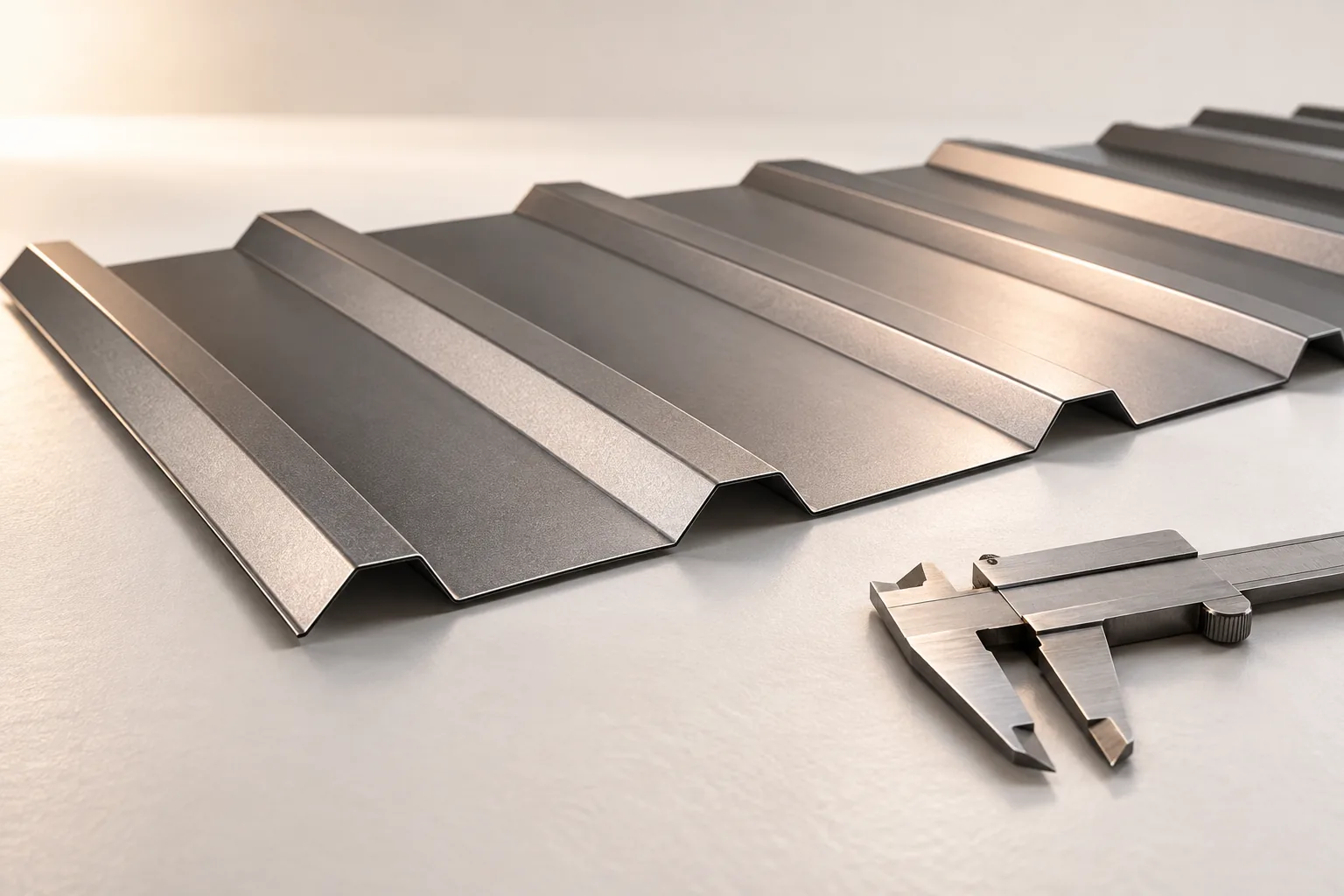
The letter T refers to the trapezoidal profile, and the number usually relates to the height of the corrugation. However, the symbol alone should not be treated as an exact drawing of the product. Different catalogues may use similar names for different geometries. Even within the T18 family, the actual dimension on the cross-section must be checked.
A higher profile may provide greater stiffness under comparable conditions. This does not automatically mean a specific load-bearing capacity. It is also influenced by the steel thickness, its properties and the method of support. T35 is therefore not a ready answer to the question of how far purlins can be spaced.
What is the difference between overall width and cover width?
The overall width describes the entire sheet. The cover width states how much roof area it will cover after joining with the adjacent element. The difference results from the overlap. To calculate the number of sheets across the roof width, the cover data and the edge detail are used. It is not enough to divide the roof area dimension by the sheet width measured in the warehouse.
In one T18 model, the overall width is 1173 mm and the cover width is 1128 mm. In a specific T35 variant, these are 1090 and 1050 mm respectively. These are two catalogue examples, not universal family dimensions. They show why similar symbols do not allow sheets to be ordered without checking the exact product data sheet.
What does the pitch and the sheet side designation indicate?
The pitch describes the repeating spacing of the profile elements. Together with the width of the crest, the valley and the shape of the webs, it defines the cross-section geometry. It is important when matching accessories, overlaps and some installation fastenings. Two sheets of the same height may not fit together at the edges.
The designations for the roof and façade variants depend on the naming system. They may indicate the profile arrangement, the visible side or the overlap detail. The sheet must not be turned over simply because the other side looks similar. Its coating may have a different purpose and may not provide the protection required on the outside.

How should thickness and coating description be understood?
The sheet thickness should be stated in accordance with the product documentation. The order must clearly indicate what the declared value refers to. The type of metallic protection and organic coating describe different characteristics from the thickness of the steel core. The items in an offer cannot be added together and regarded as a single measure of durability.
Colour also does not determine the quality of protection. Two graphite sheets may have different coatings and warranty conditions. When comparing, check their environmental intended use and maintenance requirements. It is worth keeping the full variant designation, because later reordering material based on colour alone is often insufficient.
Where can I find information on load-bearing capacity?
Load-bearing capacity is found in tables or calculations for a specific profile and thickness. The table defines the assumptions: number of spans, spacing and width of supports, and type of load. It may also distinguish between the strength and deflection criteria. Reading it without taking these assumptions into account can lead to incorrect selection.
Fastenings and the operating conditions of the structure are checked separately. For a roof, snow and wind are important, and for a façade also zones of increased suction. A high structural profile is not the same product as a low protective sheet. The application should follow from the documentation, not from assessing the stiffness of the sheet in your hands.
What should a complete order look like?
Provide the exact model, intended-use variant, thickness, coating, colour, and the lengths and number of sheets. Add the finish side if the system offers such a choice. When requesting a quote, ask for the quantity in total metres and in coverage metres. This way you can check the cost without mixing units.
Before approving a substitute, compare the profile drawing and the installation documentation. The same T18 or T35 symbol alone is not enough. On delivery, match the delivery designation set with the order. A clear complete set of data reduces the risk that the correct material ends up on a roof prepared for a different product.
It is worth linking the sheet length to the transport plan. Material within the production capabilities may be difficult to carry into a specific building. The catalogue designation does not describe these conditions. Unloading and hoisting should be agreed before approving the list of lengths.
7 branches. Materials closer to your project.

- SEROCK — Dzierżenin 34 E
- BŁONIE — ul. Sochaczewska 138A
- RADOM — ul. Grobickiego 8
- ŁÓDŹ — Natolin 8
- OLSZTYN — Barczewo, ul. Prosta 9
- WROCŁAW — ul. Jerzmanowska 10C
- GORZÓW WLKP. — ul. Zielona 33/34