Fixing and installation
What installation errors lead to leaks and damage in panels?
In brief
Problems with the building envelope often begin with small decisions on site. An incorrect measurement, swarf or insufficient screw pressure can have consequences many months later. Inspection should therefore accompany installation, not appear only when a leak occurs. Below are the places where an error is easier to stop before the joint is covered. Crooked supports and incorrect spacings make correct panel bedding difficult. Tightening the sheet with a screw does not level the structure. It can instead deform the cladding or the interlock. Before work, verticals, horizontals and the position of components at openings must be measured.
What does installation on an unchecked structure cause?
If the actual dimensions differ from the design, clarify the difference before cutting the panels. Accidental shortening can remove part of the required bearing. For a series of pavilions, check every frame. The same design does not guarantee identical execution at every location.
How does damage begin during storage?
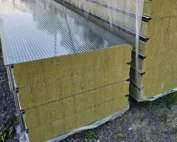
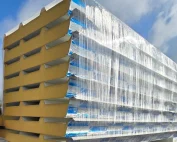
Incorrect support of the pack can deform the components. Water between the panels and the inability to dry encourage surface problems. Storage should correspond to the instructions. It is not enough to cover the material with any airtight film and forget about it until installation.
During handling, protect the edges from impact and friction. Long elements require a proper lifting method. A damaged joint may be difficult to notice in the pack but will reveal itself during assembly. Do not try to hide the problem by tightening the panels more firmly.
Why does incorrect cutting damage the coating?
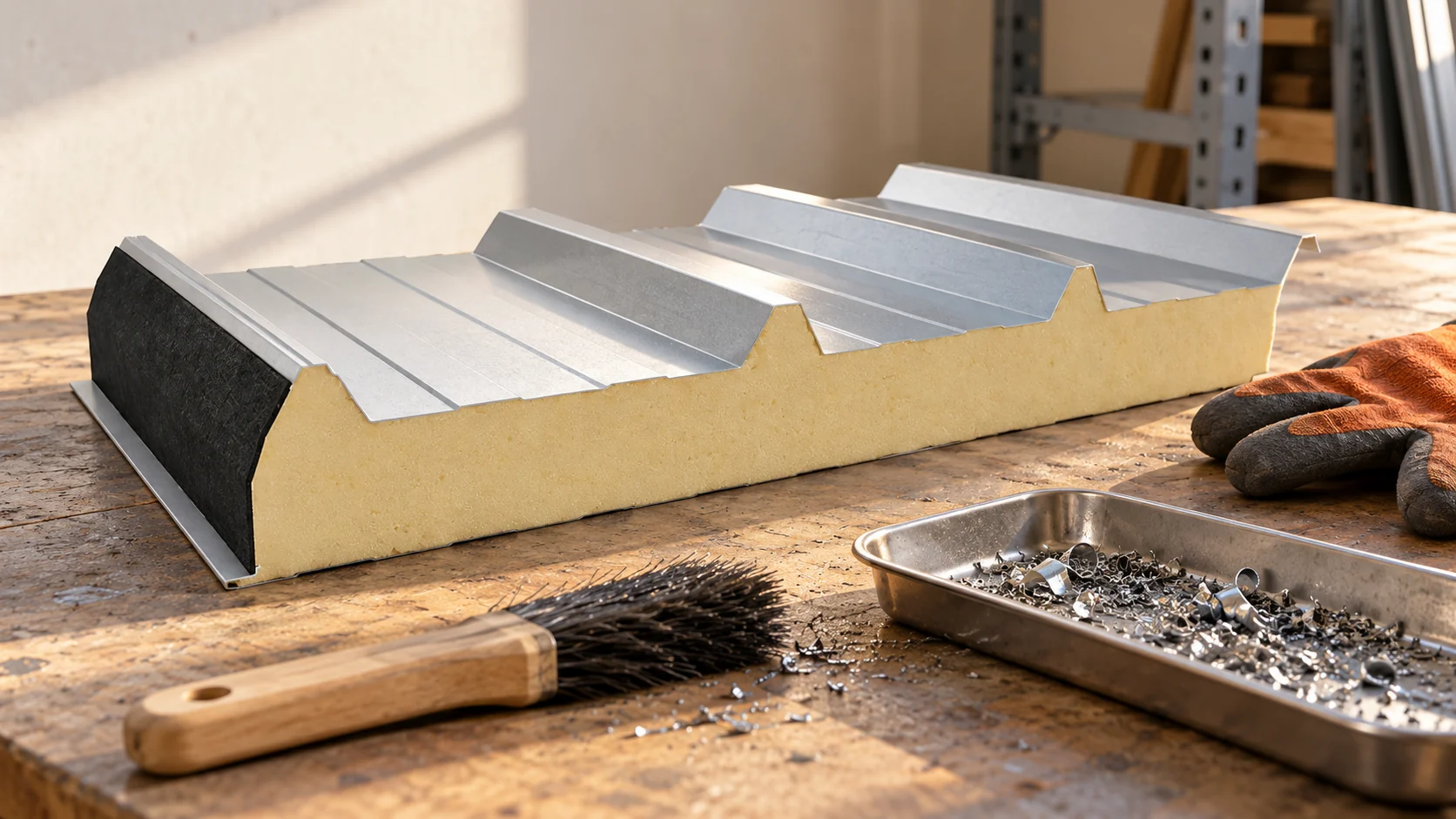
Hot cutting and sparks can damage the steel protection even beyond the processing line. Use the method permitted for the panel. After drilling and cutting, remove the swarf. If left on the surface, it can rust and cause marks, even though the panel itself initially looked good.
Assess the edge and the condition of the core after making the hole. Exposed insulation requires proper finishing. Not every cut can be repaired with a trim. If the joint or an important bearing point has been compromised, an assessment of the element’s suitability is needed.
What is the result of incorrect fixing?
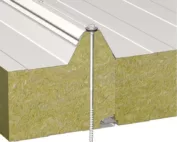
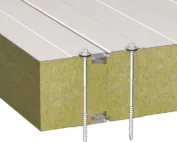
An overtightened screw can crush the washer and deform the sheet. Insufficient pressure leaves play. The wrong type of fastener may not perform correctly at the support. Monitor the tool setting and ensure screws match the fixing plan.
Do not replace missing fasteners with random pieces from another job. Grip length, drilling range and corrosion protection may differ. Stitch screws for the lap do not serve as primary fixing. Each group has a defined task.
How can you identify a fault in the joint or seal?
The panel should close into the intended geometry without damaging the edges. Dirt, a badly positioned seal or incorrect pressure can break the continuity of the joint. Check the contact before covering with the next element. Later, access to its interior will be limited.
Do not apply additional sealant without understanding the cause of the gap. The material must be compatible with the coating and the detail. An external bead may look good yet fail to stop air movement in the correct layer. Excess can also hinder water drainage.

Why are flashings and penetrations not a minor extra?
The plinth, corner and roof-to-wall junction are part of how the envelope performs. The wrong layer sequence can direct water under the panel. The flashing should protect the core and provide the intended drainage. Mere aesthetic appearance from a distance does not confirm tightness.
Service penetrations require carefully executed support and sealing. A heavy unit should not hang on the cladding alone. The opening may alter the required fire properties or load-bearing capacity. The services installer and the envelope fitter should agree the work locations before cutting.
How do you accept the enclosure before a fault becomes costly?
Inspect the surface and joints from both accessible sides. Check the protective film, swarf, dents and coating damage. Record observations before touching up. The repair must match the type of defect. Paint does not restore geometry or the integrity of a damaged panel.
Keep photographs of the details and records of the materials used. Establish inspection and cleaning rules. After severe weather exposure or a change to the installation, it is worth checking sensitive locations. Early identification of a problem usually limits the extent of necessary dismantling and repair.
What else is worth asking
Do rust marks on a fresh installation always come from the panel?
No. They may come from left-over swarf or foreign contamination. The cause and the condition of the coating must be established. The surface should not be sanded or painted straight away without an assessment.
Can a visible gap be sealed with any silicone?
No. First it must be established whether the joint is correctly assembled and which material the detail specifies. A random sealant may not be compatible with the coating or may not eliminate the actual cause.
7 branches. Materials closer to your project.

- SEROCK — Dzierżenin 34 E
- BŁONIE — ul. Sochaczewska 138A
- RADOM — ul. Grobickiego 8
- ŁÓDŹ — Natolin 8
- OLSZTYN — Barczewo, ul. Prosta 9
- WROCŁAW — ul. Jerzmanowska 10C
- GORZÓW WLKP. — ul. Zielona 33/34